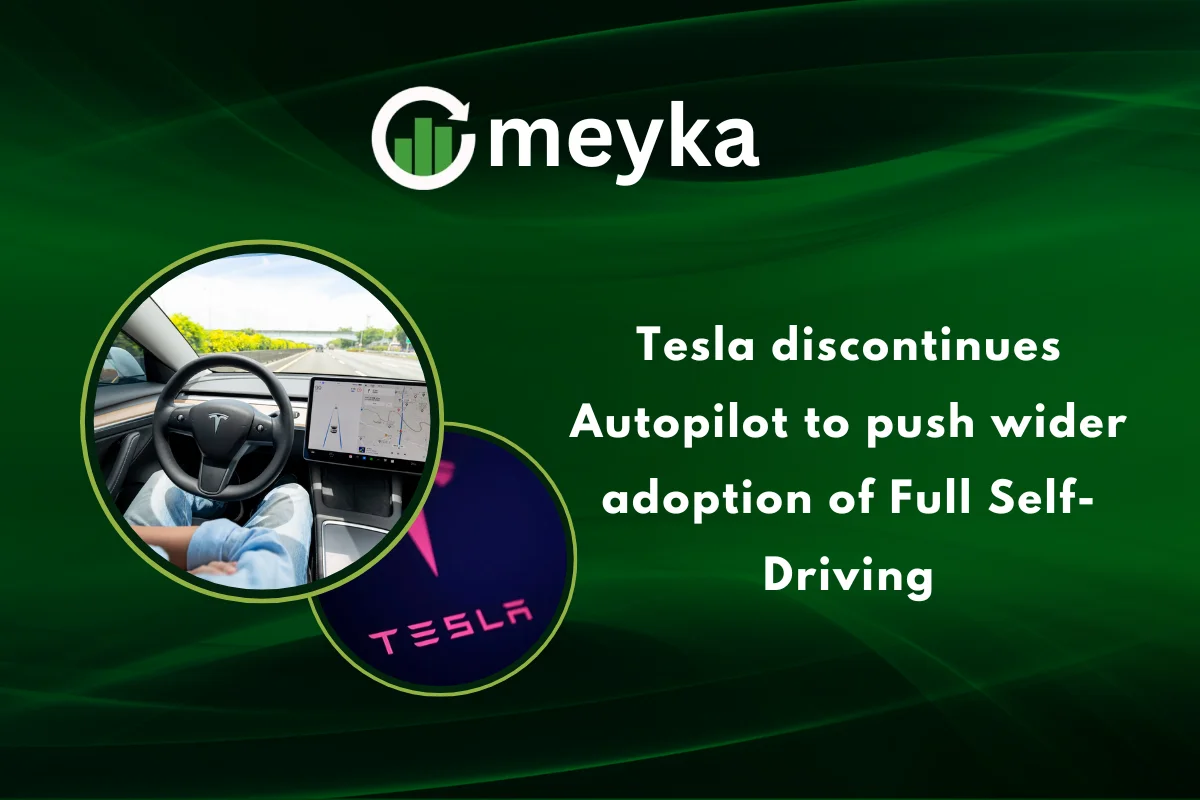
Tesla Discontinues Autopilot to Push Wider Adoption of Full Self-Driving
Tesla, the electric vehicle and AI-focused automaker led by Elon Musk, has made a major change to its driver-assistance offerings by discontinuing its standard Autopilot package and shifting focus entirely toward its Full Self-Driving (FSD) technology. This move comes as part of Tesla’s broader strategy to advance autonomous driving technology and increase recurring revenue, but it has stirred debate among tech enthusiasts, investors, and current owners.
What Changed With Autopilot and FSD
Until now Tesla vehicles came with a basic Autopilot system that included features like Traffic-Aware Cruise Control and Autosteer, which help the car maintain speed with traffic and stay centered in its lane. These features provided a semi-automated driving experience that still required driver supervision.
As of January 2026 Tesla has discontinued the standalone Autopilot package in the United States and Canada for new vehicle orders. Instead new buyers only receive Traffic-Aware Cruise Control as standard if they do not opt for an upgrade. This means the previously free or low-cost Autopilot features will no longer be included unless the buyer chooses to upgrade to Full Self-Driving (FSD) technology.
FSD, which has been available as a one-time purchase or a monthly subscription, includes more advanced features such as automated city driving, traffic light recognition, stop sign control, and future capabilities tied to autonomous navigation. The FSD offering still requires driver supervision in many markets but is continually updated through software improvements.
Shift to Subscription-First Model
In a related move, Tesla announced that it will phase out the option to buy FSD outright for a one-time fee, and will instead make FSD exclusively available through a subscription model at around $99 per month starting February 14 2026. This subscription-only approach aligns with broader shifts in technology toward recurring revenue and services.
The change aims to improve adoption rates of FSD, which have historically remained low relative to Tesla’s total vehicle fleet. At the end of 2025 only around 12 percent of Tesla owners had subscribed to FSD, highlighting a challenge for Tesla in converting standard buyers to advanced software users.
Why Tesla Ends Autopilot
1. Boost FSD Adoption
Tesla wants more customers to use its advanced self-driving tech rather than the basic, semi-automated functions that Autopilot offered. By removing Autopilot as a separate package, buyers will have to choose FSD if they want more sophisticated driver assistance. This strategy is part of Tesla’s push to expand FSD use across its installed base.
CEO Elon Musk has emphasized that the real value of FSD will come when it can operate without constant driver supervision, allowing users to be fully disengaged during parts of the trip. Tesla has even begun limited operations of autonomous robotaxis in Austin, Texas that do not carry onboard safety monitors, signifying steps toward real autonomous driving.
2. Grow Recurring Revenue
From a business perspective, subscriptions provide predictable revenue over time compared with one-off feature sales. As Tesla focuses more on software and services, increasing the number of FSD subscribers helps support long-term valuation and strengthens its position among AI stocks and tech-oriented companies that leverage recurring income.
3. Simplify Product Offering
Eliminating Autopilot simplifies Tesla’s product offerings and aligns all advanced features under FSD. This also allows Tesla to standardize its software development and updates across vehicles, reducing complexity and focusing innovation on a single stack of autonomous technology.
Market and Investor Reaction
The decision has significant implications for Tesla’s presence in the stock market:
Stock Movement and Sentiment
Tesla shares have experienced mixed responses from investors following the announcement. Some analysts see the shift to subscription revenue as positive because it enhances Tesla’s software monetization potential. Others worry that the removal of Autopilot will dampen short-term car sales or push customers toward rivals that offer advanced driver assistance as standard.
AI and Autonomous Driving Positioning
Tesla’s commitment to Full Self-Driving places the company squarely in the conversation with other autonomous technology leaders. Although FSD still requires driver supervision in many situations, progress toward unsupervised autonomy and robotaxi services could position Tesla ahead of several traditional automakers. This potential aligns with the investment thesis behind many AI stocks where future growth is tied to breakthrough technologies rather than near-term earnings.
Revenue Diversification
Subscription services and recurring revenue streams often command higher valuation multiples compared with hardware alone. Investors increasingly value companies that blend product sales with ongoing service income, which could benefit Tesla’s long-term stock research profile.
Customer Impact and Feedback
Not all reactions from Tesla owners and fans have been positive. Many long-time supporters expressed concern over the removal of Autopilot as a standard feature, noting that even basic driver assistance technology was often seen as a safety benefit rather than a luxury. Some critics argue that making Autopilot paid may reduce the value proposition of Tesla vehicles, especially when competitors provide similar features for free.
Tesla has attempted to address some of this by offering new buyers a 30-day trial of FSD so they can experience full capabilities without immediate payment, but long-term affordability remains a concern for some.
Regulatory and Safety Considerations
As Tesla pushes for wider adoption of FSD, it also faces regulatory scrutiny. Safety regulators in the United States and globally continue to evaluate autonomous driving technology, and Tesla has been granted more time to respond to ongoing probes into its FSD system. These investigations examine how FSD handles real-world scenarios and whether current supervised features meet safety standards.
Until regulators are satisfied that FSD is safe and capable without continuous driver oversight, Tesla vehicles will still require driver attention and legal supervision while using advanced features. This ongoing regulatory backdrop is a reminder that autonomous driving, despite rapid progress, is still evolving.
Conclusion
Tesla’s decision to discontinue Autopilot and pivot exclusively toward Full Self-Driving represents a major shift in its product strategy and business model. The move increases recurring revenue potential, simplifies feature offerings, and aligns the company more closely with its long-term vision of autonomous vehicles. While some customers and investors have raised concerns about cost and accessibility, Tesla’s push reflects confidence in FSD technology and its role in the future of mobility.
As autonomous capabilities continue to develop and regulatory approvals evolve, Tesla’s strategy could set a new standard for how advanced driver assistance and self-driving features are marketed and monetized in the automotive industry. Future updates and adoption trends will be key for investors and drivers alike to watch in this dynamic space.
Frequently Asked Questions
Tesla aims to focus buyers on Full Self-Driving technology, which includes more advanced automation and recurring revenue through subscriptions.
New buyers will only get basic Traffic-Aware Cruise Control by default and must subscribe to Full Self-Driving if they want advanced automation features.
Tesla is working toward unsupervised autonomy and has begun limited robotaxi operations, but full autonomy still requires regulatory approval and significant technology validation.
Disclaimer:
The content shared by Meyka AI PTY LTD is solely for research and informational purposes. Meyka is not a financial advisory service, and the information provided should not be considered investment or trading advice.