Puma shares

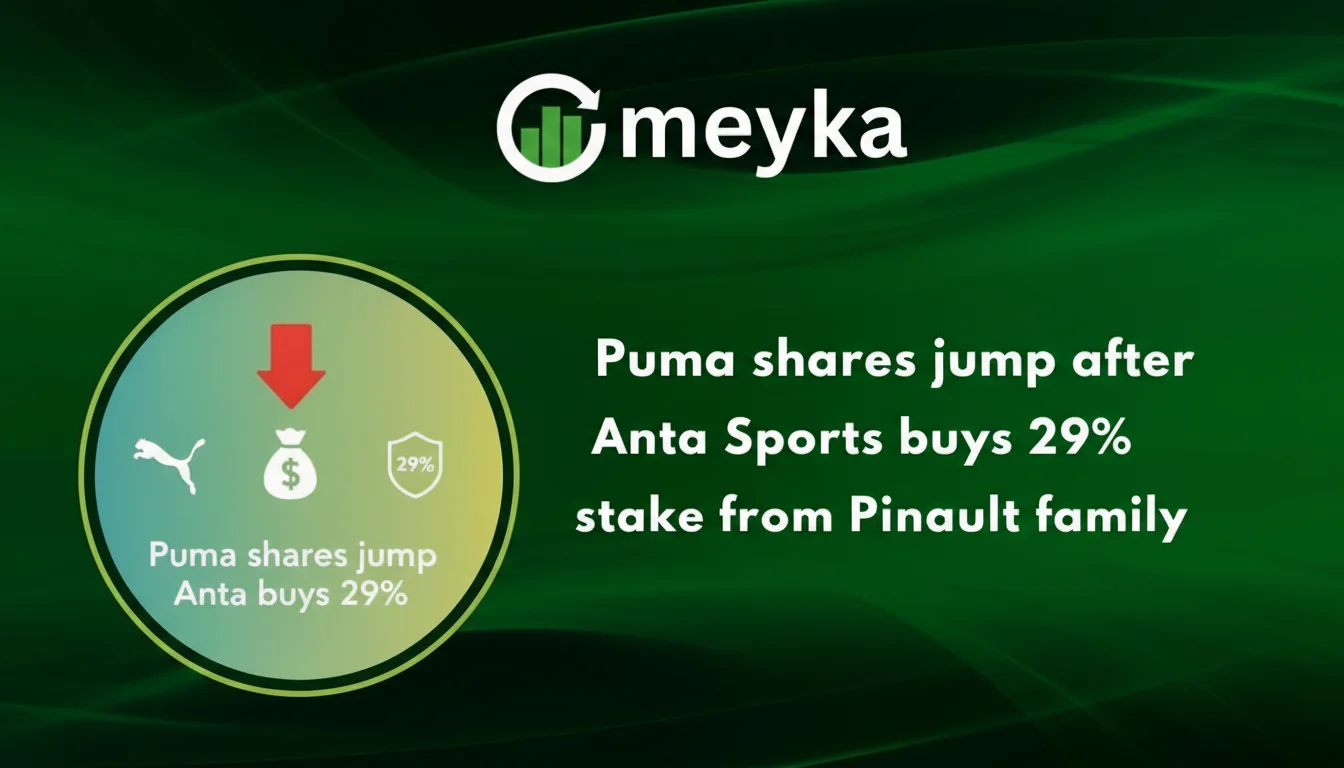
Puma Shares Jump After Anta Sports Buys 29% Stake from Pinault Family

Puma shares climbed sharply on Tuesday after news broke that Anta Sports Products, the Hong Kong-listed Chinese sportswear giant, agreed to buy a 29.06% stake in the German sports brand from the Pinault family’s investment firm, Artémis. The move not only sent Puma’s stock significantly higher in European trading but also highlighted growing global interest in brand consolidation and expansion among major sportswear makers.

The deal values the equity stake at around 1.5 billion euros (about $1.8 billion) and represents a 62% premium over Puma’s share price before the announcement. Anta will pay €35 per share in cash to acquire the shares, making it the largest single shareholder in Puma.

Why Puma Shares Soared

Puma shares responded strongly to this strategic takeover move, climbing as much as 15% or more in early trading, reflecting investor approval of the premium buy-out offer and confidence in the company’s future under stronger capital support. The jump in Puma shares indicates that the market sees value in Anta’s commitment and the likelihood that the increased stake could bring fresh strategic direction for the German brand.

Investors often view substantial stake purchases by another major company as endorsements of long-term prospects, especially when the purchasing firm pays above prevailing market prices. In Puma’s case, this boost came after a period of weaker share performance and competitive pressure from rivals like Nike and Adidas, so the Anta acquisition is seen as a potential turning point.

Details of the Anta Sports Acquisition

The agreement between Anta Sports and the Pinault family’s holding company Artemis will see Anta take a nearly 30% ownership share in Puma, solidifying its position as the biggest shareholder. Anta’s decision to buy such a significant stake is part of its broader globalization strategy aimed at expanding its footprint beyond Asia and into Western markets.

Under the terms of the agreement, Anta does not plan a full takeover of Puma at this time, meaning it intends to respect Puma’s independent governance and brand identity while working closely with its management and possibly securing representation on its supervisory board. This more collaborative approach may reassure existing investors and help mitigate fears of a hostile takeover.

Strategic Importance of the Stake Purchase

For Anta Sports, acquiring a nearly 30% stake in Puma carries multiple strategic advantages. First, it gives Anta access to a globally recognized brand with strong heritage, helping it diversify beyond its core Asian markets. Second, Anta can leverage Puma’s product portfolio and distribution networks to shore up global competitiveness amid rising competition in the athletic wear industry.

The move fits into Anta’s history of acquiring or investing in well-known Western brands. Through similar maneuvers, Anta has built a portfolio that includes Fila, Descente, Wilson, and other notable labels, reinforcing its ambition to become a global sporting goods powerhouse.

Market Reaction and Sector Implications

While Puma shares jumped significantly on the acquisition news, analysts pointed out that the deal reflects larger trends in the global stock market where consolidation among brands can offer growth opportunities and efficiencies. The premium paid by Anta signals confidence in Puma’s long-term value even at a time when the company has faced sales challenges and market share pressures.

Other sportswear stocks and related retail shares also felt the ripple effects as traders reassessed valuations and competitive positions. Some investors may look to compare Puma’s move with deals involving other major brands, while others might use this as a signal for broader stock research into the sector. These developments often support sector rotation and create new investment narratives for consumer goods and leisure stocks.

Challenges and Opportunities Ahead

Despite the positive market response, Puma faces several challenges that cannot be overlooked. Over the past year, Puma’s sales performance has lagged behind some competitors amid mixed consumer demand and underwhelming product momentum, leading to leadership changes and restructuring efforts. The company’s CEO has been focusing on cost discipline and brand repositioning to revive growth, but this turnaround has taken time.

Anta’s acquisition stake could accelerate this process by providing fresh capital, strategic expertise, and an enhanced distribution network in Asia, particularly in China where Puma has struggled to gain consistent momentum. If Anta can successfully support Puma’s brand renovation and market penetration, this could strengthen Puma’s competitive position over the medium to long term.

However, some market watchers caution that owning a large minority stake does not automatically solve underlying business challenges. Puma must still execute its turnaround strategy effectively, improve product appeal, and manage supply-chain and market risks to capitalize on the new backing.

What This Means for Investors

For investors, the surge in Puma shares following the Anta acquisition news highlights how strategic transactions can influence sentiment and prices. Buying such a large stake at a premium could attract long-term holders who believe in synergies between Puma and Anta, while short-term traders may capitalize on volatility created by deal speculation and execution news.

For those including Puma in portfolios or watching athletic apparel equities, continual monitoring of earnings reports, sales trends, and additional institutional activity will be essential. Comparative analysis with other major brands and retail stocks can also offer context for evaluating Puma’s repositioning and future performance.

Long-Term Outlook for Puma and Anta

Looking forward, Puma’s ability to leverage Anta’s global strength could be a defining theme in its turnaround narrative. Investors interested in consumer and leisure sectors may find this transaction a case study in how cross-border strategic investments can reshape brand trajectories and unlock shareholder value.

Anta’s expanded global footprint, combined with Puma’s heritage and potential market appeal, suggests that the sportswear rivalry will remain intense, but it may also open broader collaborative opportunities, including shared product innovation and enhanced global retail channel access.

Frequently Asked Questions

Why did Puma shares jump after Anta’s stake purchase?

Puma shares climbed because Anta agreed to buy a 29.06% stake at a premium price, signaling strong confidence in Puma’s future and attracting investor interest.

What does Anta’s investment mean for Puma’s future?

The investment makes Anta the largest shareholder, potentially bringing fresh capital, strategic partnerships, and enhanced market access, which could help Puma’s turnaround and global growth.

Will Anta try to take full control of Puma in the future?

Anta has stated it does not currently plan a full takeover, but it may seek board representation and work collaboratively with Puma’s management to support growth without forcing a complete acquisition.

Disclaimer:

The content shared by Meyka AI PTY LTD is solely for research and informational purposes. Meyka is not a financial advisory service, and the information provided should not be considered investment or trading advice.

Similar Posts

Leave a Reply

Your email address will not be published. Required fields are marked *