January 29: SpaceX Eyes June IPO, $50bn Raise at $1.5tn Valuation

January 29: SpaceX Eyes June IPO, $50bn Raise at $1.5tn Valuation

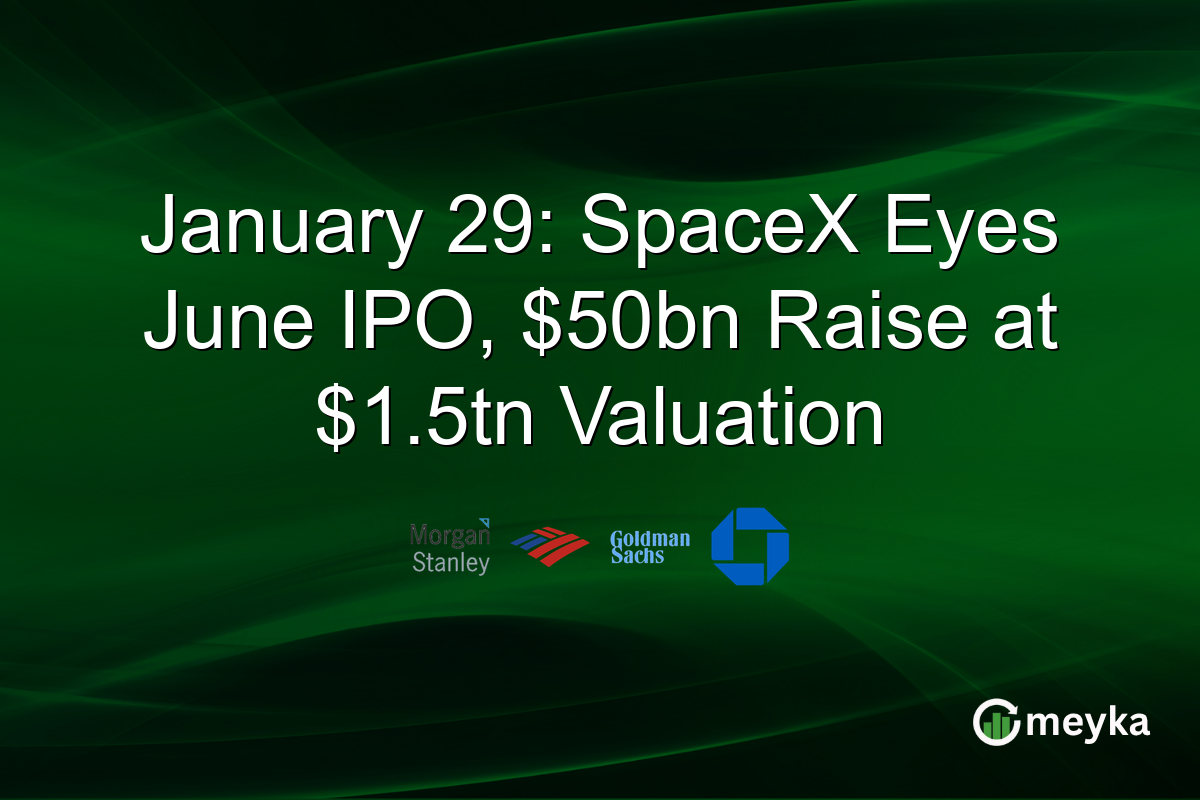
The SpaceX IPO could arrive in mid-June 2026, with a target raise of $50 billion at a $1.5 trillion valuation. If priced, it may be the largest IPO ever and a key test for high-growth tech. For investors in Japan, this potential listing brings currency questions, access issues, and timing risks, but also rare exposure to rockets and satellite internet. We break down what the SpaceX IPO could mean, how Starlink growth factors in, and what to watch across global banks.

Deal size, valuation, and timing

SpaceX is considering a $50 billion equity raise at about a $1.5 trillion valuation, according to the Financial Times source. That would position the SpaceX IPO as potentially the largest IPO ever. The scale would be a landmark liquidity event for private holders. It would also set a fresh reference point for late-stage tech valuations tied to launch services and satellite internet.

A mid-June 2026 window suggests SpaceX wants a receptive U.S. equity capital market, with strong institutional demand. A successful SpaceX IPO could reset sentiment for mega listings and price discovery across growth names. For Japan-based buyers, remember IPO pricing and trading will be in U.S. dollars, so FX moves against the yen can affect effective entry prices and post-listing returns.

Why Starlink growth matters

Starlink growth is central to the SpaceX IPO story. Recurring broadband revenue can smooth the cash profile versus launch cycles. In Japan, satellite internet can support remote areas, maritime routes, and disaster resilience, which highlights real-world utility. If adoption and pricing hold, investors may assign premium multiples to recurring connectivity, not just launch services, though visibility on margins remains key.

Starlink competes with terrestrial networks and rival constellations, while satellites and launches require heavy capital. Regulatory reviews, capacity management, ARPU durability, and launch cadence all matter. The scale of the contemplated raise underscores ambition, but execution will drive outcomes. Early reports signal revived interest in mega deals source, yet market volatility and currency shifts are real risks for yen-based investors.

Which banks may lead, and what to watch

Morgan Stanley MS, Bank of America, Goldman Sachs GS, and JPMorgan are reportedly in contention to lead the SpaceX IPO. Any mandate would be a marquee win and fee driver. Expect a broad global book, heavy U.S. participation, and likely cornerstone institutions. Allocation could be tight for retail, especially outside the U.S., given deal size and expected demand.

Bank shares often track ECM pipelines. As of 2025-03-05, MS traded at $182.34 (P/E 17.86), GS at $936.81 (P/E 18.25), BAC at $51.81 (P/E 13.59), and JPM at $300.77 (P/E 15.02). Upcoming earnings: GS 2026-04-13, JPM 2026-04-14, MS and BAC 2026-04-15. Management commentary on underwriting backlogs and mega-IPO readiness will be closely watched.

How Japan-based investors can approach it

Most Japan brokers offer U.S. stock trading, but access to U.S. IPO allocations is limited. Some may provide indications of interest, yet fills can be small. Many investors will consider buying after the SpaceX IPO lists, once order books stabilize. Another route is exposure through funds that may add the name after inclusion, but timing varies by mandate and index rules.

Prepare a U.S. trading account, confirm funding in USD, and review FX spreads. Know NISA eligibility and fees with your broker. Set alerts for the SpaceX IPO pricing range, anticipated listing date, and lock-up details. Use limit orders, size positions thoughtfully, and avoid chasing gap opens. Diversify across holdings so one high-profile listing does not dominate portfolio risk.

Final Thoughts

If priced as reported, the SpaceX IPO would be a rare, high-profile listing that could reframe risk appetite for growth deals. The headline raise and valuation point to strong demand, but execution, Starlink growth, and currency swings will shape returns for Japan-based investors. We suggest a simple plan: follow official filings, watch the pricing range, and confirm your broker’s IPO or secondary-market process. Track bank earnings calls for ECM color and monitor FX ahead of the listing window. If allocation is limited, a post-listing entry with strict risk controls can help. Keep position sizes balanced, and evaluate fundamentals as new disclosures emerge around Starlink, launch cadence, and capital needs.

FAQs

When is the SpaceX IPO expected to happen?

Reports indicate SpaceX is weighing a mid-June 2026 listing, but IPO dates can shift with market conditions. Investors should watch the prospectus, pricing updates, and exchange filings. Brokers in Japan typically post schedules, eligibility, and deadlines once an underwriting syndicate confirms the timeline.

Could this be the largest IPO ever?

Yes, early reports suggest up to $50 billion raised at a roughly $1.5 trillion valuation. That scale would likely set a new listing record. Final size depends on market conditions, investor demand, and any greenshoe options disclosed in offering documents near pricing.

How can investors in Japan buy into the SpaceX IPO?

Check if your broker offers access to U.S. IPO allocations. Many retail investors may need to buy in the open market after listing. Confirm funding in USD, fees, and NISA eligibility. Use limit orders and review the prospectus for risks, lock-ups, and dilution.

What factors drive SpaceX’s valuation?

Starlink growth, launch cadence, margins, and capital intensity are key. Investors will assess recurring revenue potential versus hardware and launch cycles. Regulatory approvals, competition, and currency shifts also matter. New disclosures in the IPO filing should clarify business mix and unit economics.

Which banks are in the running to lead the deal?

Morgan Stanley, Bank of America, Goldman Sachs, and JPMorgan are reportedly contenders. Their ECM capacity, investor networks, and research coverage could shape book quality and aftermarket support. Watch upcoming earnings calls for commentary on pipelines and mega-IPO preparedness.

Disclaimer:

The content shared by Meyka AI PTY LTD is solely for research and informational purposes.  Meyka is not a financial advisory service, and the information provided should not be considered investment or trading advice.

Similar Posts

Leave a Reply

Your email address will not be published. Required fields are marked *