1768.HK Stock Today: January 29 Debut Closes +69% on 1,898x Demand

1768.HK Stock Today: January 29 Debut Closes +69% on 1,898x Demand

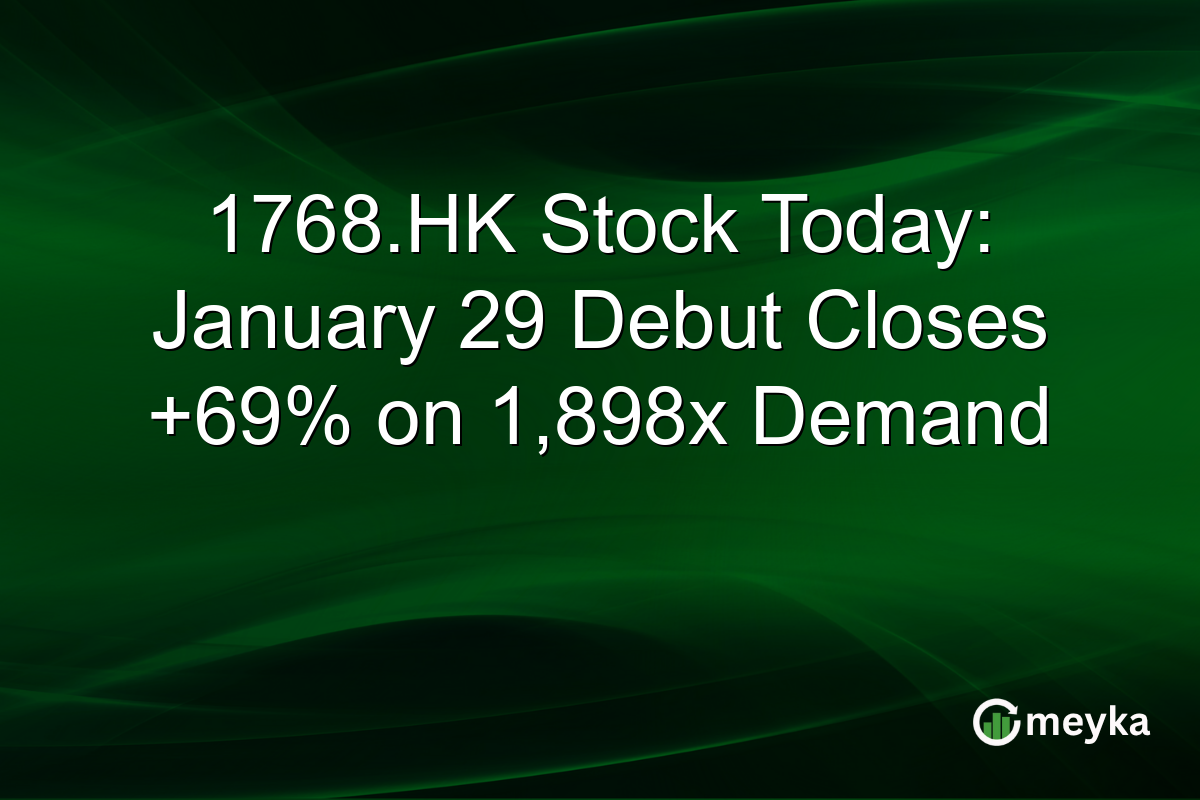
The 1768.HK IPO drew intense interest in Hong Kong today. Mainland snack chain 1768.HK opened at HK$445 against a HK$236.6 offer and closed at HK$400, up 69% on January 29. Retail oversubscription reached 1,898x, with cornerstone investors such as Tencent, Temasek, and BlackRock providing early support. The strong debut signals improving risk appetite for Hong Kong IPO activity. We also see near-term volatility as margin financing settles and lock-ups step down. Below, we break down demand drivers, key risks, and simple trading plans for local investors.

What Drove the 1768.HK IPO Surge

Shares opened at HK$445, well above the HK$236.6 offer, before ending at HK$400 for a 69% first-day gain. The gap from offer to open shows how tight day-one supply can be in a hot Hong Kong IPO. The closing price still left early buyers with large paper profits, even after intraday cooling from the opening print.

The 1768.HK IPO rode unusual scarcity and strong brand appeal. Retail oversubscription hit 1,898x, pointing to heavy margin financing and tiny public allocations. Cornerstone participation by Tencent, Temasek, and BlackRock added credibility and reduced free float. Together, these factors created a sharp imbalance between buyers and available shares, fueling the outsized initial move.

Demand and Allocation Mechanics

A 1,898x retail oversubscription means total retail orders were thousands of times the shares available to the public pool. Most bidders received minimal or zero allocation. In such Hong Kong IPO setups, early trading often sees fast turnover as leveraged buyers adjust positions, and small lots change hands quickly at wide intraday ranges.

Cornerstone investors, including Tencent, Temasek, and BlackRock, typically commit capital at the offer price and agree to hold for a period, reducing float and signaling confidence. While terms were not detailed here, the presence of large institutions often supports pricing at listing. It also concentrates supply, which can amplify early gains in a tightly held book.

Near-Term Risks After Listing

High retail oversubscription often rides on margin financing. As funding costs accrue and allocations settle, some holders may take profits to repay loans. That can pressure prices after the first session. We expect wider spreads and sudden swings if liquidity thins during the unwind, a common pattern in crowded Hong Kong IPO trades.

Limited free float can keep prices elevated, but it also makes the tape fragile. As selling restrictions ease over time, supply can rise. Investors should track company announcements and any insider or pre-IPO shareholder movements. A clear read on supply helps frame risk-reward once the initial listing excitement fades.

How HK Investors Can Trade the 1768.HK IPO

Trade with discipline. Use limit orders, not market orders, given fast-moving bids and asks. Size positions modestly and consider staggered entries. Set stop levels before trading. Watch order-book depth and turnover in the first week for signs of stabilization. If liquidity drops, reduce leverage and avoid chasing spikes.

For investors building a position, focus on execution. Track store growth, same-store sales, gross margin drivers, and input costs. Monitor mainland consumer demand and any regulatory updates. Review post-listing disclosures and upcoming results for evidence of scale and profitability. A clear plan helps avoid overpaying after a strong 1768.HK IPO start.

Final Thoughts

The 1768.HK IPO delivered a standout debut in Hong Kong, closing at HK$400, up 69% from the HK$236.6 offer after opening at HK$445. Demand was extreme, with a 1,898x retail oversubscription and visible support from cornerstone investors such as Tencent, Temasek, and BlackRock. That mix created tight float and strong early prints. The trade-off is higher near-term volatility as margin financing normalizes and supply dynamics shift over time. For traders, keep entries selective and use limits. For long-term investors, wait for clarity from post-listing updates and early results before scaling in. A measured approach can protect gains while keeping upside in view.

FAQs

Why did 1768.HK jump 69% on its debut?

The first-day pop reflected extreme demand and limited float. The stock opened at HK$445 versus a HK$236.6 offer and closed at HK$400. Retail oversubscription reached 1,898x, while cornerstone investors signaled confidence. That imbalance between buyers and available shares drove a sharp initial re‑pricing.

What does 1,898x retail oversubscription mean for allocations?

It means the retail pool was requested far beyond available shares, so most bidders received very small or no allocations. In such Hong Kong IPOs, small free float and margin use can spark volatile trading as leveraged participants adjust positions and early holders realize gains.

Do cornerstone investors reduce risk for new buyers?

Cornerstone investors like Tencent, Temasek, and BlackRock can support pricing and reduce free float, which helps at listing. However, their presence does not remove market risk. Prices can still swing as margin financing unwinds and supply shifts. New buyers should still manage position size and entry points.

How should I approach trading after a big Hong Kong IPO pop?

Use limit orders, keep position sizes small, and plan exits. Watch order-book depth, volume trends, and any company disclosures. If spreads widen and liquidity drops, consider waiting for stabilization. Long-term investors can track fundamentals and add gradually on pullbacks rather than chase strength.

Disclaimer:

The content shared by Meyka AI PTY LTD is solely for research and informational purposes.  Meyka is not a financial advisory service, and the information provided should not be considered investment or trading advice.

Similar Posts

Leave a Reply

Your email address will not be published. Required fields are marked *