Oil drops

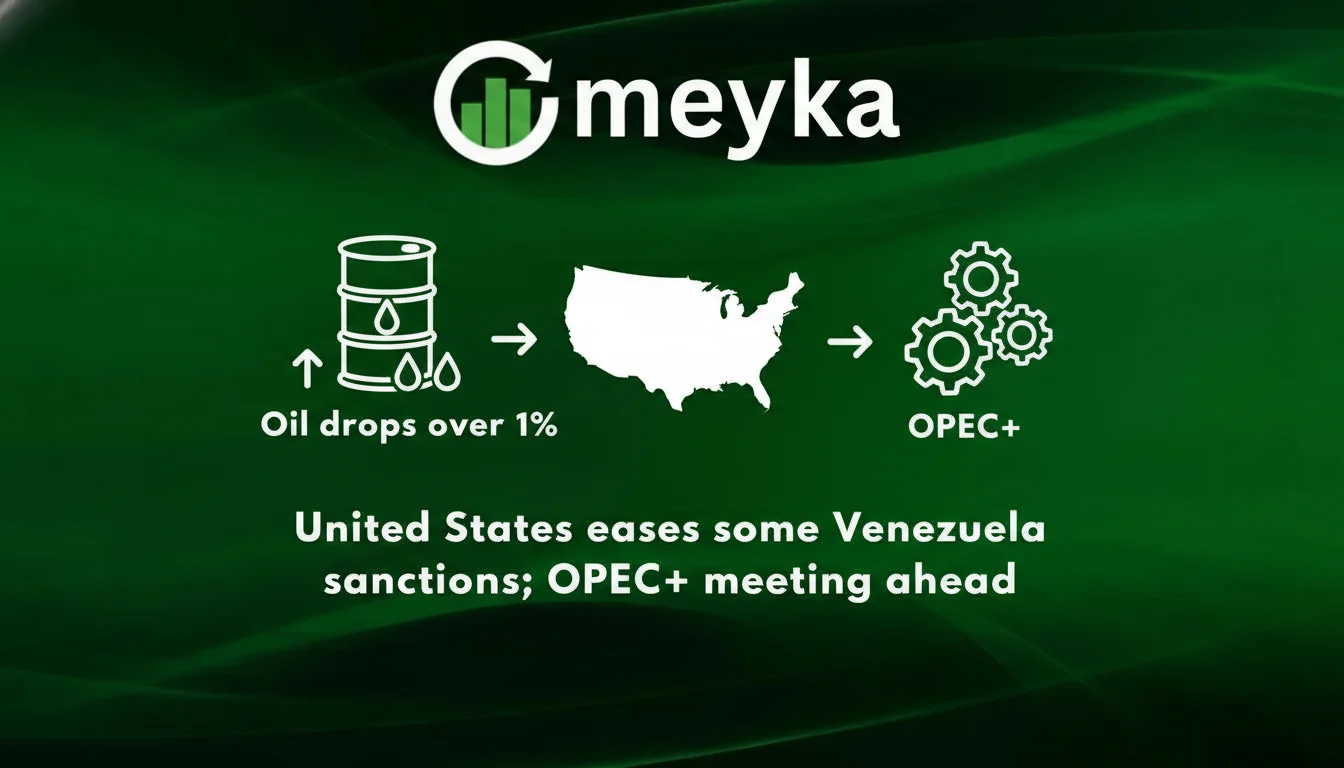
Oil Drops Over 1% After the United States Eases Some Venezuela Sanctions and Ahead of OPEC+ Talks

Global energy markets experienced a significant shift as oil drops more than 1 percent following recent policy changes by the United States that loosen sanctions on Venezuela’s oil industry, while traders also brace for an upcoming OPEC+ meeting that could influence supply decisions and price direction. The combined impact of geopolitics and strategic oil policy is reshaping pricing expectations, supply forecasts, and market confidence.

According to recent reports, U.S. authorities have relaxed certain restrictions on Venezuelan crude oil sales to American firms through a new general license intended to stimulate trade and investment activity in Venezuela’s long-troubled oil sector.

Policy Shift in Venezuela and the United States

The U.S. Treasury Department issued a general license that expands the ability of American energy companies to purchase, refine, and transport crude oil originating in Venezuela. This move is part of broader reforms by Venezuela’s interim authorities to open the nation’s oil industry to private investment and modernize its legal and fiscal framework.

While the sanctions on actual production activities remain intact, the new permission for commercial trading flows has raised expectations that Venezuelan crude may re-enter key markets in significant volumes. Analysts note that this potential increase in supply was a major factor behind the recent drop in oil prices, as the market anticipates more heavy crude entering an already well-supplied global oil landscape.

Traders also noted that oil drops as investors weigh the implications of accelerated exports from Venezuela, given that the country holds one of the largest known oil reserves in the world.

Global Supply Expectations and Market Reaction

One key reason for the market downturn is that Venezuela’s production, although growing gradually, remains far below its historical peak. Despite reaching roughly 1.2 million barrels per day in 2025, a recovery from earlier lows, output is still far from the 3 million plus barrels per day achieved in previous decades before mismanagement and sanctions crippled production.

However, even an incremental rise in Venezuelan supply has pressured prices because the global oil market is already dealing with relatively abundant inventories and uneven demand. Commodity traders are now factoring in not only potential new barrels of supply but also how these could interact with decisions from the Organization of the Petroleum Exporting Countries and allies, known collectively as OPEC+.

OPEC+ Meeting Expectations and Strategic Decisions

The upcoming OPEC+ meeting has emerged as another critical factor influencing market sentiment. Members of the alliance are expected to discuss production plans and possibly decide on output adjustments that could attempt to stabilize prices. So far, officials have not signaled dramatic changes, but speculation about any shifts in quotas is weighing on investor confidence.

Historical data shows that even rumors about higher production targets or delayed cuts can prompt price declines. For example, in previous sessions, OPEC+ discussions about increasing supply triggered extended sell-offs in crude futures.

If member states choose to maintain or even increase output amidst signs of recovering supply from countries like Venezuela, traders may push oil prices even lower, especially if global demand fails to keep pace.

Investor Outlook: Energy, Stocks, and Risk Management

For investors, especially those involved in stock research related to energy companies or AI stocks with exposure to commodities data and predictive analytics, this price drop signals increased short-term volatility. Energy sector equities often react sharply when crude benchmarks fluctuate by more than one percent in a single day.

Major oil producers and service companies could see mixed results, with some benefiting from improved access to Venezuelan crude and others losing momentum due to lower global prices. Firms that track or leverage artificial intelligence models for supply forecasting and trading signals may have an edge in navigating this unpredictable environment.

Meanwhile, the broader stock market could experience ripple effects, with commodities-linked indices under pressure if prices continue to fall or remain soft.

Long-Term Dynamics: Supply, Demand, and Infrastructure

The reopening of Venezuelan oil trade has implications beyond the immediate price movements. Although sanctions easing may allow new revenue streams and investment projects to take root, Venezuela’s oil infrastructure has suffered decades of neglect and underinvestment. Experts caution that ramping up output to pre-sanctions levels will take time and capital, and the global market may only see modest increases in supply over the medium term.

Still, the psychological impact on markets is clear: traders are pricing in the possibility of new Venezuelan barrels entering key refinery systems in the United States and elsewhere, contributing to the recent decline as oil drops on easing sanctions expectations.

What Traders Are Watching Next

  1. OPEC+ Output Decisions: Any announcement from the upcoming meeting could significantly influence prices, either calming markets with supply restraint or pushing prices lower with higher quotas.
  2. Actual Export Volumes from Venezuela: Whether Venezuela can materially increase its exports in the short term remains a critical factor.
  3. Inventory Reports: Weekly inventory data from major economies like the U.S. often dictate near-term price movements, especially when expectations are misaligned with data releases.

Frequently Asked Questions

What caused oil prices to drop more than 1% recently?

The price drop was largely driven by the U.S. easing some sanctions on Venezuela’s oil industry, raising expectations of increased supply, while traders also prepared for the upcoming OPEC+ meeting.

How could OPEC+ decisions impact oil prices?

If OPEC+ members decide to maintain or increase production at their meeting, it could put further downward pressure on prices; conversely, production cuts could help stabilize or boost prices.

Does easing sanctions mean Venezuela will quickly export more oil?

Not immediately, because Venezuela’s oil infrastructure has been weakened and production increases take time despite new permissions for trade.

Disclaimer:

The content shared by Meyka AI PTY LTD is solely for research and informational purposes. Meyka is not a financial advisory service, and the information provided should not be considered investment or trading advice.

Similar Posts

Leave a Reply

Your email address will not be published. Required fields are marked *