Lenovo

Lenovo Stockpiles PC Memory as AI Demand Creates Supply Crunch

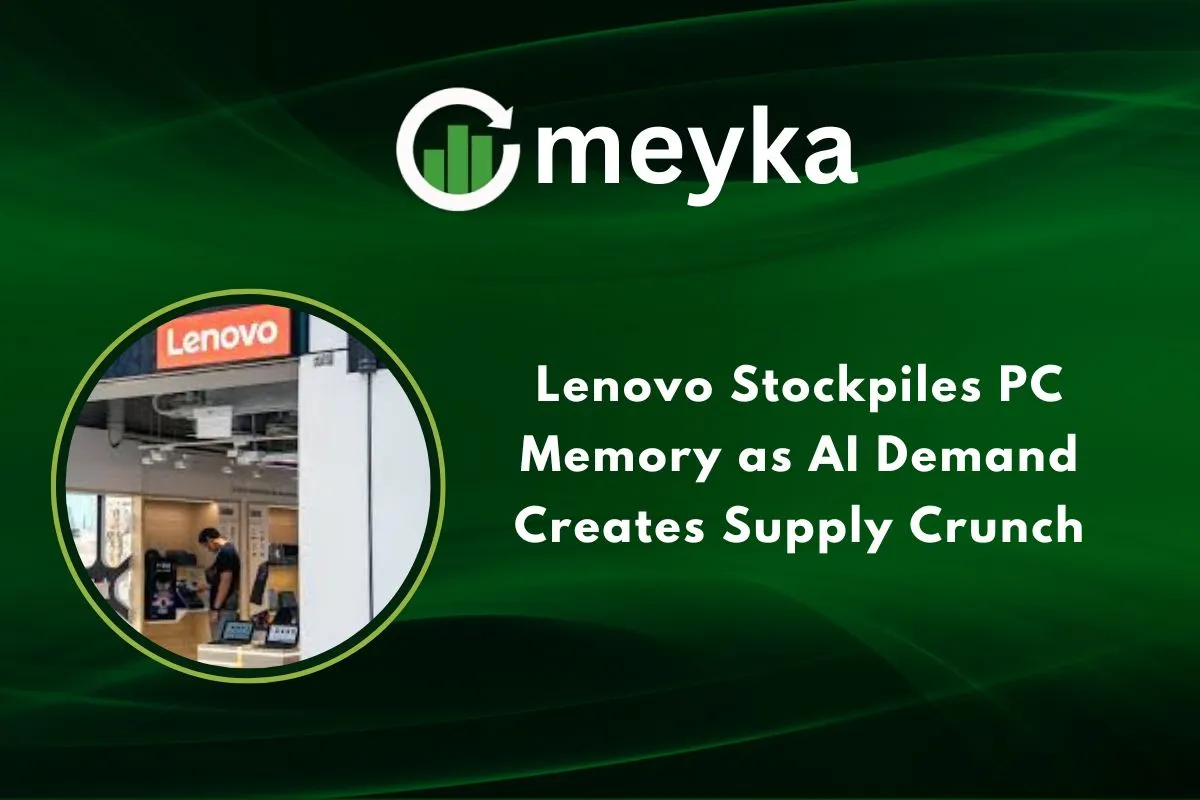
We’re seeing a remarkable shift at Lenovo, one of the world’s largest PC makers. The company is aggressively stockpiling memory chips, not because it’s planning for a sudden surge in sales, but because of a looming global memory shortage driven by artificial intelligence (AI). As data centers expand and AI workloads demand more and more high-speed memory, Lenovo is preparing for a tight market. By building up its inventory now, Lenovo hopes to ride out the disruption, protect its production lines, and even gain a strategic edge.

Lenovo’s Strategic Stockpiling

Lenovo isn’t just buying memory chips as usual. According to its CFO, Winston Cheng, the company is holding about 50% more memory component inventories than it typically would. This is not a short-term gamble; Lenovo has also signed long-term contracts with memory chip suppliers to secure its supply for next year.

This kind of planning shows how Lenovo is thinking ahead. Rather than scrambling for memory when demand peaks, it’s locking in deals now. That gives Lenovo two big advantages: it ensures steady inventory, and it may let the company avoid passing steep price increases onto customers. As Cheng said, they see an opportunity in having this stockpile.

AI‑Driven Demand for PC Memory

Why is Lenovo doing this? The answer lies in AI. As more companies build out AI data centers, demand for fast, high-bandwidth memory is exploding. These AI workloads need big, fast memory modules, and that’s pushing memory makers to prioritize those chips over more traditional ones used in regular PCs.

It’s not just about data centers. Cloud providers, researchers, and enterprises all want powerful AI infrastructure. That means big memory buys. The shift in production toward high-bandwidth memory (HBM) and other advanced types is making it harder to get the simpler DRAM or NAND modules that traditional PCs rely on.

Supply Crunch in the PC Memory Market

On the supply side, things are tightening fast. Several memory chipmakers, including major ones like Samsung and SK Hynix, are prioritizing production of HBM and other AI-focused memory. As a result, the supply of regular memory modules is shrinking. Lenovo’s CEO, Yang Yuanqing, has warned of a sustained DRAM and NAND shortage continuing into next year, driven by the pressure from AI demand. That shortage is already forcing other electronics makers, like smartphone companies, to rethink their memory-buying strategies and might even raise prices for consumers. To make matters more urgent, memory chip prices are going up sharply. According to recent reports, contract prices for both NAND and DRAM have jumped by 15–20% in Q4 2025, largely because of aggressive buying from cloud providers building out AI infrastructure.

Another major memory maker, Samsung, has raised memory chip prices by up to 60% amid the worsening shortage. This price pressure is rippling through the entire electronics ecosystem, from data centers to consumer devices.

Implications for Lenovo

Lenovo’s stockpiling strategy gives it a possible edge. With its long-term contracts and high inventories, Lenovo is more insulated than many competitors. This could allow the company to keep production going smoothly, even if suppliers struggle or prices get even more volatile. At the same time, this is not without risk. Holding large inventories comes with cost: money tied up in memory chips, and the risk that some of those chips become less relevant or cheaper to replace later. But Lenovo seems confident. Its scale, as a big buyer, helps it negotiate favorable terms.

From a market standpoint, Lenovo is positioning itself as proactive rather than reactive. It’s not waiting for the pain; it’s acting now to mitigate it.

Broader Impact on PC Manufacturers and Consumers

Lenovo isn’t alone in feeling the squeeze. Other PC makers are also watching memory prices and supplies closely. But not everyone can build an inventory like Lenovo’s; smaller companies or ones with weaker supply chain reach may struggle more. For consumers, the memory crunch could mean higher prices for PCs, laptops, and other devices. If memory costs rise, device makers may pass some of that on to buyers. There’s also a chance products could ship later if components are delayed. On a global level, this trend underscores how AI isn’t just changing software; it’s reshaping hardware supply chains. Memory, once a commodity, is becoming a strategic resource. Companies with strong procurement and supply-chain strategies (like Lenovo) may come out stronger.

Market Outlook and Predictions

So where do we go from here? Experts predict that memory demand tied to AI will remain strong over the next few years. As data centers continue to scale aandAI becomes more central to business, the need for high-performance memory is unlikely to slow. Lenovo’s approach suggests it expects this trend to last. By locking in memory now, it’s betting that AI-driven demand will keep supply tight or even tighten further, and that having a buffer will be a competitive advantage.

However, there are potential tech changes on the horizon. New memory technologies, like more efficient high-bandwidth options, next-gen memory classes, may emerge and relieve some of the pressure. Investing in supply chain resilience now could pay off, but so could investing in innovation that changes the memory game.

Conclusion

Lenovo’s decision to stockpile PC memory is not just a defensive move; it’s a bold strategy. By building up inventory and securing long-term contracts, the company is preparing for a world where AI demand reshapes the memory market. This isn’t just about making more PCs. It’s about staying ahead in a tech era defined by AI, where memory is more than a component; it’s a critical resource. Lenovo’s actions show that in the race to power AI, supply chain strength may matter as much as innovation.

Disclaimer:

The content shared by Meyka AI PTY LTD is solely for research and informational purposes. Meyka is not a financial advisory service, and the information provided should not be considered investment or trading advice.

Similar Posts

Leave a Reply

Your email address will not be published. Required fields are marked *