Gold

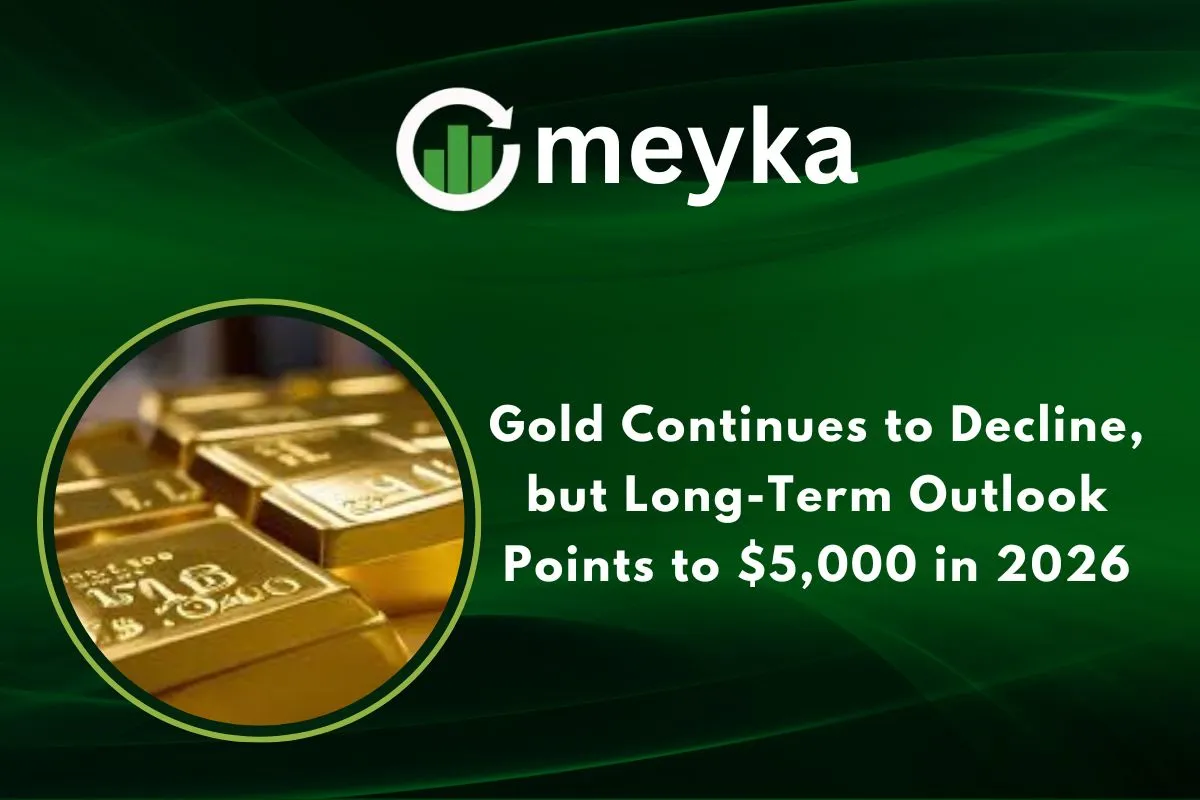
Gold Continues to Decline, but Long-Term Outlook Points to $5,000 in 2026

Gold has dipped recently, leaving many of us uneasy. After a remarkable run, the price is pulling back, yet big institutions still see a dramatic rise ahead. HSBC, for example, now predicts gold could hit $5,000 per ounce by mid‑2026. Why such a bold call? According to HSBC, a mix of global risks, geopolitical tensions, rising public debt, and economic uncertainty is pushing more investors into gold’s safe-haven net. The bank also raised its average gold price forecast for 2025 to $3,455/oz (from $3,355), and for 2026 to $4,600/oz (up from $3,950). At the same time, new players are entering the gold market, such as retail investors and ETFs, helping to drive demand higher. HSBC believes many of these buyers will stay invested even after a rally, not just for gains but for diversification and protection.

Why Is Gold Falling Now?

Even though big banks are eyeing $5,000, gold’s near-term drop reflects some real pressures:

  • Interest rates: Higher U.S. interest rates make non-yielding gold less attractive.
  • Strong U.S. dollar: A powerful dollar makes gold more expensive for foreign buyers.
  • Profit-taking: After big gains, some investors are locking in profits.
  • Shifting sentiment: As economic data stabilizes, some are rotating back into risk assets.

So, while gold’s long-term story might be strong, these short-term headwinds are enough to cool off momentum for now.

What’s Powering the Long-Term Bullish Case

Here’s why investors like HSBC are so confident in gold’s long-term surge:

  • Geopolitical risk: Ongoing tension in major regions is keeping safe-haven demand alive.
  • Public debt: Rising government debt across the world makes gold more attractive as a hedge.
  • Central bank buying: Central banks continue to add gold to their reserves, which supports structural demand.
  • ETF inflows: Money is flowing into gold ETFs as investors look for non‑correlated assets.
  • Rate cuts expected: Many believe the U.S. Federal Reserve will cut rates down the line, which could boost gold.

This mix of forces could fuel a sustained rally, not just a short-lived surge.

What Do the Experts Say?

HSBC isn’t alone in its bullish view. Other big names have also made strong calls for gold:

  • Bank of America: Part of the bullish camp, tying safe-haven demand and economic uncertainty to rising gold prices.
  • Goldman Sachs: In a more dramatic scenario, Goldman warns that $5,000/oz could happen if the independence of the U.S. Federal Reserve is challenged.

These forecasts rest on a few key assumptions: continued investor demand, central banks remaining active, and macro risks persisting.

Looking Back: Gold’s History Speaks

History offers a useful guide. During past economic crises, like the 2008 financial crash, gold spiked as investors fled to safe assets. Today, some of the same patterns are replaying:

  • High debt levels and political uncertainty are once again pushing gold into the spotlight.
  • Central banks are behaving like long-term buyers, not just traders.
  • Retail interest is growing, which adds more fuel than just institutional flows.

If this rally follows earlier crises, that could make the $5,000 target more than just wishful thinking.

How We Might Invest (If We’re Playing the Long Game)

For long-term investors, gold’s current dip might actually be a chance to build a position. Here are some strategies:

  • Dollar-cost averaging: Instead of buying all in, we can spread purchases over time.
  • Diversify: Use gold as just one part of a broader portfolio (bonds, stocks, real assets).
  • Use ETFs or physical gold: Depending on risk preferences, we can choose safe and liquid ETFs or hold actual bullion.
  • Stay patient: If we believe in the 2026 outlook, short-term drops become less scary.

This way, we’re not trying to time gold’s bottom but rather positioning for a long-term move.

Risks to Watch

That said, investing in gold isn’t risk-free. A few key risks could derail the $5,000 thesis:

  • Volatility: If the rally is fast, there could be big swings.
  • Policy shocks: Unexpected central bank moves, tighter regulation, or an economic surprise could hurt gold.
  • No inflation surge: If inflation cools dramatically, gold’s appeal as an inflation hedge may weaken.
  • Fed surprises: If the Fed doesn’t cut rates, or worse, raises them, gold could suffer.

We need to stay alert and ready to reassess our strategy if things change.

Conclusion

Gold’s recent price drop might worry some, but we think the bigger picture is still very compelling. The major players, like HSBC, are betting on a deep, long-term rally driven by debt, uncertainty, and strong demand. If they’re right, $5,000 per ounce in 2026 isn’t a pipe dream. For long-term investors, now could be one of those rare moments: an opportunity to build a position at the bottom of what could be a powerful bull wave. That said, staying grounded and aware of the risks is just as important as chasing the upside.

FAQS

What is the gold price prediction for 2026?

Some top banks expect gold to hit between $4,000 and $4,900 per ounce by the end of 2026.

What is Goldman Sachs’ gold prediction for 2026?

Goldman Sachs forecasts gold could reach $4,900 per ounce by December 2026, driven by central bank demand.

Is the old price projected to reach $5,000 per ounce by 2026?

Yes, HSBC predicts gold could reach $5,000 per ounce in 2026, citing geopolitical risks and high demand.

Disclaimer:

The content shared by Meyka AI PTY LTD is solely for research and informational purposes. Meyka is not a financial advisory service, and the information provided should not be considered investment or trading advice.

Similar Posts

Leave a Reply

Your email address will not be published. Required fields are marked *