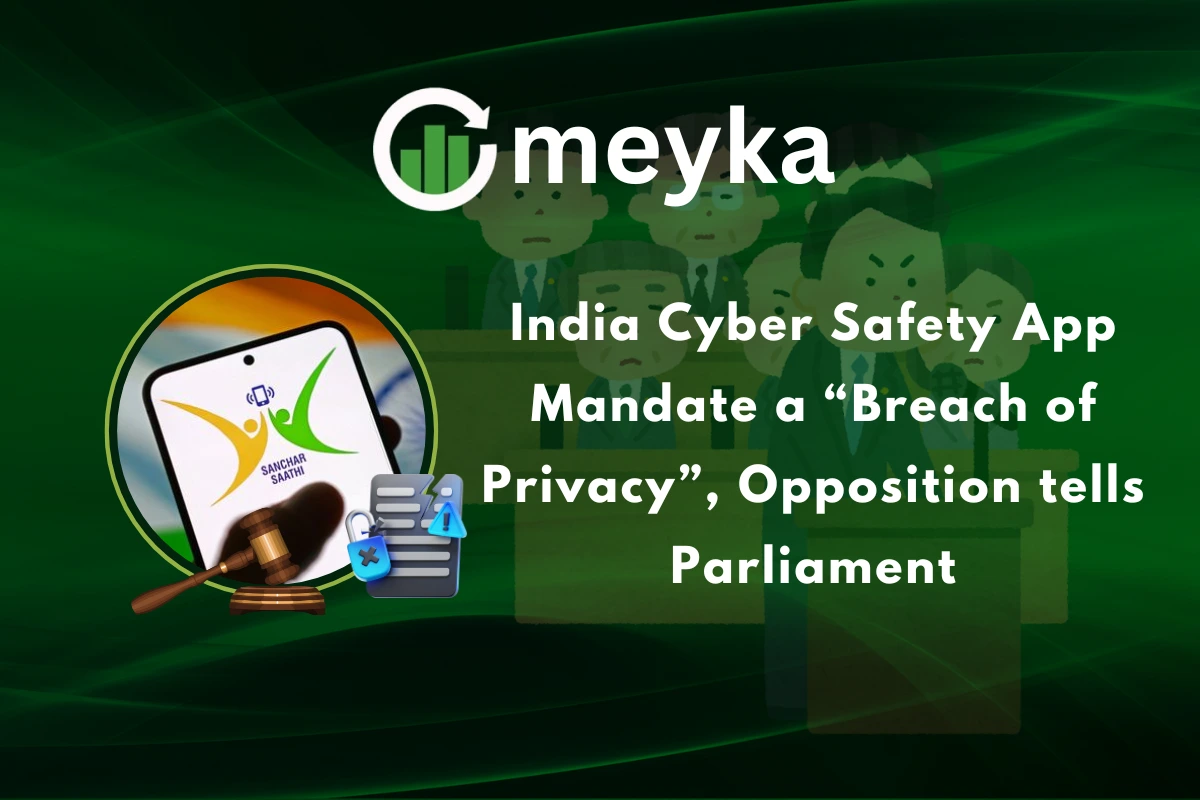
India cyber safety app mandate a “breach of privacy”, opposition tells Parliament
On December 2, 2025, the government of India ordered that every new smartphone sold in the country must come pre-loaded with a state-run cyber-safety app called Sanchar Saathi. The app is meant to help users track stolen phones and curb telecom fraud by verifying device identity and phone connections.
But the move has already triggered sharp criticism. Opponents warn this mandate violates personal privacy. Many see it as forcing government software onto people’s devices without real consent. In Parliament, lawmakers described the directive as a “breach of privacy” and raised alarms about possible surveillance.
As India pushes ahead with this mandate, the debate has opened a wider question: can security and protection from fraud come without risking citizens’ private digital lives?
What the Order Actually Demands (Dec 1-2, 2025)?
On December 1-2, 2025 the Department of Telecommunications (DoT) directed phone makers to pre-install a government app called Sanchar Saathi on all new handsets sold in India. The order gives manufacturers 90 days to comply. The directive also asks for the app to be pushed to existing devices through updates and for the device verification process to be linked to a central IMEI registry.
How Sanchar Saathi Functions and Why it Matters?
The app is billed as an anti-fraud and anti-theft tool. It can verify a phone’s IMEI, help block fake or cloned connections. It also offers a route to report suspicious numbers and connections. The government says this will curb telecom fraud and make second-hand phone sales safer. These features explain the policy push.
Technical Permissions and The Privacy Question
Sanchar Saathi requires device-level permissions on many Android phones. Those permissions can include access to phone identifiers and certain device details. Privacy experts say such access could reveal user behaviour if logs are collected centrally. That is the main technical worry. Not all platforms grant the same permissions, which adds friction for some manufacturers.
Political Reaction: Opposition Calls it a “Breach of Privacy”
Opposition leaders took the issue to Parliament on December 2, 2025. They called the mandate a breach of privacy and a step toward state surveillance. Some MPs described the idea of government software pre-loading on millions of phones as “unconstitutional” and “dystopian.” The charge drew strong headlines and forced rapid clarifications from ministers.
Government Response and Later Clarifications
Officials argue the app is essential to protect citizens from fraud. The ministry said the app will help trace stolen devices and disconnect fraudulently used SIMs. After the political outcry, the communications minister clarified that the app is optional for users and can be uninstalled, while manufacturers must still preload it. That softened stance aimed to reduce the heat but did not remove core privacy concerns.
Legal Stakes: Privacy as a Fundamental Right
India’s Supreme Court recognised privacy as a fundamental right in the Puttaswamy judgment. Any mass data collection or mandatory software that touches personal devices triggers strict tests of necessity and proportionality. Lawyers and civil liberties groups now ask whether the DoT order meets those legal standards. Questions include the limits on data retention, purpose limitation, and independent oversight. No new statutory framework was announced alongside the directive.
What Experts say about Risk and Safeguards?
Cybersecurity researchers acknowledge the app’s potential to stop IMEI cloning and related scams. But they urge transparency. Experts recommend a public privacy impact assessment. They also call for open-source code or third-party audits so independent reviewers can verify what the app actually collects and transmits. Without these safeguards, critics warn, the app might create a single point of failure for user data.
Industry Friction: Manufacturers and Platform Limits
Phone makers will face a complex rollout. Apple has strict rules on preinstalled software in iOS. Other global vendors have voiced concern about security and supply-chain implications. Android device makers face fewer platform limits but must adapt each model and firmware variant. Carriers and retailers also face compliance costs. These practical hurdles explain why the government set a 90-day compliance window.
Public Sentiment and User Behaviour
Public reaction is split. Some consumers welcome extra protection from scams. Others fear that a state app on handsets could be misused to track people. Social media saw both support and alarm on Dec 2-3, 2025, as news spread. Download numbers before the directive showed Sanchar Saathi had modest adoption; the order will increase its footprint regardless of user choice.
Policy Alternatives and Practical Fixes
There are less intrusive ways to pursue the same goals. Make the app optional but incentivise use with clear benefits. Build privacy by design into the app. Limit data collection to hashes or anonymised telemetry and set short retention windows. Introduce independent audits and a grievance redress mechanism. Mandates could focus on validated device registries rather than mandatory software on user devices. These steps would reduce legal and political backlash while still improving telecom security.
Cyber Safety App: What to Watch Next?
Watch for three things over the coming weeks. First, whether major manufacturers comply or seek legal review. Second, any formal privacy impact assessment or audit order. Third, parliamentary moves that could convert the direction into law or require rollback. The debate that began in early December 2025 will shape how India balances digital safety and personal privacy for years to come.
Closing Note
Security and privacy are not mutually exclusive. Both need clear rules. The state can protect users without compromising basic rights. Clarity, oversight, and transparency remain the only reliable ways to build trust when a government asks to touch the phones of millions.
Frequently Asked Questions (FAQs)
The government announced on December 2, 2025, that new phones must include the app. Users can still remove it. The rule is for manufacturers, not forced use for everyone.
The app reads device details to check phone identity. Officials say it does not track personal activity. Critics want clearer rules, since permissions may still raise privacy questions.
The app helps stop phone fraud. It checks IMEI numbers and reports stolen or fake devices. It also alerts users about risky connections. The goal is safer digital use.
Disclaimer
The content shared by Meyka AI PTY LTD is solely for research and informational purposes. Meyka is not a financial advisory service, and the information provided should not be considered investment or trading advice.