Ai Data Center

Palantir–NVIDIA Partnership Aims to Transform AI Data Center Development

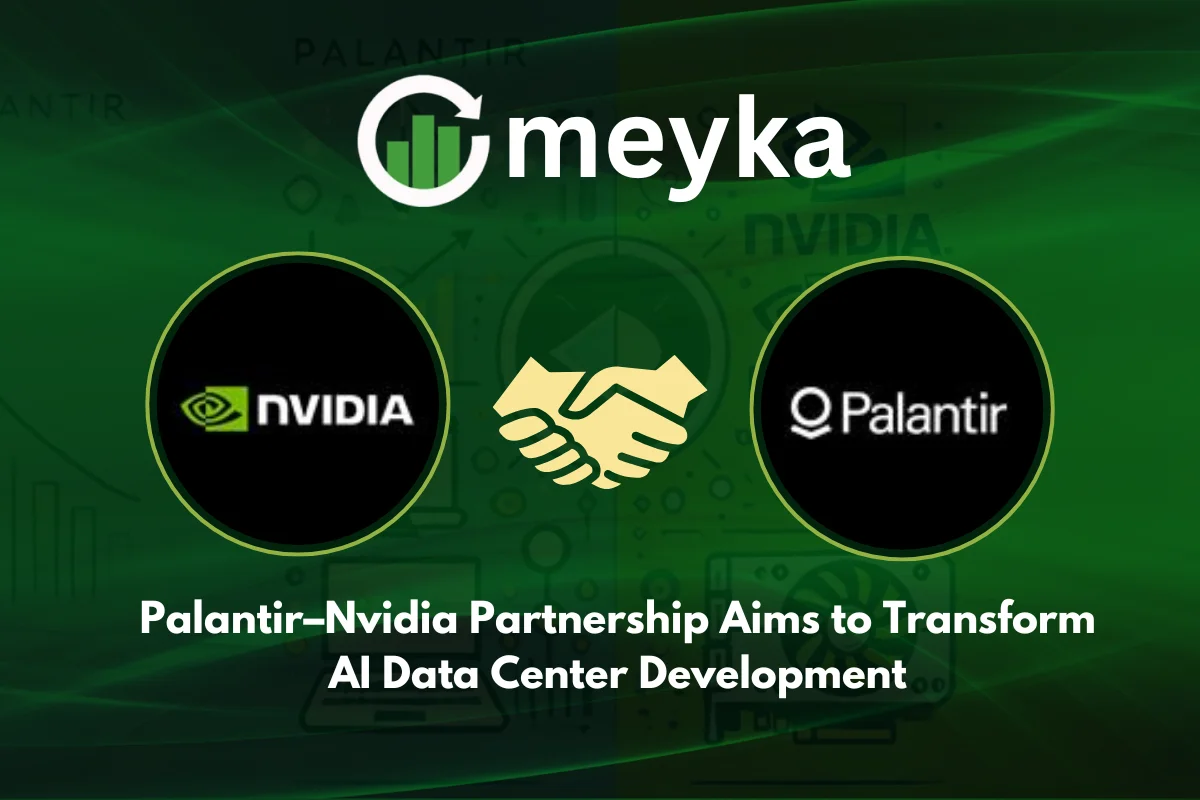
In late 2025, Palantir and NVIDIA announced a powerful new collaboration that aims to accelerate the development and deployment of AI data centers. This move could reshape how companies build and operate large‑scale infrastructure for artificial intelligence workloads. For investors, tech watchers, and enterprises, the rationale behind this partnership reveals why AI data center infrastructure may be the next big frontier in AI.

What Is the Palantir–NVIDIA Partnership About

Palantir and NVIDIA have decided to join forces to build an end‑to‑end infrastructure stack for enterprise AI, blending Palantir’s data‑management and software capabilities with NVIDIA’s leading hardware and GPU‑accelerated computing.

Palantir’s AI platform, known as AIP (Artificial Intelligence Platform) — will now integrate NVIDIA’s CUDA‑X data‑science libraries, GPU‑accelerated computing, and open‑source models such as Nemotron. This integration will allow enterprises and government agencies to build AI applications, analytics tools, and automated decision‑making systems on top of highly optimized computing infrastructure.

The collaboration was unveiled at a major industry event, where both firms described their joint vision: to turn enterprise data into decision intelligence, enabling complex systems, from supply chains and logistics to government operations, to leverage AI at scale.

More recently, the partnership expanded to target the construction and management of full‑scale AI data centers. Under the name Chain Reaction, Palantir, NVIDIA, and energy‑infrastructure firm CenterPoint Energy will coordinate the planning, permitting, power supply, and building of new AI‑optimized data centers — a task that requires synchronization across energy providers, chip manufacturers, construction firms, and utilities.

Why This Matters: The Rise of AI Data Centers

Massive Demand for Compute Power

AI workloads — including training large language models (LLMs), deep learning, real-time analytics, and decision‑making systems — demand vast compute power. Traditional data centers, built for standard cloud computing, are often not optimized for these GPU‑heavy, high‑compute tasks. As AI adoption grows globally, companies need specialized infrastructure capable of handling these loads efficiently.

With Palantir and NVIDIA combining software and compute, they offer a one‑stop solution for enterprises seeking to deploy scalable, high‑performance AI infrastructure. This could speed up the adoption of AI across industries like retail, healthcare, manufacturing, government, and logistics.

Efficiency Through Integration

By fusing Palantir’s data‑management and logic workflows with NVIDIA’s GPUs and optimized libraries, the new stack promises greater efficiency. Enterprises can deploy AI workloads more reliably, process large datasets faster, and manage infrastructure complexity — from energy supply and cooling to compute scheduling — in a unified way. This integration lowers barriers to entry for companies that may not have in‑house AI infrastructure expertise.

Solving Energy and Infrastructure Challenges

Building AI data centers is more than installing servers: power supply, electricity demand, cooling, permitting, and grid infrastructure all matter. The Chain Reaction platform aims to manage these complexities by coordinating between utilities (like CenterPoint Energy), chip suppliers, and data‑center builders.

This is an important development because AI centers often require energy levels comparable to those of small cities. Without proper coordination, supply‑chain delays or power bottlenecks can derail buildouts. The partnership seeks to avoid those pitfalls by using AI‑driven planning and logistics.

Strategic Advantage for AI‑Focused Enterprises

Organizations adopting AI at a large scale — for example, enterprises building internal analytics platforms, governments upgrading digital infrastructure, or global retailers optimizing logistics, will benefit from a ready-made, scalable infrastructure stack. Instead of piecemeal procurement of chips, servers, and software, they get an integrated solution optimized for AI workloads. This reduces time to production, lowers scaling costs, and improves reliability.

For Palantir and NVIDIA, this could translate into a powerful growth engine, as demand for AI infrastructure expands worldwide.

What It Means for Investors and the Stock Market

For those tracking AI stocks, the Palantir–NVIDIA partnership positions both firms not just as software or chip vendors, but as critical infrastructure providers for the AI era.

  • Diversified revenue streams: Palantir, traditionally known for data software and enterprise analytics, now taps into infrastructure buildouts and data-center operations. NVIDIA, already strong in hardware sales, extends its reach into integrated AI services and infrastructure.
  • Long‑term growth potential: As demand for data‑intensive AI services grows globally, companies offering end‑to‑end infrastructure solutions may capture significant market share. This could lead to sustainability and growth in revenues beyond one‑off software licenses or chip sales.
  • Reduced dependency on single products: By combining strengths, Palantir and NVIDIA reduce risk related to changing market sentiment or sector cycles. Their joint infrastructure offering may prove more resilient, especially if AI adoption spreads widely across industries.
  • Valuation upside if execution succeeds: The promise of scalable AI infrastructure could re‑rate both stock valuations, especially as enterprises increasingly invest in AI adoption and cloud‑data transformation.

For investors doing stock research, this collaboration signals a potential shift in how we value companies: not just by AI models or software features — but by their ability to build, manage, and scale the physical and software infrastructure behind those models.

Challenges and What to Watch Out For

This opportunity, while substantial, also comes with risks:

  • Execution complexity: Coordinating energy providers, chip supply, construction, and infrastructure buildouts is complicated. Delays, regulatory hurdles, or supply‑chain issues could slow progress.
  • High capital requirements: Building AI‑optimized data centers requires significant upfront capital — for power, cooling, computing hardware, and real estate. Return on that investment depends heavily on adoption rates.
  • Competition from other cloud and AI infrastructure providers: There are established players in cloud computing and data centers. Palantir and NVIDIA must deliver clear performance advantages in cost, efficiency, and reliability to win business.
  • Regulatory and energy constraints: Energy consumption, environmental impact, and local regulations (permits, zoning, sustainability) may create obstacles for large‑scale AI data‑center buildouts.
  • Dependence on AI adoption growth: If adoption of heavy AI workloads slows — due to economic downturns, regulatory pushback, or technological shifts — demand for these data centers may not reach projected levels.

Investors should weigh these risks when evaluating the long‑term potential of Palantir, NVIDIA, or companies offering similar infrastructure services.

What to Watch Next — Key Milestones

To assess whether the Palantir–NVIDIA AI data center initiative succeeds, look for:

  1. New contract announcements: Large enterprise or government customers using the integrated stack to build AI data centers or infrastructure.
  2. Evidence of AI‑center build‑outs: Public declarations of data center construction powered by Chain Reaction, including partnerships with utilities and real estate developers.
  3. Financial disclosures: Revenue growth tied to infrastructure services — not just software or chip sales, but recurring income from maintenance, energy management, or hosting.
  4. Performance benchmarks and case studies: Demonstrations showing that the integrated stack significantly improves AI workload performance, energy efficiency, or deployment speed.
  5. Broader industry adoption: If multiple industries — healthcare, retail, logistics, government — begin adopting this approach, it’ll indicate the model scales beyond niche use cases.

Conclusion

The Palantir–NVIDIA partnership marks a major step toward building the backbone of the AI revolution: not just software or models, but the infrastructure, hardware, data centers, energy, and logistics, needed to power large‑scale AI applications.

By combining Palantir’s data‑centric AI platform with NVIDIA’s GPU‑accelerated computing and integrating infrastructure planning with power utilities, the collaboration aims to solve real problems that have slowed AI adoption at scale.

For investors and companies looking to ride the AI wave, this move could offer a powerful entry point. If executed well, it could transform how enterprises build, deploy, and manage AI, making AI data center infrastructure the next frontier in the AI‑driven world.

FAQs

What exactly is meant by “AI data center” in this context?

An “AI data center” refers to specialized data centers built to support heavy AI workloads — with powerful GPUs or AI‑specific hardware, optimized cooling and power supply, and software infrastructure designed for high‑performance computing, data analytics, and AI model training or inference.

Why is the Palantir–NVIDIA partnership unique compared to traditional data‑center providers?

Unlike traditional providers, this collaboration integrates software (data workflows, analytics, AI platforms), hardware (GPUs, accelerated computing), and infrastructure planning (power supply, permits, construction logistics). This unified stack simplifies deployment and optimizes performance for AI workloads.

Who stands to benefit most from these AI‑optimized data centers?

Large enterprises using AI — such as retailers managing supply chains, healthcare providers analyzing data, government agencies running complex systems, and AI-first startups — stand to benefit. They can deploy scalable, efficient infrastructure faster than building it themselves.

Disclaimer:

The content shared by Meyka AI PTY LTD is solely for research and informational purposes. Meyka is not a financial advisory service, and the information provided should not be considered investment or trading advice.

Similar Posts

Leave a Reply

Your email address will not be published. Required fields are marked *