Trump Address

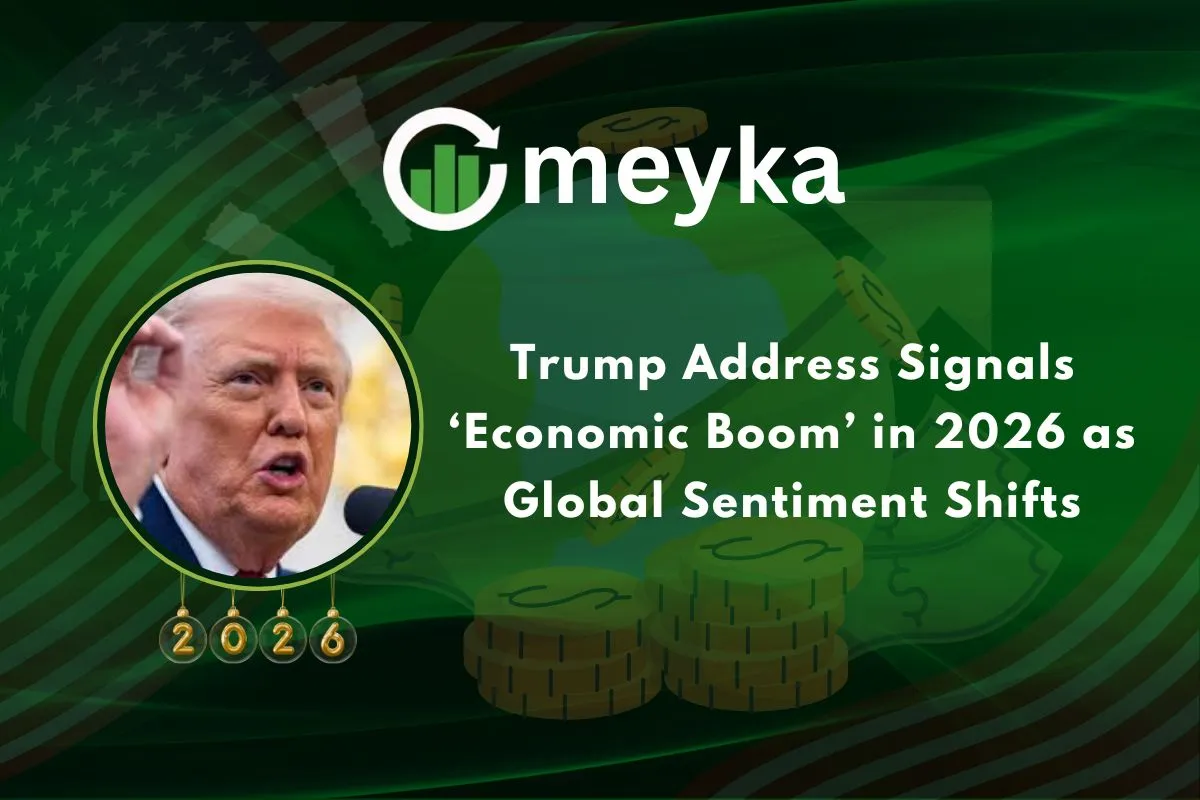
Trump Address Signals ‘Economic Boom’ in 2026 as Global Sentiment Shifts

In December 2025, U.S. President Donald Trump addressed the nation with a bold message. He said America is moving toward an economic boom in 2026. The statement quickly caught global attention. Markets reacted. Analysts debated. Investors listened closely.

Economic signals already feel mixed. Inflation has eased from earlier highs. Hiring has slowed in some sectors. Yet business investment and stock markets remain strong. Against this backdrop, Trump’s words landed at a critical moment. They came as global confidence shifted and major economies rethought growth plans.

His address was not just about numbers. It focused on confidence, control, and direction.  Supporters see a turning point. Critics see political timing. Outside the U.S., governments and investors are watching closely. What happens next could shape trade, markets, and global sentiment.

The key question now is simple. Does the data support the optimism? Or is the boom still a promise waiting to be tested?

Trump’s Economic Claims from the Address 

On December 17, 2025, President Donald Trump delivered a prime-time address. He said the U.S. is headed for an“unprecedented economic boom” in 2026. Trump pointed to falling prices, stronger paychecks, and rising business investment. He also announced a $1,776 “warrior dividend” for military service members. The speech credited tariff revenue for funding some new payouts. The president framed these moves as proof that his policies are already lifting living standards.

Trump Address Dec, 2025: Fact-Checking the Boom Narrative

Many of the claims in the address do not line up cleanly with public data. Independent fact-checkers flagged selective use of numbers and overstated comparisons. Some price measures have eased from peak levels. Yet headline inflation remains sticky in parts of the economy. Job growth has slowed in recent months compared with earlier 2025 gains. 

Analysts caution that short-term market moves do not equal a durable boom. The FactCheck summary and other outlets parsed the president’s statistics and found several claims that need more context. For example, a drop in some consumer prices does not mean broad affordability has returned.

FRED Source: CPI Numbers Overview from last 10 Years

Official data timing matters. The Bureau of Labor Statistics scheduled the November 2025 CPI release for December 18, 2025, one day after the address. That sequence left little time to use the final federal data to support the speech’s broad assertions. Traders and economists, therefore, read the remarks as forward-looking political messaging as much as an economic update.

The Tariff-Driven Strategy and Its Limits

Tariffs are central to the administration’s pitch. The White House argues tariffs boost revenue and protect domestic jobs. The address tied some new benefits to tariff receipts. But economic research shows tariffs can raise costs for consumers and firms.

Estimated Price Effect of Tariffs by Product Category with Perfect Pass-through

The Federal Reserve branch analysis and academic studies indicate that tariffs push up input costs. That effect often filters into consumer prices over months. Several research bodies warn that large, sustained tariffs risk lowering investment and slowing trade-driven growth. The St. Louis Fed and other analyses show measurable upward pressure on prices from tariffs enacted in 2025.

Markets responded unevenly to tariff headlines earlier in 2025. Sharp tariff announcements have triggered market dips and volatility. Some corporate executives have said tariffs complicate supply chains and raise costs. The net effect is a mixed picture: tariffs raise government revenue but also create headwinds for growth and consumer buying power.

Global Context and Shifting Sentiment

Global forecasts do not yet back an “unprecedented” U.S. boom. The OECD’s December 2, 2025, outlook projected global growth to slow slightly in 2026 and warned that higher effective tariff rates will weigh on trade and investment. The OECD projected U.S. growth to moderate from 2.0% in 2025 to about 1.7% in 2026. That projection suggests a softer path than the administration’s rhetoric implies. In sum, international bodies see resilience, not a sudden surge.

Official Source: OECD Estimation of GDP by Country, including the US

At the same time, pockets of optimism exist. Tech firms continue major capital spending. Equity markets have shown pockets of strength tied to AI and cloud investment. Some investors and strategists argue that productivity gains from new technology could lift output later in 2026. Still, these gains are uneven across sectors and will not automatically translate into broad wage gains for all households.

Political Timing and the Message

The timing of the address was notable. It arrived amid political pressure on the administration’s handling of affordability and approval ratings. Observers described the speech as partly campaign messaging. The announced military dividend and talk of tariff-funded checks carry clear political appeal. Critics argue the moves are short-term attempts to shift public focus ahead of next year’s electoral tests. The speech blurred policy details and political tone in ways that fact-checkers and opponents highlighted.

What 2026 Could Actually Look Like: Risks and Upside

Upside scenarios rely on a few clear factors. First, if inflation continues to ease, real incomes could rise. Second, if private investment, especially in AI and infrastructure, keeps expanding, productivity could improve. Third, if trade frictions stabilize, supply chains may settle, and growth could accelerate. Some analysts using AI tool models point to productivity gains in specific sectors that could lift corporate profits and markets. But these scenarios require steady policy execution and external stability.

Risks are real. Tariff pass-through to consumer prices could erode household purchasing power. A downturn in global demand would hit export-oriented industries. Slower hiring or a surprise tightening in financial conditions could further weaken domestic demand. The OECD warned of these fragilities and the chance that growth slows before picking up again. Given those risks, a headline “boom” is not the most likely immediate outcome.

Bottom Line: Measured Optimism, Not Certainty

The Trump address painted an optimistic path for 2026. Reality looks more nuanced. Some metrics have improved since the inflation peak. Other measures still lag. Tariff revenues can fund short-term payouts. But tariffs also carry costs that tend to emerge later. 

Global forecasts expect modest growth with notable downside risks. Readers should monitor key data points in early 2026 GDP revisions, the employment series, and CPI prints to gauge whether the optimism turns into broad, sustained gains. For now, the claim of an “unprecedented boom” is aspirational rather than proven.

Frequently Asked Questions (FAQs)

Will Trump’s economic policies cause a real boom in 2026?

Trump says the U.S. will see strong growth in 2026 after his speech on December 17, 2025. Some experts see mild growth, not a big boom. Growth may rise moderately but not skyrocket.

How will Trump’s tariffs affect U.S. inflation and jobs in 2026?

Tariffs may raise prices on many goods and cause inflation above desired levels. Some firms may slow hiring. Inflation and jobs could stay mixed through 2026.

Is the U.S. economy improving after the Trump address?

After Dec 17, 2025, some indicators show slight improvement. But many economists still see weakness, cautious hiring, and inflation risks. The recovery is not clear or strong yet. 

Disclaimer

The content shared by Meyka AI PTY LTD is solely for research and informational purposes. Meyka is not a financial advisory service, and the information provided should not be considered investment or trading advice.

Similar Posts

Leave a Reply

Your email address will not be published. Required fields are marked *