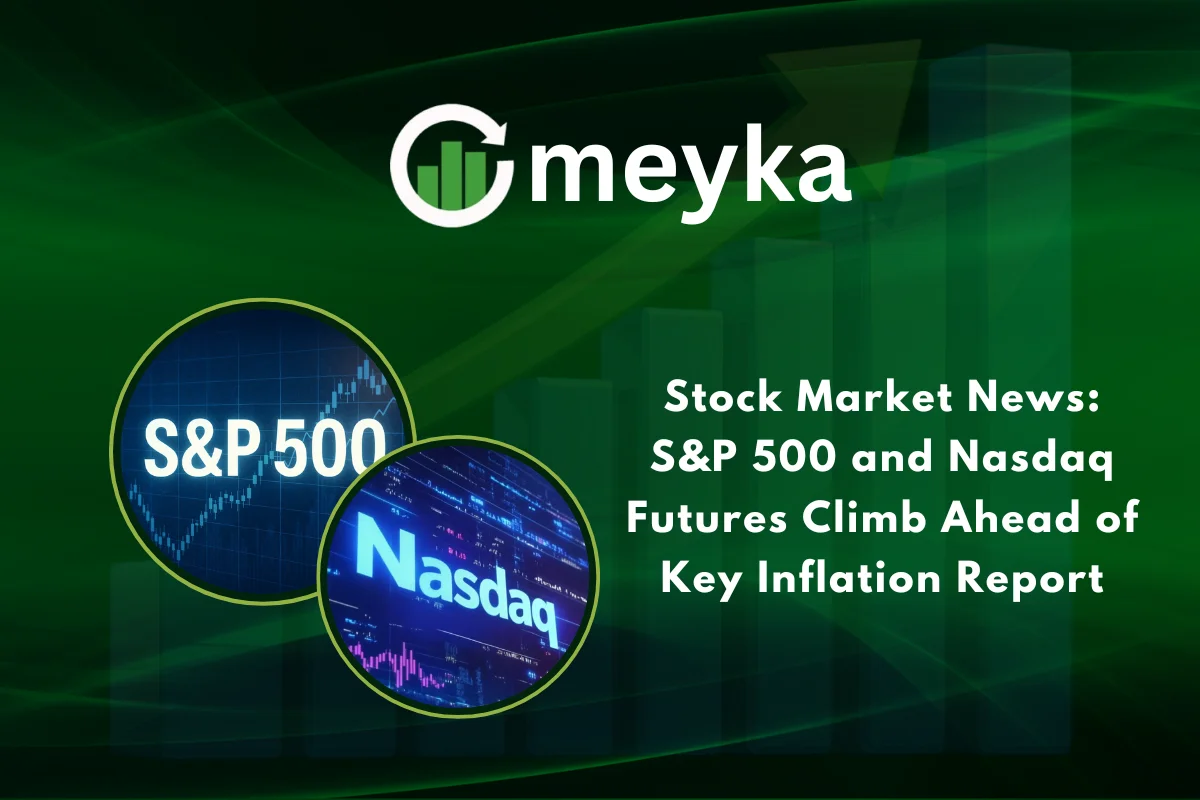
Stock Market News: S&P 500 and Nasdaq Futures Climb Ahead of Key Inflation Report
U.S. stock market futures moved higher as investors positioned themselves ahead of a crucial U.S. inflation report that could shape market direction in the near term. Futures linked to the S&P 500 and Nasdaq showed clear gains during early trading hours, reflecting cautious optimism across global financial markets. Traders are closely watching inflation trends because they directly influence interest rate expectations, corporate earnings outlooks, and overall investor sentiment.
The positive movement in futures suggests that market participants expect inflation data to remain manageable rather than showing a sharp acceleration. This expectation has encouraged selective buying, particularly in growth-oriented sectors, even as investors remain alert to sudden shifts once official data is released.
Why Futures Matter Before Market Open
Futures contracts act as an early signal of how investors expect the market to perform once regular trading begins. When S&P 500 and Nasdaq futures climb, it often reflects confidence that upcoming economic data will not disrupt current market momentum.
However, futures do not guarantee how the market will perform throughout the day. They mainly capture short-term expectations. Professional traders and long-term investors usually combine futures signals with economic indicators, earnings trends, and broader stock research to make informed decisions.
Inflation Report at the Center of Attention
The upcoming inflation report has become the main focus for investors worldwide. Inflation data provides insight into price pressures across the economy, including food, energy, housing, and services. Persistent inflation can push central banks to keep interest rates higher for longer, while cooling inflation may open the door for policy easing.
Markets have shown sensitivity to inflation releases over the past year. Even small deviations from expectations can cause sharp movements in equity indexes. As a result, investors are approaching this report with both optimism and caution.
Impact on Interest Rate Expectations
Interest rates remain a critical driver of market performance. If inflation shows signs of slowing, investors may increase bets on future rate cuts, which generally support equity valuations. Lower rates reduce borrowing costs for companies and consumers, helping economic growth.
On the other hand, stronger than expected inflation could reinforce a cautious stance from policymakers. This scenario might limit near term upside in the stock market, especially for high valuation sectors that depend heavily on low interest rates.
Nasdaq Strength Driven by Technology Optimism
The Nasdaq futures outperformed the broader market, reflecting renewed confidence in technology stocks. Many Nasdaq-listed companies are linked to innovation themes, including artificial intelligence, cloud computing, and advanced semiconductors.
Interest in AI stocks continues to shape market trends. Investors believe that long term demand for AI-related products and services could support earnings growth even during periods of economic uncertainty. This belief has helped cushion technology shares against broader market volatility.
S&P 500 Gains Show Broad-Based Confidence
While the Nasdaq led gains, S&P 500 futures also moved higher, indicating broader market participation. The S&P 500 includes companies from various sectors such as healthcare, financials, energy, and consumer goods. Rising futures suggest that optimism is not limited to technology alone.
This broader confidence may reflect improving views on corporate profitability and consumer resilience. Investors appear willing to hold risk assets while waiting for confirmation from inflation data.
Global Market Influence
U.S. futures are also influenced by global developments. Overseas markets in Europe and Asia showed mixed performance as investors balanced local economic data with expectations for U.S. inflation. Since the U.S. plays a central role in global finance, its inflation trends often impact currencies, commodities, and equities worldwide.
A stable U.S. inflation outlook can improve global risk appetite, encouraging capital flows into equities and other growth assets.
Volatility Still a Key Risk
Despite the positive tone in futures, volatility remains a concern. Markets have experienced sudden swings in recent months due to changes in economic expectations, geopolitical developments, and shifts in central bank messaging.
Experienced investors often avoid making aggressive moves ahead of major data releases. Instead, they focus on risk management and diversification, recognizing that short-term reactions can reverse quickly once actual numbers are known.
How Investors Are Positioning
Ahead of the inflation report, many investors are maintaining balanced portfolios. Some are increasing exposure to quality stocks with strong balance sheets, while others prefer defensive sectors that can withstand economic uncertainty.
Those involved in detailed stock research are paying close attention to inflation-sensitive industries such as energy, financials, and consumer discretionary. Performance in these sectors often provides clues about how inflation is affecting real economic activity.
What to Watch After the Data Release
Once the inflation figures are released, attention will shift to market reaction rather than the numbers alone. How bond yields move, how the dollar responds, and which sectors lead or lag will offer important signals.
If markets respond calmly, it may suggest that inflation is aligning with expectations. Sharp moves, however, could indicate that investors are reassessing their outlook for interest rates and economic growth.
Outlook for the Stock Market
The rise in S&P 500 and Nasdaq futures highlights cautious optimism ahead of a key economic event. While futures suggest a positive start, the broader trend will depend on inflation results and how policymakers interpret them.
For now, the stock market remains driven by a mix of economic data, technology growth stories, and interest rate expectations. Investors who stay informed and disciplined are better positioned to navigate short term uncertainty while keeping an eye on long term opportunities.
FAQs
Futures rise when investors expect inflation to be stable or supportive of current interest rate policies, which can benefit equities.
Not always, Nasdaq gains often reflect optimism around technology and AI stocks, but these shares can still be volatile after major data releases.
Many investors prefer to wait for confirmed data and market reaction, using futures as a guide rather than a final decision tool.
Disclaimer:
The content shared by Meyka AI PTY LTD is solely for research and informational purposes. Meyka is not a financial advisory service, and the information provided should not be considered investment or trading advice.