After US plea deal, Binance still failed to stop suspicious crypto movements: FT
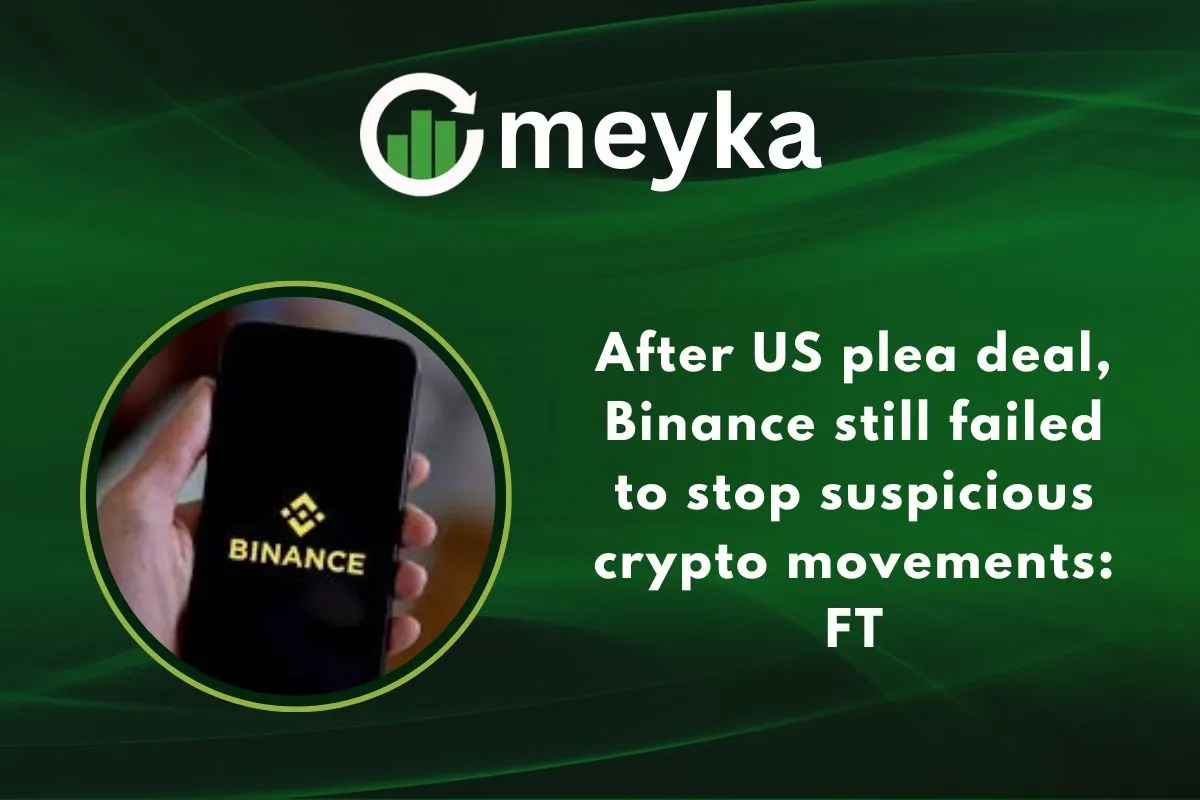
Binance, the world’s largest crypto exchange by trading volume, is widely used for buying, selling, and swapping digital assets. Despite its size, compliance with global financial rules remains a concern. A recent Financial Times investigation revealed that Binance allowed hundreds of millions in suspicious transactions even after a $4.3 billion U.S. settlement, raising alarms for investors and regulators.
What Was the US Plea Deal All About?
- $4.3 Billion Penalty: In late 2023, Binance agreed to pay $4.3 billion to U.S. authorities. One of the largest fines in AML and sanctions history.
- Reason for Penalty: Regulators said Binance failed to stop illicit flows tied to ransomware, scams, and even terrorist financing.
- Compliance Promises: Binance committed to:
• Improve anti-money-laundering (AML) systems
• Monitor suspicious transactions more closely
• Report suspicious activity to U.S. authorities - Significance: Seen as a turning point, moving from lax controls to bank-grade compliance. Analysts call it a test case for how regulators handle major crypto exchanges.
But Suspicious Transactions Continued Anyway
- Ongoing Risk: Even after the $4.3 billion settlement, Binance reportedly processed hundreds of millions in suspicious crypto transactions.
- Red-Flagged Accounts: Some accounts that triggered warnings kept moving large sums without interruption.
- High-Value Example: One account, linked to a Venezuelan resident, transferred roughly $93 million during this period.
- Types of Red Flags: Unusual login locations, failed identity checks, and transactions linked to parties later alleged to have terrorist connections.
- Compliance Gap: In regular banks, these patterns would trigger freezes or investigations. At Binance, these controls were inconsistent, allowing risky transactions to continue for months.
Why Is This Happening?
- Massive Transaction Volume: Binance processes millions of trades and transfers every day. Monitoring each one in real time is harder than in traditional banking.
- Crypto Complexity: Cryptocurrency moves quickly across wallets and borders. It can bypass usual identity markers, making tracking difficult and costly.
- Time-Intensive Compliance: Policies are one thing; real-world enforcement across millions of accounts is another. Full implementation takes time.
- Resource Gaps: Analysts suggest Binance initially didn’t allocate enough staff to compliance teams, leaving suspicious accounts unchecked.
Binance Says It’s Taking Action, But Critics Aren’t Convinced
- Public Commitment: Binance says it is dedicated to stopping illicit activity on its platform.
- Tools in Use: The company uses advanced monitoring systems, real-time risk engines, and AI tools to detect and prevent fraud before it happens.
- Reported Impact: Binance claims it prevented over $2.4 billion in potential losses from scams and fraud in 2024 by flagging suspicious transfers early.
- Critics’ View: Analysts say these measures may not fully stop high-value or sophisticated transfers conducted by professional criminals or organized groups.
- Internal Challenges: Former compliance staff report that teams weren’t empowered to investigate serious cases, leaving them focused on smaller transactions.
According to a Binance Spokesperson it says:
“We take compliance seriously and reject the framing of the Financial Times report. Transactions are assessed based on information available at the time. None of the wallets referenced were sanctioned when the activity referenced by the Financial Times occurred. Binance operates under the highest standards of AML, sanction screening, and law enforcement cooperation, and since 2023 Binance has operated under independent monitorship oversight. Binance complies with all relevant financial sanctions. Compliance and user safety remain our highest priority.“
What This Means for Crypto Markets
- Investor Confidence: Compliance gaps can shake trust among investors.
- Global Scrutiny: Countries like India, Nigeria, and South Africa are tightening crypto rules.
- AML Challenges: Regulators stress that exchanges must actively enforce rules, not just promise compliance.
The Broader Picture: Binance and Compliance Globally
- Canada: Fined Binance for registration and transaction reporting failures.
- France: Launched a probe into possible money laundering and fraud.
- India: Financial Intelligence Unit reviewed AML compliance at major crypto firms.
- Key Insight: Governments worldwide expect big crypto platforms to follow rules like traditional banks.
Where Binance Goes From Here
- Crypto Expansion: Binance will continue pushing for wider adoption.
- Compliance Focus: Must prove it can meet global regulatory standards.
- Key Steps:
• Upgrade monitoring and reporting systems
• Strengthen internal compliance teams
• Maintain clear communication with authorities
• Be transparent about handling suspicious activity - Uncertain Outcome: It’s still unclear if Binance can fully deliver on these promises.
Conclusion
The Financial Times report shows that even after a major $4.3 billion U.S. plea deal, Binance still failed to stop large flows of suspicious crypto activity. For many, this raises serious concerns about whether crypto exchanges can be trusted to enforce AML and sanctions rules the way traditional financial institutions do. Binance is crucial to the crypto ecosystem. But if it wants to be seen as a compliant and responsible player, it has to do more than settle with regulators; it must prove its systems can actually stop illicit flows in real time. Only then will investors and the broader financial system start to trust crypto for the long term.
FAQS
Binance agreed to pay $4.3 billion in late 2023 to U.S. authorities for AML and compliance failures. It is committed to stronger monitoring and reporting of suspicious transactions.
Even after the settlement, internal documents revealed hundreds of millions in suspicious transactions continued, including transfers linked to red-flagged accounts.
Compliance gaps can shake investor confidence and lead to stronger global regulation, as seen in countries like India, Nigeria, and South Africa.
Binance uses AI tools, real-time risk engines, and monitoring systems. It claims to have prevented $2.4 billion in potential fraud in 2024, but critics say high-value transfers may still go unchecked.
Disclaimer:
The content shared by Meyka AI PTY LTD is solely for research and informational purposes. Meyka is not a financial advisory service, and the information provided should not be considered investment or trading advice.