BSE Sensex

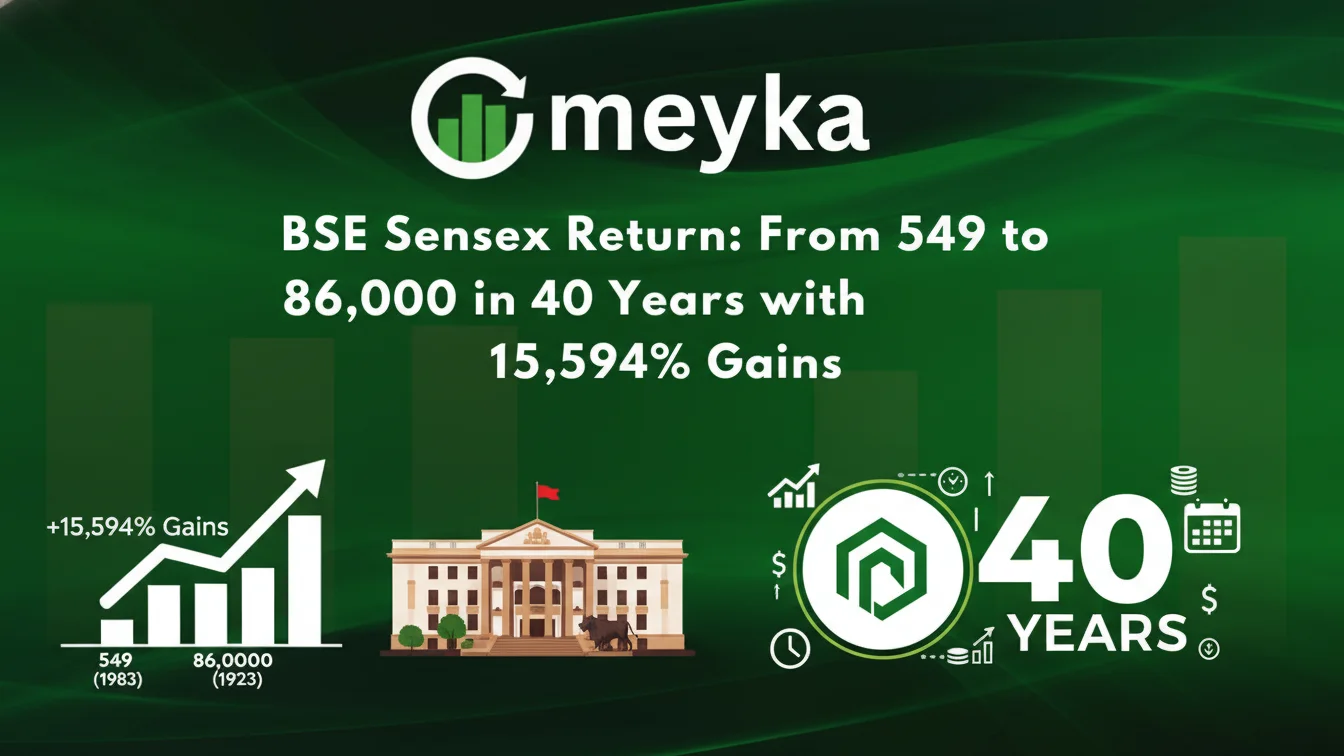
BSE Sensex Return: From 549 to 86,000 in 40 Years with 15,594% Gains

The BSE Sensex stands as one of the most remarkable stories of wealth creation in global financial history, growing from a modest starting level of about 549 points in its early phase to roughly 86,000 points over four decades of market evolution. This extraordinary performance has delivered remarkable long-term returns to patient investors, underscoring the power of compounding, economic reforms, and the expanding footprint of India’s equity markets.

What Is the BSE Sensex and Why It Matters

The BSE Sensex, also known as the Sensitive Index, is India’s premier benchmark index representing 30 of the largest and most actively traded companies listed on the Bombay Stock Exchange. It was first published on 1 January 1986 with a base value that tracked back to a base year of 1978–79.

Over time, the Sensex has become the pulse of the Indian stock market, reflecting investor confidence, domestic economic trends, corporate earnings growth, and global capital flows. The performance of this index influences consumer sentiment, retirement portfolios, mutual funds, and even policymakers who gauge economic vibrancy through its trends.

A Journey of Explosive Growth: 549 to 86,000

From around 549 points in its early years, the BSE Sensex has ascended to approximately 86,000 points over a 40-year period, representing an astonishing 15,594% return to long-term investors.

This means an investment of even a modest amount of capital at the start of the Sensex’s journey would have multiplied many times over by the present day for investors who remained committed through market cycles. The long-term compound growth reflects sustained economic development, expanding private enterprise, and increasing participation in the stock market from both domestic and foreign investors.

In fact, comparative data show that the Indian market’s growth rate has consistently outpaced several major global indices over the same period.

Understanding the Returns: The Power of Compounding

The most striking feature of the BSE Sensex return story is the power of long-term compounding. Over 40 years, compounding transformed market gains into exponential wealth creation. This underscores a fundamental principle of equity investing: time in the market often matters far more than timing the market.

Compounded returns help investors absorb short-term volatility and benefit from the long-term upward trend of corporate earnings and economic growth. When dividends are reinvested, total returns can be even higher, delivering compounded wealth far beyond capital appreciation alone.

Key Historical Milestones of the Sensex

The Sensex has passed numerous milestones on its upward trajectory. Some of the key inflection points include:

  • The early 1990s market liberalisation reforms that opened India’s economy and financial markets.
  • The technology boom around the late 1990s and early 2000s that lifted investor optimism.
  • Recoveries following market downturns such as the 2008 global financial crisis and the 2020 pandemic-induced selloff.
  • Record highs in recent years driven by domestic consumption growth, corporate earnings expansion, and healthy capital flows.

Each of these phases contributed to expanding investor participation and strengthening India’s capital markets.

Comparing Sensex Growth with Global Markets

When we compare the growth of the BSE Sensex with major global indices such as the Dow Jones Industrial Average or Nikkei 225, the Indian benchmark has delivered superior returns over the last 40 years. Analysts suggest that this outperformance largely reflects the underlying potential and long-term economic growth story of the Indian economy.

This strong relative performance is significant for global investors seeking diversified exposure outside traditional markets, especially in an era where emerging markets play a larger role in global capital flows.

What Drives the Sensex’s Long-Term Growth

Several structural and macroeconomic factors have helped sustain the impressive rise of the Sensex:

  1. Economic Reform and Liberalisation: Policy reforms in the 1990s improved market accessibility and encouraged private enterprise.
  2. Demographic Dividend: A growing working-age population has driven consumption growth, business expansion, and investment demand.
  3. Corporate Earnings Expansion: India’s leading companies have grown revenues and profits over decades, supporting higher valuations.
  4. Financialisation of Savings: More households and institutions are investing in equities, boosting market depth and liquidity.
  5. Global Capital Inflows: Foreign investment has helped strengthen markets, increase valuations, and enhance global investor interest.

Together, these components have powered long-term equity returns that benefit index-linked investments and diversified portfolios.

Lessons for Long-Term Investors

History suggests that patient investors who maintain a disciplined approach and diversify their holdings tend to benefit more than those who chase short-term gains. The Sensex’s journey illustrates essential lessons:

  • Stay invested: Long-term holdings help riders absorb volatility.
  • Diversify: Spreading risk across sectors improves resilience.
  • Use disciplined strategies: Techniques like systematic investment plans help smooth market timing risks.

These lessons are useful for anyone building their financial future through equity markets.

AI Stocks and the Role of Tech in Modern Portfolios

As the market evolves, new sectors such as AI stocks have emerged as potential drivers of future growth. While the Sensex comprises established large-cap companies, the broader stock market continues to diversify with technology firms and innovation-driven enterprises gaining prominence.

For investors conducting stock research, understanding how AI, data analytics, and digital transformation influence future corporate earnings is becoming more important. These themes tie into long-term market trends shaping modern portfolios.

A Look Ahead: What’s Next for the Sensex

Looking ahead, analysts are optimistic about further growth potential in Indian markets. Economic growth forecasts, increasing domestic investment, and strong corporate performance could continue to support the BSE Sensex.

However, investors should remain mindful of market cycles, valuation risks, and macroeconomic shifts that can influence short-term performance even as the long-term trend remains positive.

FAQs

What does the BSE Sensex represent?

The BSE Sensex is an index of 30 major publicly traded companies on the Bombay Stock Exchange that reflects overall market performance and investor sentiment.

How has the BSE Sensex returned 15,594% over 40 years?

The Sensex’s monumental return reflects long-term economic growth, corporate earnings expansion, and compounded reinvestment of profits that helped the index rise from about 549 points to over 86,000 points.

Can long-term investors benefit from the Sensex today?

Yes, long-term investors who adopt disciplined investment strategies and stay invested through market cycles can benefit from the historical trend of wealth creation in the Sensex and broader stock market.

Disclaimer:

The content shared by Meyka AI PTY LTD is solely for research and informational purposes. Meyka is not a financial advisory service, and the information provided should not be considered investment or trading advice.

Similar Posts

Leave a Reply

Your email address will not be published. Required fields are marked *