H-1B Visa

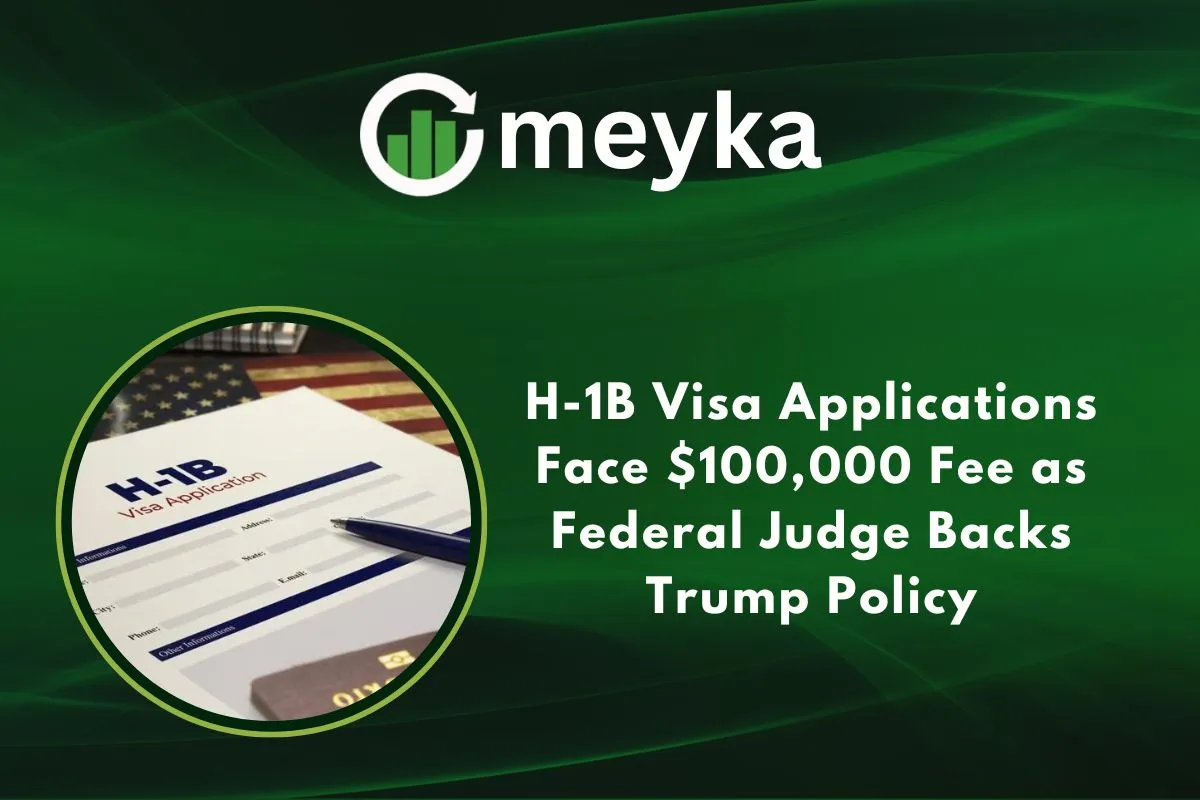
H-1B Visa Applications Face $100,000 Fee as Federal Judge Backs Trump Policy

The H‑1B visa has long been a key route for high‑skilled workers to come to the United States. It fuels innovation in tech, health care, research, and many other professional sectors. Recently, a dramatic shift in policy has shaken employers, workers, and lawmakers alike. A U.S. federal judge upheld a new policy that imposes a $100,000 fee on certain H‑1B visa applications, a huge jump from the prior fee structure. This ruling has wide‑ranging effects on hiring, global talent flows, and economic policy.

Understanding the H‑1B Visa Program

  • Purpose: H‑1B visas let U.S. employers hire foreign professionals for specialized roles in engineering, IT, science, math, and related fields.
  • Annual quota: 65,000 visas are available each year, plus 20,000 for applicants with U.S. master’s or higher degrees.
  • Previous fees: Before the new policy, filing an H‑1B petition cost a few hundred to a few thousand dollars, depending on employer size and optional fees. Most employers paid well under $5,000 for government filing fees.
  • New policy: On September 21, 2025, a presidential proclamation introduced a $100,000 entry fee for new H‑1B petitions.
  • Exemptions: The fee is one-time only and does not apply to renewals or existing H‑1B holders.
  • Impact: This marks a major shift in U.S. skilled immigration, potentially affecting hiring, costs, and global talent flows.

Court Ruling: What Happened

  • Date & Judge: On December 24, 2025, the Honorable Federal Judge Beryl Howell ruled that the $100,000 H-1B visa fee could be introduced.
  • Decision: Rejected challenges from business groups like the U.S. Chamber of Commerce.
  • Reasoning: The court ruled the President has broad authority to regulate non‑citizen entry in the national interest.
  • Opposition: Plaintiffs argued the fee could disrupt hiring and exceed executive powers; the court sided with the government.
  • Ongoing challenges: Legal appeals continue; 20 states are part of separate lawsuits against the fee.

What This Means for Employers

  • Cost impact: $100,000 per new H‑1B worker significantly raises hiring expenses.
  • Large vs small firms: Big companies may absorb costs; small/mid-sized businesses face challenges.
  • Key impacts:
    • Rising hiring costs: Small firms may skip foreign hires.
    • Strategy shift: Firms may focus on domestic recruitment or move jobs overseas.
    • Budget pressure: Even with exemptions, uncertainty slows hiring.
  • Exemptions: Some hires vital to “national interest” may qualify, but the criteria remain vague.

Impact on Foreign Workers

  • Higher costs: The U.S. becomes more expensive for new applicants, especially those outside the country.
  • Who’s affected:
    • Prospective hires abroad.
    • International students graduating from U.S. universities.
    • Employees requiring a new H‑1B for status changes.
  • Exemptions: Workers already in the U.S. on F‑1, L‑1, or similar visas may avoid the fee if changing status internally.
  • Global impact: May push talent to Canada, Europe, and other competitive markets.

Economic and Policy Considerations

  • Supporters’ view: Fee protects U.S. wages and prevents H‑1B misuse.
  • Critics’ concerns:
    • Innovation hit: Tech and AI sectors may slow.
    • Talent shortages: Healthcare, education, and rural areas could be affected.
    • Legal costs: Employers and taxpayers may face additional expenses.
  • Economic impact: Startups may slow, and research initiatives may relocate.

Future Outlook

  • Legal battles: Appeals are likely; challenges from employers and states continue.
  • Policy changes: Administration plans to prioritize H‑1B visas based on wages and skill levels starting February 2026.
  • Evolving program: Expect updates on wage regulations, lottery changes, and global talent policies throughout 2026.

Conclusion

The H-1B visa program faces one of its most significant changes in decades. With a $100,000 fee now upheld by a federal judge, both employers and foreign professionals will need to rethink their strategies. While the policy aims to prioritize U.S. workers and curb misuse, it may also limit access to global talent, slow innovation, and reshape hiring in tech, healthcare, and research sectors. We from the industry and immigration observers see this as a pivotal moment: the U.S. must balance domestic labor protection with its role as a global hub for skilled talent. The coming months will reveal how companies adapt and whether legal challenges will further alter the H‑1B landscape.

FAQs

Who does the fee affect the most?

New applicants outside the U.S., international students seeking employment, and employees needing a new H‑1B petition are most affected. Workers already in the U.S. on F‑1, L‑1, or other visas may be exempt.

How does this impact employers?

Large companies might absorb the cost, but small and mid-sized businesses face higher hiring expenses. Some may hire domestically or move jobs overseas to avoid the fee.

Are there ongoing legal challenges?

Yes. Multiple lawsuits from states and business groups continue. Appeals are expected, and the H‑1B program may see further changes in wages, lottery rules, and eligibility criteria in 2026.

Disclaimer:

The content shared by Meyka AI PTY LTD is solely for research and informational purposes. Meyka is not a financial advisory service, and the information provided should not be considered investment or trading advice.

Similar Posts

Leave a Reply

Your email address will not be published. Required fields are marked *