^NDX Today: December 24 – Nvidia-Groq $20B License Fuels AI Trade
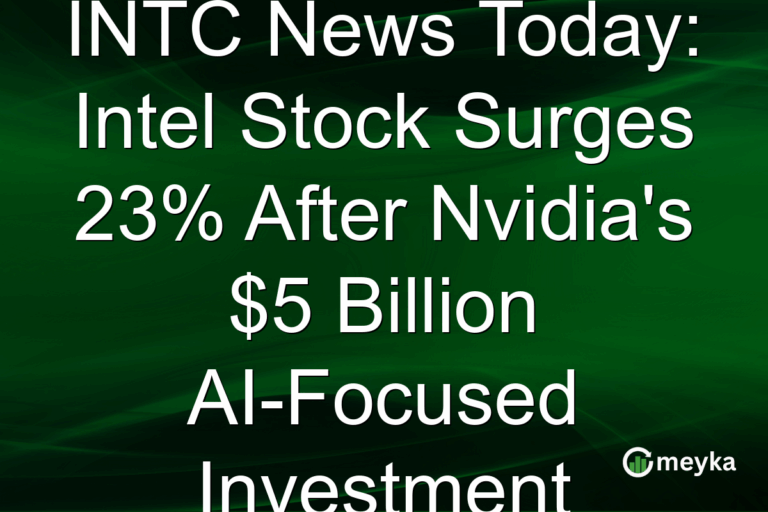
Nvidia Groq $20B licensing is the headline powering today’s AI trade. Nvidia (NVDA) will license Groq’s inference tech and hire founder Jonathan Ross, while Groq stays independent, per reports. The Nasdaq 100 sits at 25,656.15, up 0.27% intraday, with a 25,556.85 to 25,665.28 range. For Australians, this matters through NDQ and US tech exposure in super funds. The deal is reported near US$20 billion, roughly A$30 billion, and could speed lower-cost, low-latency AI serving across data centres.
Deal snapshot and strategy
Nvidia Groq $20B licensing signals a push to speed inference at lower cost while confirming Groq remains independent. Nvidia will also hire CEO Jonathan Ross, aligning with “Jonathan Ross Nvidia” talk across markets. Nvidia clarified it is not buying Groq, but licensing its tech, per TechCrunch. Meyka’s wrap adds deal context and market reaction here.
Licensing Groq’s low-latency stack aims to improve AI serving economics. It could widen Nvidia’s options in AI inference chips while keeping partners flexible. For investors, the key is faster time-to-response and lower cost per token. If inference scales on mixed hardware, cloud buyers gain leverage, which can support index leaders tied to AI demand without forcing a single-architecture path.
Nasdaq 100 reaction and key levels
The Nasdaq 100 is up 0.27% to 25,656.15, near the upper Bollinger band at 25,982.21. RSI is 56.83, a neutral read. ADX at 12.31 implies a weak trend, so breakouts may fade. MACD histogram is positive at 18.84. Middle band support sits near 25,416.33, with lower band at 24,850.45. Today’s range is tight, suggesting holiday liquidity.
AI-exposed names remain focal. NVDA can benefit from Nvidia Groq $20B licensing if inference ramps. AMD may gain from broader accelerator demand and software wins. Cloud platforms and data centre suppliers could also see sympathy bids as investors price faster deployment cycles and improved utilization across AI inference chips.
Implications for HBM and supply chains
HBM supply constraints have capped AI server shipments. If licensed Groq tech allows more efficient memory use or workload partitioning, it may reduce pressure over 2026 deployments. Even modest relief helps procurement planning and capex pacing. This is not an instant fix, but it broadens tooling, which can diversify supply risk and smooth delivery timelines for hyperscalers and enterprise buyers.
The pitch is lower latency and cost per token for real-time workloads. If Nvidia Groq $20B licensing expands the inference toolkit, buyers can mix architectures to fit models and budgets. Lower memory footprints and smarter scheduling can trim HBM needs. That supports margin defense for clouds and improves ROI on AI inference chips, which matters if model usage outpaces hardware supply.
What it means for Australian portfolios
Aussie investors often gain exposure via Nasdaq 100 ETFs and global tech funds. Unhedged options rise when the US market rallies and AUD is stable or weaker. Hedged versions focus on equity moves alone. Consider fee differences, tracking error, and rebalancing dates. If the AI theme broadens from training to serving, fund allocations with inference leaders may deliver steadier cash flows.
For shorter-term traders, ATR is 351.42 points, flagging moderate swings. First support sits around 25,416.33 with resistance near 25,982.21. A daily close above the upper band would frame a potential momentum push. A fade to the middle band keeps the uptrend intact. Watch headlines on HBM supply constraints and any deployment updates as catalysts for follow-through.
Final Thoughts
The core takeaway is simple. Nvidia Groq $20B licensing targets faster, cheaper inference without an outright buyout, while Groq stays independent. That adds tools for AI serving and could ease pressure on memory and supply in 2026. For the Nasdaq 100, momentum is constructive but not stretched, with RSI neutral and price near the upper band. Australian investors can express the view through Nasdaq-focused ETFs or diversified global tech funds, weighing hedging and fees. Near term, use 25,416 as a support gauge and 25,982 as resistance. Medium term, watch whether inference wins translate to steadier cloud capex and better utilization across AI inference chips.
FAQs
Reports say Nvidia is licensing Groq’s inference technology and hiring founder Jonathan Ross, while Groq remains independent. Nvidia stated it is not an acquisition. The aim is faster, lower-cost inference for real-time AI. This structure lets both firms keep optionality while moving quickly on deployment.
Nasdaq 100 strength drives many Aussie global tech funds and ETFs. If the deal accelerates AI serving, earnings visibility could improve for key index names. Unhedged investors also watch AUD moves, since currency shifts can add or subtract from returns on top of the equity move.
It may help at the margin over 2026 deployments. If inference workloads need less memory per request or can be scheduled more efficiently, demand on HBM eases. That would smooth server deliveries and capex pacing. It is not a quick fix, but broader tooling reduces single-point bottlenecks.
The index trades near 25,656, with resistance around 25,982 and support near 25,416. RSI sits close to 57, and ADX is low, signaling a weak trend. A close above resistance can attract momentum buyers. A pullback to the middle band can still maintain the broader uptrend.
Disclaimer:
The content shared by Meyka AI PTY LTD is solely for research and informational purposes. Meyka is not a financial advisory service, and the information provided should not be considered investment or trading advice.