Kospi Index

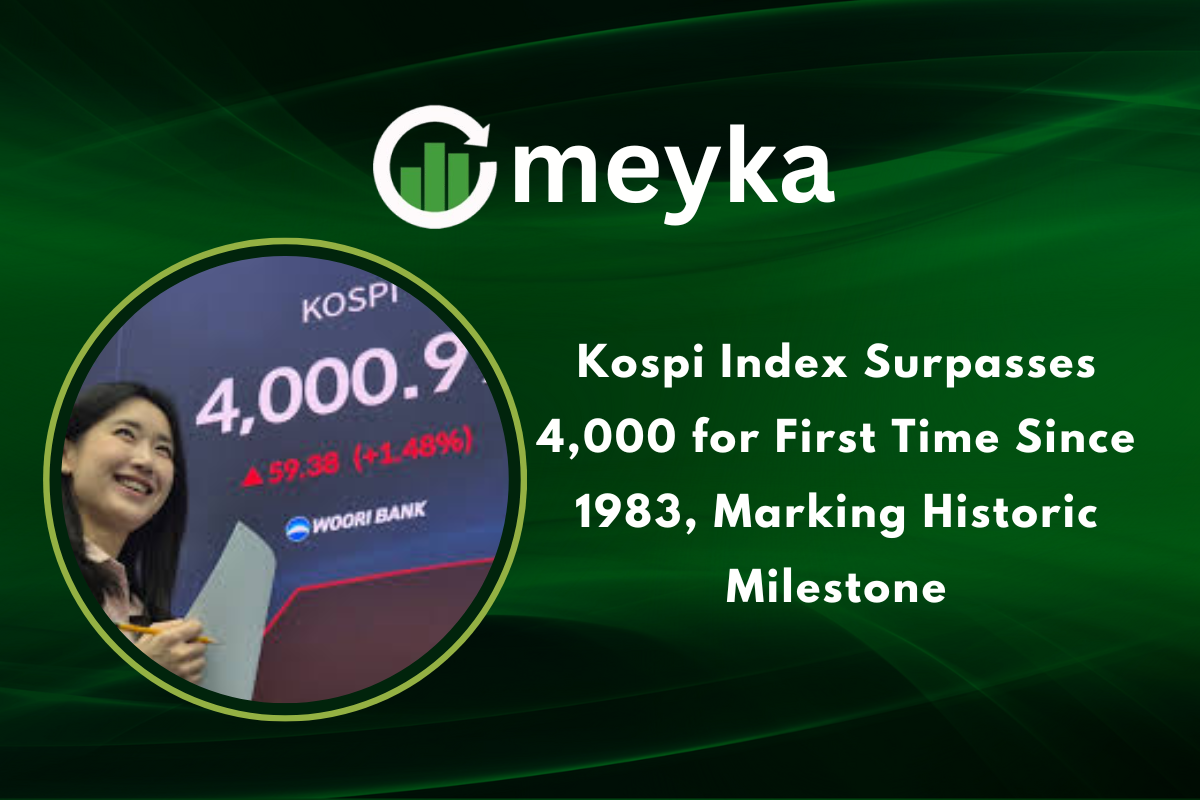
Kospi Index Surpasses 4,000 for First Time Since 1983, Marking Historic Milestone

Introduction: Historic Breakthrough for the Kospi Index

The Kospi Index has achieved a historic milestone, surging past the 4,000 mark for the first time since the index was introduced in 1983. This momentous event signals robust investor confidence in South Korea’s equity markets and global enthusiasm for the country’s technology and industrial sectors. 

The benchmark Korea Composite Stock Price Index climbed to a record closing level above 4,000 points, rewriting market history and positioning Seoul as a standout performer in global equities markets.

This comprehensive news article explains why the Kospi Index hit this milestone, what factors are driving the rally, what analysts are forecasting for 2026, and what this means for investors at large.

What Does the Kospi Index Surpassing 4,000 Mean?

The Kospi Index breaching 4,000 points is more than just a market statistic: it reflects deep market strength, economic optimism, and strong capital inflows. This marks the first time in history since its launch in 1983 that the benchmark has reached such unprecedented heights. 

Why is this important for global investors?

Investors closely monitor the Kospi Index because it serves as a barometer of South Korea’s corporate health, economic direction, and the global appetite for key Korean exports such as semiconductors, automobiles, and advanced electronics.

When and How Did the Kospi Index Reach 4,000?

On October 27, 2025, the Kospi Index soared past the 4,000 threshold early in trading, climbing over 2 percent on heavy buying, and closed at around 4,042.83 points, up more than 101 points from the previous session.

How quickly did this occur?

The index reached 4,000 points just minutes after the market opened, reflecting strong immediate demand from institutional and foreign investors. That rapid rally was driven by strong optimism about global trade prospects, robust earnings, and expectations of continued stimulus in the technology sector. 

Short‑Term Drivers Behind the Kospi Index Rally

1. Global Chip Demand and AI Growth

The ongoing global boom in artificial intelligence (AI) and semiconductor demand has been a key catalyst behind the Kospi rally. Korean companies such as Samsung Electronics and SK Hynix have seen extraordinary growth in share prices as they expand production of AI chips and high‑bandwidth memory. These heavyweight firms account for a significant portion of the Kospi’s market capitalization and are leading the surge.

Did Samsung and SK Hynix reach new peaks?

Yes, both firms recorded new record highs in 2025, with Samsung Electronics’ share price surpassing historic levels as investor confidence in AI infrastructure marches forward.

2. Policy Support and Capital Market Reforms

South Korean government policies promoting shareholder‑friendly reforms, capital gains incentives, and corporate governance improvements have encouraged both domestic and foreign investment. This has helped reduce the long‑standing “Korea discount” that once dampened global investor interest.

Is the government aiming even higher?

Yes. President Lee Jae‑myung has publicly encouraged a longer‑term goal of boosting the Kospi toward 5,000 points, promoting transparency and market reforms to support that vision.

3. Record Foreign Inflows and Institutional Interest

Large foreign capital inflows into the Kospi have been a key driver. After periods of overseas outflows, foreign institutional investors returned strongly, buying stocks in high‑growth tech and export‑driven sectors. This renewed confidence helped propel the index through major psychological barriers, such as 3,000 and now 4,000 points.

What role did foreign demand play?

Foreign buying played a central role in sustaining upward momentum, especially in large‑cap stocks and ETFs that track the Kospi’s performance.

Include Social Media Insight

Here is a real investor sentiment snapshot shared on social media showing market excitement:

This tweet reflects widespread investor confidence in Kospi Index’s upward momentum, highlighting increased interest following the 4,000 milestone and reinforcing bullish sentiment among retail and professional market watchers.

Economic and International Factors Influencing the Kospi Index

Global Rate Cuts and Monetary Policy

Global interest rate expectations, especially around potential easing by major central banks like the U.S. Federal Reserve, have provided supportive liquidity that boosted equity markets worldwide, including South Korea’s. 

Such policy expectations often make equities relatively more attractive compared to low‑yield fixed‑income assets.

Trade Negotiations and External Confidence

Positive developments in international trade negotiations have eased fears about global commerce disruptions, enhancing investor confidence in export‑driven economies like South Korea’s. 

Cooperation with major partners, including the United States, helped reinforce optimism around market expansion.

What Analysts Are Predicting for 2026

Market analysts and brokerages are issuing forward‑looking outlooks based on a continuation of strong growth fundamentals:

2026 Forecast Range

Several strategy reports estimate that the Kospi Index could trade within a forecast range of around 3,740 to 4,930 points in 2026, assuming stability in global markets, continued tech demand, and supportive domestic reforms.

Bullish Projection Toward 5,500

Some analysts, considering broader corporate earnings improvements and global expansion in technology supply chains, have even predicted the Kospi could edge toward 5,500 points by late 2026 or early 2027.

What would push Kospi to higher levels?

A continued supercycle in AI‑related demand, further foreign investment, and deeper penetration of Korean firms into international markets could all push the Kospi Index higher.

Risks and Cautions for Investors

Despite strong performance, some factors could create volatility:

1. Heavy Concentration in Large Caps

Much of the index gains have been concentrated in mega‑cap tech firms, leaving smaller sectors behind. A market overly reliant on a few large names may experience disproportionate volatility if those stocks correct or slow.

2. Currency and Export Risks

Fluctuations in the South Korean won versus the dollar can influence export competitiveness and foreign investor flows. A weakening currency could make equity valuations less attractive if capital outflows rise.

3. Global Economic Shocks

Unexpected global economic slowdowns, shifts in interest rate policy, or geopolitical tensions could trigger market pullbacks affecting the Kospi’s momentum.

Conclusion: What the Kospi Index Milestone Means for Investors

The Kospi Index surpassing 4,000 for the first time in history is a defining moment for South Korea’s capital markets. This achievement reflects a mix of strong macroeconomic factors, supportive policy measures, and vibrant investor participation.

For long‑term investors, this milestone highlights growth potential in Asia’s fourth‑largest economy, particularly in technology, semiconductors, and global export sectors. Short‑term traders, on the other hand, may find opportunities around technical levels and global monetary shifts.

While risk remains, especially in concentrated sectors, the overall Kospi trajectory points to continued relevance on the global investment stage as markets prepare for 2026 and beyond.

FAQ’S

Why Is the Kospi Index’s Break Above 4,000 So Significant?

The Kospi surpassing 4,000 for the first time since 1983 shows deep market confidence, stronger investor appetite, and sustained optimism in South Korea’s economic and corporate future.

Can the Kospi Index Continue Its Rally in 2026?

Yes, many analysts believe the Kospi will continue to grow in 2026, though the pace of gains may vary. Forecasts place the index in a range that could reach toward 5,000 or more, driven by continued tech demand and investment reforms.

What Should Investors Watch Next?

Investors should monitor earnings trends, foreign investor flows, monetary policy guidance, and currency fluctuations. Each can influence how the Kospi trades in the months ahead.

Disclaimer

The content shared by Meyka AI PTY LTD is solely for research and informational purposes. Meyka is not a financial advisory service, and the information provided should not be considered investment or trading advice.

Similar Posts

Leave a Reply

Your email address will not be published. Required fields are marked *