Paisa Nahi Milta” Protest, Swiggy and Zomato Delivery Partners Go on All India Strike
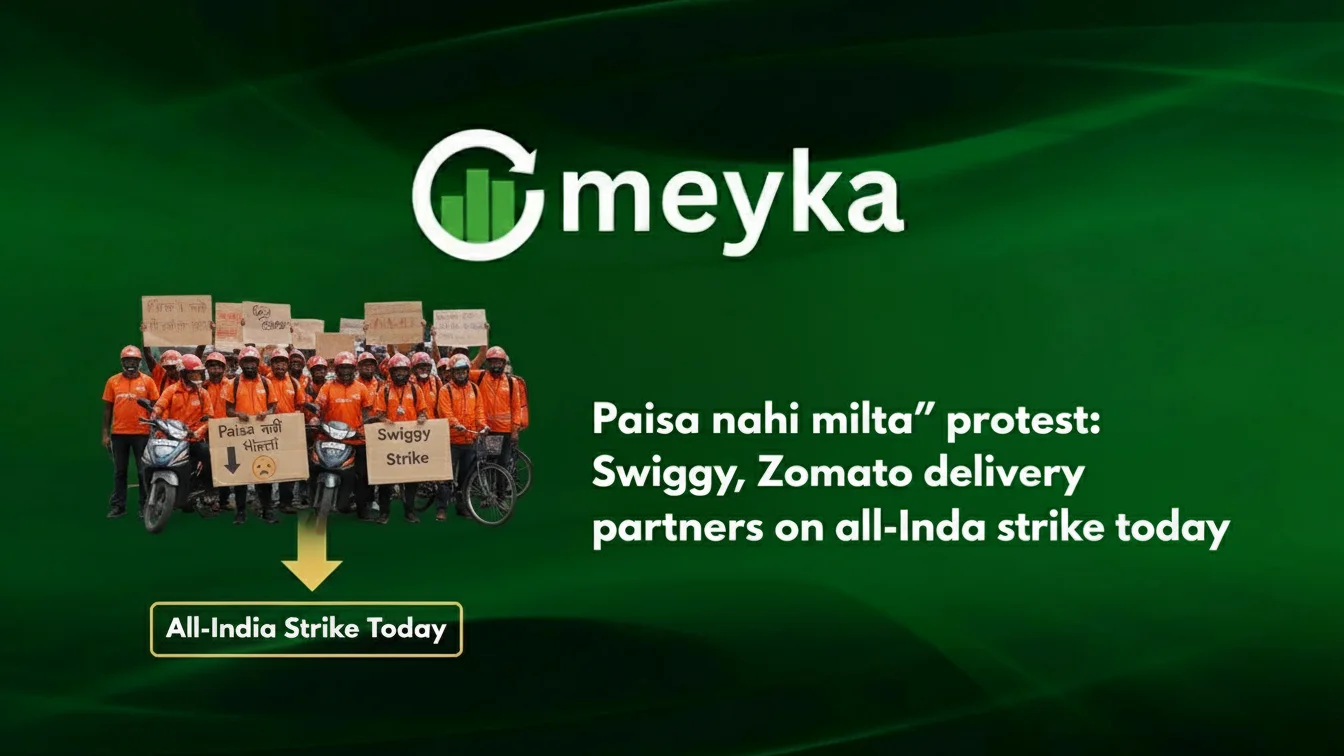
We are witnessing a major moment in India’s gig economy as delivery partners of Swiggy and Zomato have launched an all India strike under the slogan “Paisa nahi milta.” The protest has disrupted food delivery services across several major cities and has once again brought attention to long standing concerns around low pay, rising costs, and the absence of social security for platform based workers.
Delivery partners claim that despite working long hours, their earnings have fallen sharply in recent months. Rising fuel prices, higher commission structures, and reduced incentives have made daily operations financially unsustainable. The strike is not limited to one city or state. It has emerged as a coordinated national movement, reflecting widespread frustration across the workforce.
What Triggered the “Paisa Nahi Milta” Protest
The phrase “Paisa nahi milta” reflects the core grievance of delivery workers. Many riders report that after fuel costs, vehicle maintenance, and mobile data expenses, their net income often drops below minimum wage levels. Earlier incentive based models helped workers earn more during peak hours, but recent changes in payout structures have reduced these opportunities.
We see that algorithm driven order allocation has also become a major concern. Delivery partners allege that opaque systems penalize them for rejecting low paying orders, even when distances are long or traffic conditions are poor. This has created a situation where workers feel forced to accept unprofitable deliveries to maintain ratings.
According to labor activists, these issues mirror broader global challenges in the gig economy. Similar protests have been reported among ride hailing and delivery workers worldwide, highlighting the need for regulatory clarity and fair compensation frameworks.
Impact on Consumers and Urban Food Delivery
The strike has affected daily life in metro cities such as Delhi, Mumbai, Bengaluru, and Hyderabad. Many users reported delayed deliveries or temporary suspension of services on food delivery apps. Restaurants that rely heavily on online orders have also seen a decline in daily revenue.
From a market perspective, disruptions like these raise questions for investors tracking the platform economy. Stock research analysts often assess labor stability as a key risk factor for tech enabled service companies. Repeated protests can influence market sentiment, especially in a competitive environment where margins are already thin.
We also observe that customer trust is closely linked to delivery reliability. Any prolonged disruption may push users to explore alternative platforms or direct restaurant orders, affecting long term growth projections.
Worker Demands and Key Issues Raised
The delivery partners have outlined several clear demands. These include higher per order payouts, transparent incentive calculations, fuel cost adjustments, and accident insurance coverage. Many riders also seek recognition as workers rather than independent contractors, which would entitle them to basic labor protections.
Another major issue is deactivation without explanation. Delivery partners claim that accounts are sometimes suspended due to customer complaints or algorithmic flags, with little opportunity for appeal. This lack of due process has added to the sense of insecurity.
We believe these demands reflect a growing awareness among gig workers about their rights. As digital platforms scale rapidly, workers are increasingly organizing to negotiate better terms.
Company Response and Industry Context
Swiggy and Zomato have acknowledged the protests and stated that they are in dialogue with delivery partners. Company representatives emphasize flexibility and earning opportunities as key benefits of the platform model. However, workers argue that flexibility loses meaning when base earnings are insufficient.
From an industry standpoint, food delivery platforms operate under intense pressure to balance profitability, customer discounts, and partner payouts. Rising competition and investor expectations have led companies to optimize costs, often impacting frontline workers.
This situation also intersects with broader discussions in the stock market around sustainable business models. Investors analyzing AI stocks and platform based companies are increasingly factoring in labor relations and regulatory risks as part of long term valuation.
Regulatory Attention and Policy Debate
The strike has caught the attention of policymakers and labor departments in several states. There are renewed calls for a national framework to protect gig workers, including minimum pay standards and social security benefits. The Indian government has previously announced plans to extend social security schemes to gig and platform workers, but implementation remains slow.
We note that countries like the UK and parts of the European Union have already taken steps to redefine gig worker status. These global developments could influence future policy decisions in India.
Institutions such as the International Labour Organization have also highlighted the need for fair work conditions in digital labor platforms. Their research emphasizes balancing innovation with worker welfare, a challenge that India now faces at scale.
Market Implications and Investor Outlook
From a financial lens, labor unrest can have both short term and long term implications. In the short term, service disruptions may affect order volumes and revenue. In the long term, unresolved worker issues can invite stricter regulations, increasing operational costs.
Stock research reports increasingly include environmental, social, and governance factors in company evaluations. Worker satisfaction and ethical practices now play a role in shaping investor confidence, especially in technology driven sectors.
For market participants tracking the stock market, this strike serves as a reminder that growth driven by digital platforms must be inclusive to remain sustainable. Companies that proactively address worker concerns may gain a competitive edge over time.
The Human Side of the Gig Economy
Beyond data and market analysis, the protest highlights real human struggles. Many delivery partners support families on daily earnings. Delayed payments or reduced incentives directly impact their ability to meet basic needs.
We see that the gig economy has provided employment to millions, but it has also shifted risks from companies to individuals. Fuel price volatility, health emergencies, and road accidents are borne largely by workers themselves.
This strike is not just about pay. It is about dignity, security, and recognition in a rapidly changing economic landscape.
What Lies Ahead for Food Delivery Platforms
The outcome of the “Paisa nahi milta” protest will likely shape future relations between platforms and delivery partners. Constructive dialogue, transparent policies, and fair compensation models can help rebuild trust.
We believe that sustainable growth in the food delivery sector depends on balancing technology with empathy. Platforms that listen to their workforce and adapt responsibly will be better positioned to thrive in a competitive and closely watched market.
As consumers, investors, and policymakers observe these developments, the conversation around gig work in India is set to deepen.
FAQs
Delivery partners are protesting against low earnings, reduced incentives, high fuel costs, and lack of social security benefits.
Yes, the all India strike has caused delays and service disruptions in several major cities.
Labor unrest can influence investor sentiment and long term valuations, especially when social factors are considered in stock research.
Disclaimer:
The content shared by Meyka AI PTY LTD is solely for research and informational purposes. Meyka is not a financial advisory service, and the information provided should not be considered investment or trading advice.