SoftBank

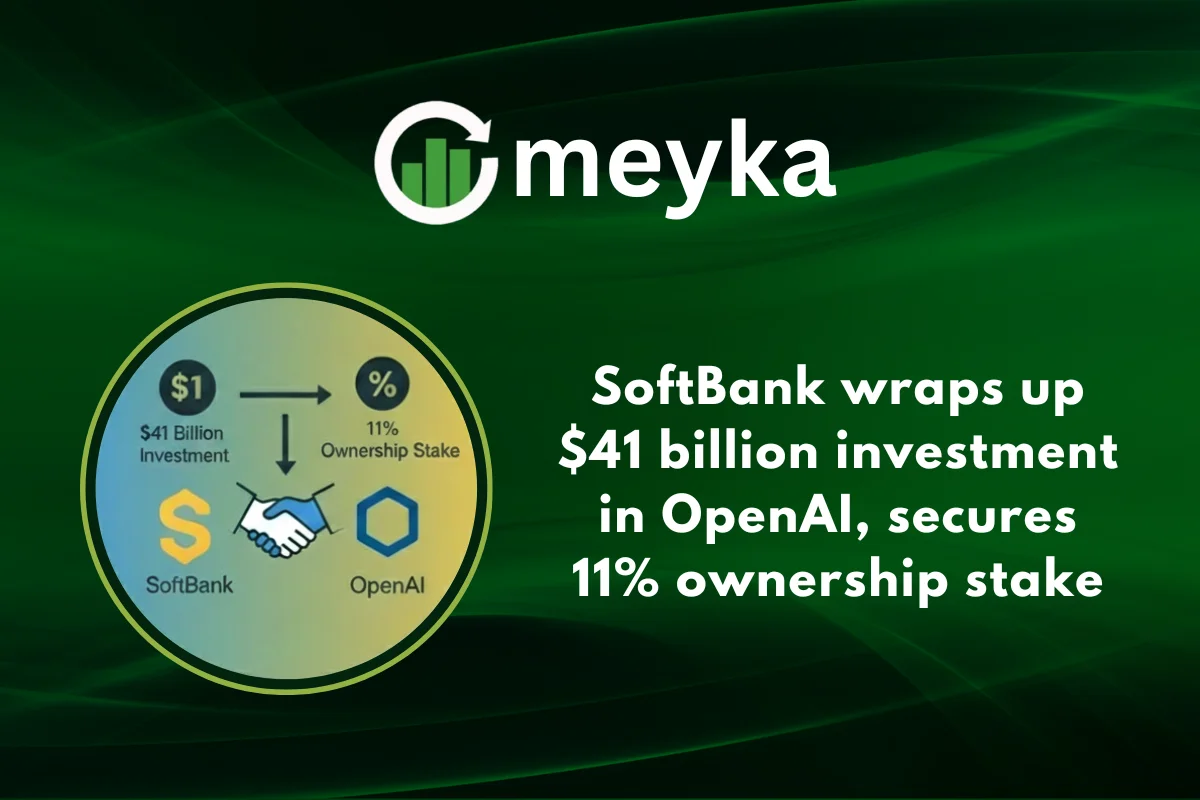
SoftBank Wraps Up $41 Billion Investment in OpenAI, Secures 11% Ownership Stake

SoftBank has officially completed a massive $41 billion investment in OpenAI, the company behind ChatGPT and some of the most advanced AI technology in the world. This deal marks one of the largest tech investments ever recorded and signals a new era for both artificial intelligence and global finance. The move has major implications for investors, the stock market, AI stocks, and the future direction of AI innovation.

This investment gives SoftBank approximately 11% ownership in OpenAI, making it one of the most significant stakeholders in the AI leader. The news has dominated financial headlines and sparked fresh interest in technology and AI sectors around the world, especially among investors looking to capitalize on long-term growth in emerging technology.

Understanding the Scale of the Investment

The $41 billion figure is staggering in any context. For SoftBank, it represents a bold long-term bet on generative AI, machine learning, and AI applications that could reshape how businesses operate. SoftBank’s Vision Fund has been known for backing transformative technology companies, and the decision to invest heavily in OpenAI fits this pattern. The scale of this investment shows confidence in OpenAI’s leadership, technology roadmap, and ability to maintain a competitive edge globally.

While the deal size may seem risky to some, SoftBank has a history of large strategic bets. Previous Vision Fund investments have included companies such as NVIDIA, DoorDash, and others that have delivered strong returns for investors and reshaped entire industries. Now with a meaningful stake in OpenAI, SoftBank positions itself at the center of the AI revolution.

Why This Matters for AI and Technology Markets

OpenAI is widely regarded as one of the most influential AI research labs and product developers in the world. Its tools have been integrated into software used by millions of people daily. From enterprise solutions to consumer apps, OpenAI’s technology has become deeply embedded in the global tech landscape.

SoftBank’s investment increases OpenAI’s financial resources, enabling the company to accelerate innovation, expand product development, and scale infrastructure. This could result in faster breakthroughs in areas such as natural language processing, autonomous systems, and AI safety research.

For investors focusing on AI stocks, this is a critical development. Although OpenAI is a private company and not listed on public exchanges, the investment sends strong signals to the broader market about investor confidence in AI’s growth potential. Public companies exposed to AI technologies may see increased interest as a result of SoftBank’s strategic move.

Stock Research and Investor Sentiment

The news of SoftBank’s investment has energized analysts and everyday investors alike. In stock research reports, industry experts have been reevaluating tech sector forecasts and adjusting expectations for companies heavily involved in AI development. Public technology and semiconductor companies that support AI innovation, such as providers of AI chips, cloud infrastructure firms, and software developers, may benefit from renewed investor enthusiasm.

Markets tend to respond to major strategic movements by large institutional players, and SoftBank is one such player. The Vision Fund backing often sends a signal that a particular technology or company has lasting potential. This can influence the stock market in terms of price movements, trading volumes, and investor sentiment toward related sectors.

Investors who are monitoring AI trends are likely paying close attention to companies that could indirectly benefit from advancements at OpenAI. These might include cloud computing providers, chip manufacturers, and software platform companies that integrate AI into their products. As these businesses grow, they could become strong candidates for inclusion in diversified portfolios.

What This Means for SoftBank

For SoftBank, securing an 11 percent stake in OpenAI is more than just an investment. It is a strategic position in the future of AI innovation. SoftBank gains access to cutting-edge AI technology, and the potential benefits extend beyond financial returns. This partnership may also enable SoftBank to drive collaborations between OpenAI and companies in its broader investment portfolio.

SoftBank’s CEO has publicly stated that AI will play a central role in the global economy in the years ahead. By investing so heavily in OpenAI, SoftBank aligns its long-term strategy with the broader digital transformation sweeping across industries. This could also influence how SoftBank prioritizes future investments and which sectors it chooses to support.

Importantly, this stake in OpenAI does not make SoftBank a controlling shareholder, but it does make SoftBank one of the largest backers. OpenAI’s governance structure is designed to balance innovation with ethical and safety considerations, a model that appeals to investors who are cautious about rapid technological change.

Implications for Global Technology Leadership

OpenAI has been at the forefront of debates on the ethical use of AI, the need for responsible development, and the potential impact of AI on labor markets and society. With SoftBank’s backing, OpenAI now has even greater financial capacity to expand research into AI safety, bias mitigation, and other important areas that influence how technology is adopted responsibly.

The investment also highlights the global competition for AI leadership. Countries and corporations are racing to build the most advanced systems, attract top scientific talent, and influence future standards for AI technology. SoftBank’s investment places it among the major players in this global race.

For emerging markets investors, this development may create new opportunities. Regions that are gaining momentum in technology innovation may attract capital flows from global funds seeking exposure to AI and related sectors. This could enhance technological ecosystems, stimulate job creation, and promote research collaborations worldwide.

Risks and Challenges Ahead

Despite the enthusiasm surrounding the investment, it is important to recognize that AI development carries risks. Ethical concerns, regulatory scrutiny, and potential misuse of AI technologies are areas that both companies and governments must address. OpenAI has emphasized its commitment to safety and responsible deployment, and SoftBank’s backing may support this agenda.

Investors should also understand that long-term tech investments can be volatile. Market conditions, competition, and macroeconomic factors can influence performance. Hence, careful stock research and risk assessment remain essential for those looking to invest in AI related sectors or companies influenced by this news.

Another challenge is the translation of AI breakthroughs into revenue. While OpenAI’s products are widely used and influential, converting technological leadership into sustainable and predictable financial results requires careful business strategy and execution.

Looking Ahead: The Future of AI and Investment

SoftBank’s $41 billion investment in OpenAI is likely to be remembered as a landmark moment in technology investment history. It solidifies AI’s place at the core of future innovation and changes how investors view opportunities in this space.

Going forward, we may see additional strategic partnerships, increased funding for AI research, and expansion of products that leverage advanced machine learning. As the innovation cycle continues, companies that lead in AI technology are likely to shape how industries evolve over the next decade.

Investors who pay attention to trends, maintain diversified portfolios, and conduct solid stock market research will be better positioned to navigate this evolving landscape. For many, SoftBank’s move signals that the age of AI is entering a new phase of growth and investment.

FAQs

What does SoftBank’s investment in OpenAI mean for investors?

SoftBank’s large investment signals strong confidence in AI’s future, and it may increase interest in related technology and AI stocks in the broader market.

Is OpenAI a public company that can be invested in through the stock market?

No, OpenAI remains a private company, but its activities influence public markets especially in technology and AI focused sectors.

How might this investment impact the future of AI development?

The funding will likely accelerate research, innovation, product development, and responsible AI initiatives, shaping the next wave of AI applications globally.

Disclaimer:

The content shared by Meyka AI PTY LTD is solely for research and informational purposes. Meyka is not a financial advisory service, and the information provided should not be considered investment or trading advice.

Similar Posts

Leave a Reply

Your email address will not be published. Required fields are marked *