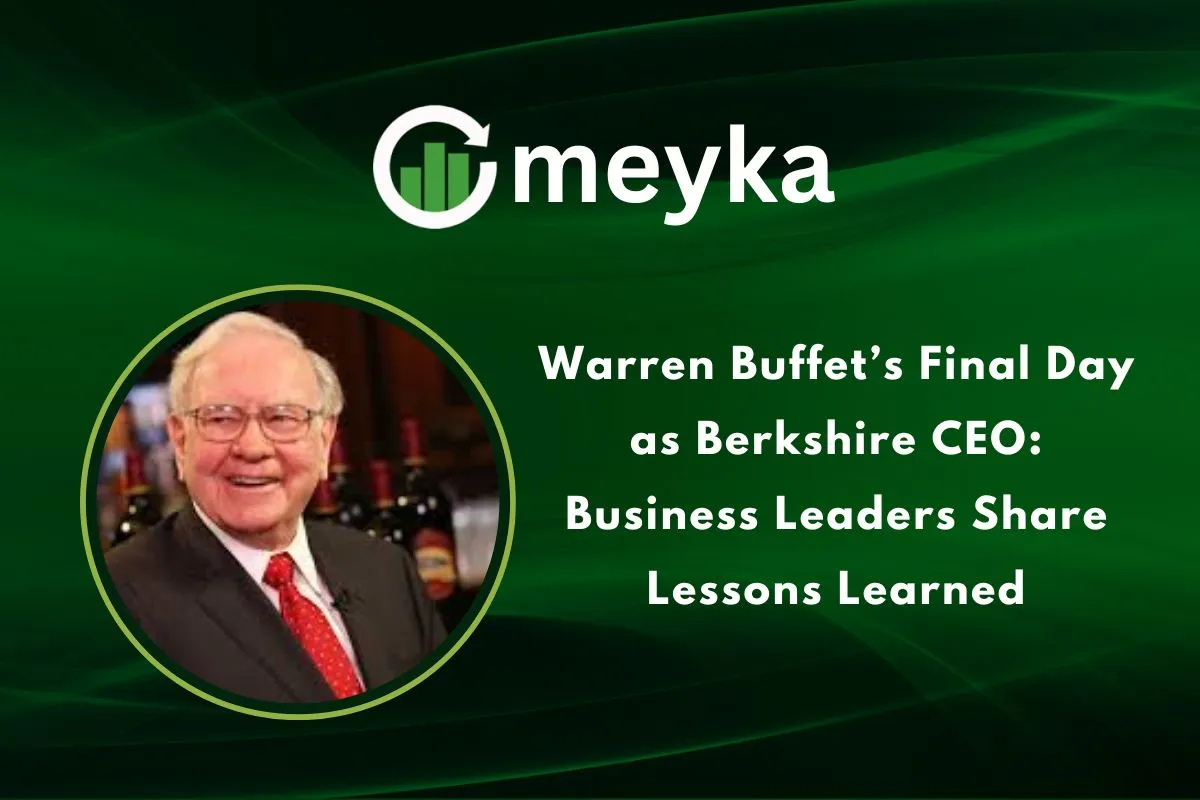
Warren Buffet

Warren Buffett’s Final Day as Berkshire CEO: Business Leaders Share Lessons Learned

At 95, Warren Buffett retired as CEO of Berkshire Hathaway on December 31, 2025, concluding six decades of leadership. His final day highlighted not just market impact but the timeless leadership lessons he leaves behind.

The End of an Era at Berkshire Hathaway

  • Buffett took charge in 1965: Turned a struggling textile firm into a global powerhouse.
  • Berkshire’s 2025 value: Nearly $1 trillion, with businesses in insurance, railroads, energy, and consumer brands.
  • Succession plan: Passed CEO role to Greg Abel, vice chairman and long-time deputy.
  • Transition praised: Smooth, thoughtful, and well-planned handover.
  • Investor confidence: Markets reacted calmly, reflecting trust in Buffett’s leadership model.
  • Leadership style: Built on stability, autonomy, and long-term thinking, now continuing under Abel.

Lesson 1: Long-Term Thinking Beats Short-Term Noise

  • Patience is key: Buffett’s favorite holding period was “forever,” guiding Berkshire through booms and crashes.
  • Think like an owner: He advised leaders to focus on fundamentals, not short-term trends.
  • Influence on CEOs: Many executives and fund managers follow his long-term approach in their strategies.
  • 2025 focus: Buffett prioritized cash reserves and waited for real value instead of chasing hype.

Lesson 2: Capital Allocation Is a CEO’s Most Important Job

  • Master of capital allocation: Buffett decided not just what to invest in, but where money should go and why.
  • Tough choices matter: He balanced buybacks, acquisitions, and cash reserves to maximize long-term value.
  • Recent moves: Shifted cash into traditional investments and trimmed big tech positions when valuations were high.
  • Influence on leaders: Many CEOs adopted his disciplined approach to capital management in their own companies.

Lesson 3: Culture and Trust Create Durable Businesses

  • Empowered leaders: Buffett let subsidiary heads run their businesses independently.
  • Culture of ownership: Trust and responsibility motivated employees to perform better.
  • Leadership lesson: Many CEOs learned to trust teams instead of micromanaging.
  • Attracting talent: This style helped Berkshire retain strong leaders who acted with integrity.

Lesson 4: Simplicity Is a Strategic Advantage

  • Legendary communication: Buffett used plain language and avoided jargon or long speeches.
  • Global impact: His annual letters made complex ideas easy to understand for investors worldwide.
  • Leader admiration: CEOs like Steve Hafner of Kayak praised his ability to explain financial truths clearly.
  • Strategic simplicity: Clarity over complexity builds trust and confidence in a noisy world.

Succession at Berkshire: What Comes Next

  • Planned succession: Buffett chose Greg Abel years ago and prepared him thoroughly.
  • Abel’s leadership: Brings his own style while respecting Buffett’s core values.
  • Decades in the making: The transition was carefully planned over many years.
  • Practical lesson: Stepping back at the right time ensures continuity without disruption.

Buffett’s Broader Impact on Global Business Thinking

  • Beyond CEO: Buffett influenced how business is done worldwide.
  • Generational impact: His lessons shaped investors and executives from Wall Street to Main Street.
  • Educational value: Annual letters, speeches, and interviews are used in business schools to teach ethics, strategy, and leadership.
  • Focus on integrity: Emphasized honesty and long-term value, changing how companies view reputation.

Conclusion

As Buffett leaves the CEO role, his legacy lives on. Not just in Berkshire’s continued success, but in the way leaders think about patience, discipline, culture, and simplicity. We believe this moment isn’t just about retirement. It’s a passing of timeless wisdom to a new generation of leaders. Buffett’s principles don’t depend on headlines; they depend on steady judgment and human values. His final day didn’t just mark an end. It marked a beginning, a future shaped by lessons that endure.

FAQS

When did Warren Buffett step down as Berkshire Hathaway CEO?

On December 31, 2025, the 60-year leadership era will end.

Who succeeded Warren Buffett as CEO?

Greg Abel, Berkshire Hathaway’s vice chairman and long-time deputy.

What is Warren Buffett’s key leadership lesson?

Focus on long-term thinking, simplicity, trust, and disciplined capital allocation.

How has Buffett influenced global business?

His philosophy shaped generations of investors, executives, and business schools, emphasizing ethics, integrity, and long-term value.

Disclaimer:

The content shared by Meyka AI PTY LTD is solely for research and informational purposes. Meyka is not a financial advisory service, and the information provided should not be considered investment or trading advice.

Similar Posts

Leave a Reply

Your email address will not be published. Required fields are marked *