Gold and Silver Prices Drop as Traders Prepare for Major Index Rebalancing
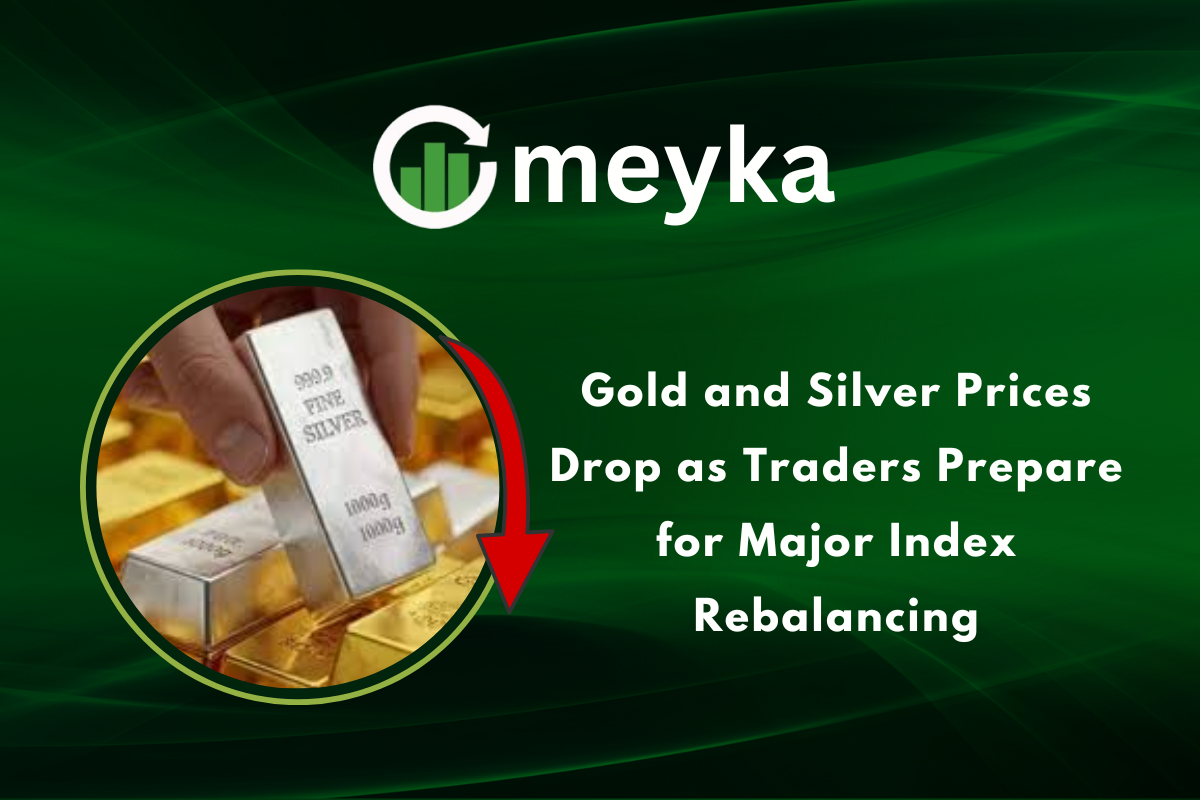
Gold and Silver Prices moved lower this week as global traders and institutional investors adjusted their positions ahead of a major index rebalancing event. The pullback came after a strong rally, with profit taking, futures positioning, and portfolio realignment putting short-term pressure on precious metals.
This move is not sudden or random. It reflects a mix of market structure, timing, and expectations around inflation, interest rates, and global risk appetite. Below is a deep, well-researched, and investor-focused breakdown of what is happening, why it matters, and what could come next.
Gold and Silver Prices React to Index Rebalancing Pressure
Gold and Silver Prices weakened as traders prepared for large-scale index rebalancing, a process where funds adjust asset weightings at fixed calendar periods. According to market analysis published by Investing.com, gold paused just below the key psychological level near 4500 as profit-taking met fresh selling pressure from index-driven flows.
This rebalancing is particularly important in January, when many commodity and precious metal indices reset their allocations. Funds tracking these benchmarks must sell or buy contracts regardless of sentiment. This creates temporary price pressure, especially in highly liquid assets like gold and silver.
So why does this matter to investors?
Index rebalancing often causes short-term volatility without changing the long-term fundamentals. Traders know this, so many reduce exposure ahead of time, amplifying the price dip.
Proactive Investors also highlighted that both gold and silver face a January headwind as index rebalancing looms, with selling flows expected to peak before stabilizing later in the month.
A key market note from Investing.com explains that gold futures stalled as traders locked in gains from the recent rally. Silver followed the same path, reflecting its strong correlation with gold during macro-driven moves.
Why is silver falling with gold?
Silver is both a precious metal and an industrial metal. When gold pulls back due to positioning, silver often drops faster because it is more volatile and more sensitive to futures flows.
Key price levels traders are watching
Gold and Silver Prices are now trading near critical technical zones that many investors are closely tracking.
Gold is holding above major support near 4400 while facing resistance just below 4500. A clean break below support could trigger further selling, while stability above this level may attract dip buyers.
Silver remains under pressure near its recent consolidation zone, with traders watching whether industrial demand and safe-haven interest can offset index-related selling.
A widely shared market update from Mira on X highlights how gold stalled near resistance as rebalancing flows increased.
This aligns with futures market data showing rising open interest followed by quick profit-taking.
Market Drivers Behind the Drop in Gold and Silver Prices
Several forces are acting together to shape the current move in Gold and Silver Prices. Understanding these drivers helps investors separate short-term noise from long-term trends.
Profit taking after a strong rally
Gold had rallied sharply in recent sessions, driven by safe-haven demand and expectations of future rate cuts. When prices rise fast, traders often lock in gains, especially ahead of known market events like index rebalancing.
This selling does not mean confidence is gone. It simply reflects disciplined trading behavior.
James B, a market commentator, noted on X that traders were trimming positions ahead of rebalancing while keeping a bullish longer-term view.
Index rebalancing and fund flows
Index rebalancing forces passive funds to adjust holdings mechanically. This creates selling pressure even when fundamentals remain supportive.
Why does January matter so much?
January is one of the most active months for index resets. Commodity indices recalibrate weights based on past performance and volatility. Gold and silver often see reduced weightings after strong rallies, leading to forced selling.
Argaam Plus shared data showing how precious metals typically face early-year pressure due to these flows.
Interest rate expectations and bond yields
Gold and Silver Prices are sensitive to interest rate expectations. Higher yields reduce the appeal of non-yielding assets like gold.
Right now, markets are pricing in future rate cuts, but timing remains uncertain. Any delay in easing keeps yields elevated, which caps upside for gold in the short term.
That said, real yields remain historically moderate, which continues to support long-term demand.
US dollar movement
A firm US dollar also adds pressure to Gold and Silver Prices. Since metals are priced in dollars, a stronger currency makes them more expensive for international buyers.
Recent dollar strength has been modest but enough to contribute to the pullback.
Gold and Silver Prices Data Snapshot and Near-Term Outlook
Current market observations and projections
- Gold futures paused below 4500 after profit-taking increased
- Short-term support is seen near 4400, with deeper support around 4300
- Silver shows higher volatility with sharper pullbacks during rebalancing phases
- Analysts expect selling pressure to ease once index flows are completed
- Volatility may remain elevated through the end of the rebalancing window
Market strategist TB Burnette shared that once forced selling ends, prices often stabilize quickly.
What happens after rebalancing ends
Historically, Gold and Silver Prices often recover after index rebalancing is complete. Once mechanical selling fades, prices tend to reflect fundamentals again.
What are those fundamentals right now?
- Central banks remain net buyers of gold
- Geopolitical risks continue to support safe-haven demand
- Inflation expectations remain sticky in several regions
- Long-term supply constraints support higher price floors
These factors suggest that the current dip may be temporary rather than structural.
Investor Strategy During Gold and Silver Price Volatility
For investors, the key question is not whether prices fell, but what to do next.
Should investors panic?
No. Short-term declines driven by technical flows are common in commodities.
Long-term investors often view these dips as accumulation opportunities, especially when fundamentals remain intact.
This approach mirrors how investors analyze growth themes in AI Stock research, where short-term volatility does not change the long-term story. In precious metals, fundamentals matter more than weekly price swings.
How institutional investors are positioning
Large funds are reducing leverage but not exiting positions entirely. Many are rotating exposure rather than abandoning gold and silver.
This behavior suggests caution, not fear. Some funds are also pairing precious metals with equities and AI stock analysis-driven portfolios to balance risk across asset classes.
Gold and Silver Prices Compared With Broader Markets
Gold and Silver Prices do not move in isolation. Comparing them with equities, bonds, and currencies provides useful context.
Equity markets remain strong, reducing immediate safe-haven demand. At the same time, bond yields are not high enough to fully replace gold as a hedge.
This balance explains why prices are pulling back but not collapsing.
In contrast to speculative assets, gold remains a core defensive holding. Unlike an AI Stock, which depends on earnings growth, gold depends on trust, scarcity, and macro stability.
Expert Sentiment and Market Confidence
Most analysts cited by Investing.com and Proactive Investors remain constructive on gold and silver beyond the rebalancing period.
They point to central bank demand, geopolitical uncertainty, and long-term inflation protection as key supports. Confidence remains intact even as prices dip.
Final Thoughts on Gold and Silver Prices
Gold and Silver Prices have dropped as traders prepare for major index rebalancing, driven by profit-taking and mechanical fund flows rather than weakening fundamentals.
This move reflects market structure, not market fear.
For investors, understanding the reason behind the drop is more important than reacting to the price itself. Once rebalancing pressure fades, attention will return to inflation trends, central bank policy, and global risk, all of which continue to support precious metals over the long run.
Staying informed, patient, and data-focused remains the smartest approach.
FAQ’S
Gold and Silver Prices dropped mainly due to profit-taking and upcoming index rebalancing. Large funds adjusted their positions, which caused short-term selling pressure even though long-term demand remains strong.
Index rebalancing happens when investment funds change asset weightings at set times. During this process, funds may sell gold and silver contracts automatically, which can temporarily push prices lower.
No. Most analysts see this decline as a short-term pause. Historical data show that prices often stabilize or recover once index rebalancing is completed.
Many long-term investors view such dips as buying opportunities. However, short-term traders may wait for prices to stabilize after rebalancing pressure eases.
Prices may rise again if selling pressure fades, interest rate cut expectations strengthen, the US dollar weakens, or global risks increase, all of which support demand for safe haven assets like gold and silver.
Disclaimer
The content shared by Meyka AI PTY LTD is solely for research and informational purposes. Meyka is not a financial advisory service, and the information provided should not be considered investment or trading advice.