Sensex

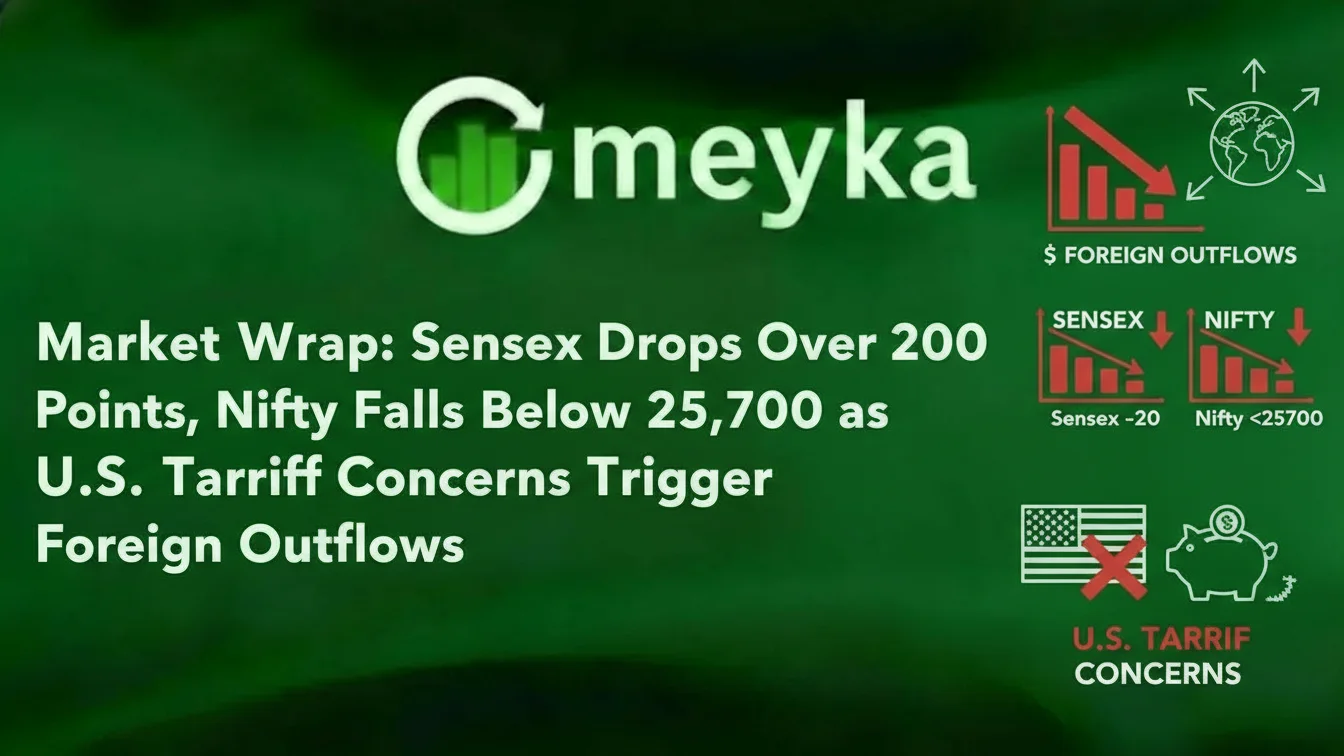
Market Wrap: Sensex Drops Over 200 Points, Nifty Falls Below 25,700 as U.S. Tariff Concerns Trigger Foreign Outflows

The Indian Sensex slipped sharply on January 14, 2026, as investors grew cautious amid renewed concerns over potential U.S. tariffs on Indian exports and rising foreign outflows from equity markets. The benchmark index fell over 200 points, while the Nifty 50 slid below the 25,700 level, reflecting broader risk‑off sentiment among traders and financial institutions.

Global trade tensions and macroeconomic uncertainty have weighed on sentiment, prompting foreign institutional investors to reduce their exposure to Indian stocks. Persistent selling pressure from overseas funds has compounded the market decline, even as pockets of strength emerged in select sectors like metals and banking.

Why the Sensex Fell: U.S. Tariff Worries and Foreign Selling

A major reason the Sensex dropped was rising unease about potential tariffs from the United States that could affect Indian exporters and slow the nation’s trade growth prospects. Renewed tariff jitters have added pressure on risk assets and are viewed as a threat to corporate earnings, especially in export‑oriented sectors such as pharmaceuticals, textiles, and auto components.

Foreign Institutional Investors (FIIs) also continued to withdraw capital from Indian markets, which has been a trend for much of early 2026. This selling has contributed to the overall downward pressure on the Sensex and Nifty levels, as overseas investors adjust portfolios in response to global uncertainties.

When foreign funds sell predominantly, it often signals a risk‑off environment where investors prefer safe assets over equities. As FIIs pull money out of growth markets like India, major indices such as the Sensex are likely to face renewed volatility.

Sector Performance: Mixed Picture

Even as the Sensex dropped on tariff concerns, not all sectors participated equally in the decline. Metals and banking stocks provided some support throughout the session as gains in these areas helped limit broader selling pressure.

The metal sector saw stronger performance due to rising commodity prices and safe‑haven demand. Banking stocks also recorded gains after some lenders reported encouraging quarterly results, which helped buoy sentiment in an otherwise weak market backdrop.

On the downside, heavyweight stocks in information technology and consumer goods faced selling pressure, which contributed directly to the decline in the Sensex. Shares of prominent companies like Tata Consultancy Services and major auto and consumer names recorded notable losses.

Rupee Movement and Crude Prices Influence Sentiment

The Indian rupee also weakened against the U.S. dollar during the session, adding to market unease. A softer rupee can raise input costs for companies that rely on imported raw materials and technology, which in turn can affect profitability for certain sectors.

Meanwhile, crude oil prices climbed to multi‑week highs, which intensified inflation concerns and increased the cost burden on oil‑importing economies such as India. Higher oil prices also tend to divert investor attention toward safe‑haven assets like gold, and away from equities.

These intertwined factors, foreign outflows, tariff worries, a weaker rupee, and rising energy costs, combined to put additional downward pressure on the Sensex as global risk sentiment deteriorated.

Market Breadth and Trading Activity

Market breadth was skewed toward declining stocks, with a majority of counters ending in the red as selling was broad‑based. However, some pockets of the market, particularly mid‑ and small‑cap segments, showed resilience, which suggests that investors are selectively buying sectors they perceive as more defensive or insulated from global headwinds.

Trading volumes remained healthy despite weakness, indicating active participation from both domestic and foreign traders. However, inflows skewed toward safe assets as risk appetite diminished amid uncertainty over tariff policies and global macro trends.

Global Cues and Broader Risk Environment

The Indian markets did not move in isolation. Global equities also showed mixed performance during the session, influenced by rising geopolitical tensions, central bank policy expectations, and worries about slower global growth. Risk assets often react to such uncertainty with declining stock prices and increased demand for traditional safe havens.

Tariff concerns have reverberated beyond India, with several major economies navigating trade policy complexities and supply chain disruptions that can affect corporate earnings and export volumes. This environment makes investors more cautious, prompting reallocation of capital away from equities and toward bonds or precious metals.

How Investors Are Responding

In response to the market weakness, many investors have been reassessing their portfolios, focusing on risk management and liquidity. Defensive strategies such as increasing allocations to stable sectors like utilities, consumer staples, and healthcare are gaining attention.

Some market participants conducting stock research are also exploring opportunities emerging from weakness in certain equities, particularly if valuations appear stretched or fundamentals are weak. For example, selective buying in beaten‑down stocks with strong long‑term prospects could present value opportunities for long‑term investors.

Additionally, comparisons between equity performance and assets like gold or government securities are common as investors rebalance portfolios to hedge against inflation risks and tariff‑related uncertainties.

Outlook: What Comes Next for the Sensex and Nifty

Looking ahead, market analysts say that clarity on the U.S. tariff situation and stability in foreign fund flows could help stabilize the Sensex and broader Indian equity indices. Improved trade relations or policy negotiations could reduce the risk premium currently priced into the market.

Economic data releases, corporate earnings reports, and domestic policy announcements will also play an important role in shaping investor sentiment over the near term. Investors are closely watching inflation trends, interest rate expectations, and sectoral earnings to gauge the health of the economy.

However, until global trade concerns ease and foreign investor confidence strengthens, volatility could continue in Indian markets, especially for benchmark indices like the Sensex and the Nifty 50.

For global investors and those involved in the stock market, risk management and diversified asset strategies are critical during periods of uncertainty, particularly when external factors such as tariffs and foreign flows heavily influence market direction.

FAQs

Why did the Sensex drop over 200 points today?

The Sensex fell due to concerns over potential U.S. tariffs affecting Indian exports and continued foreign investor outflows, which weighed on overall market sentiment.

What sectors were most affected when the Sensex fell below 25,700?

Heavyweight stocks in IT and consumer goods weighed on the Sensex, while metals and banking sectors provided some support amid the broader decline.

How should investors approach markets during tariff‑related volatility?

Investors should focus on risk management, diversify portfolios, and consider defensive sectors or assets like gold, while closely studying corporate earnings and macroeconomic trends.

Disclaimer:

The content shared by Meyka AI PTY LTD is solely for research and informational purposes. Meyka is not a financial advisory service, and the information provided should not be considered investment or trading advice.

Similar Posts

Leave a Reply

Your email address will not be published. Required fields are marked *