Mira Murati

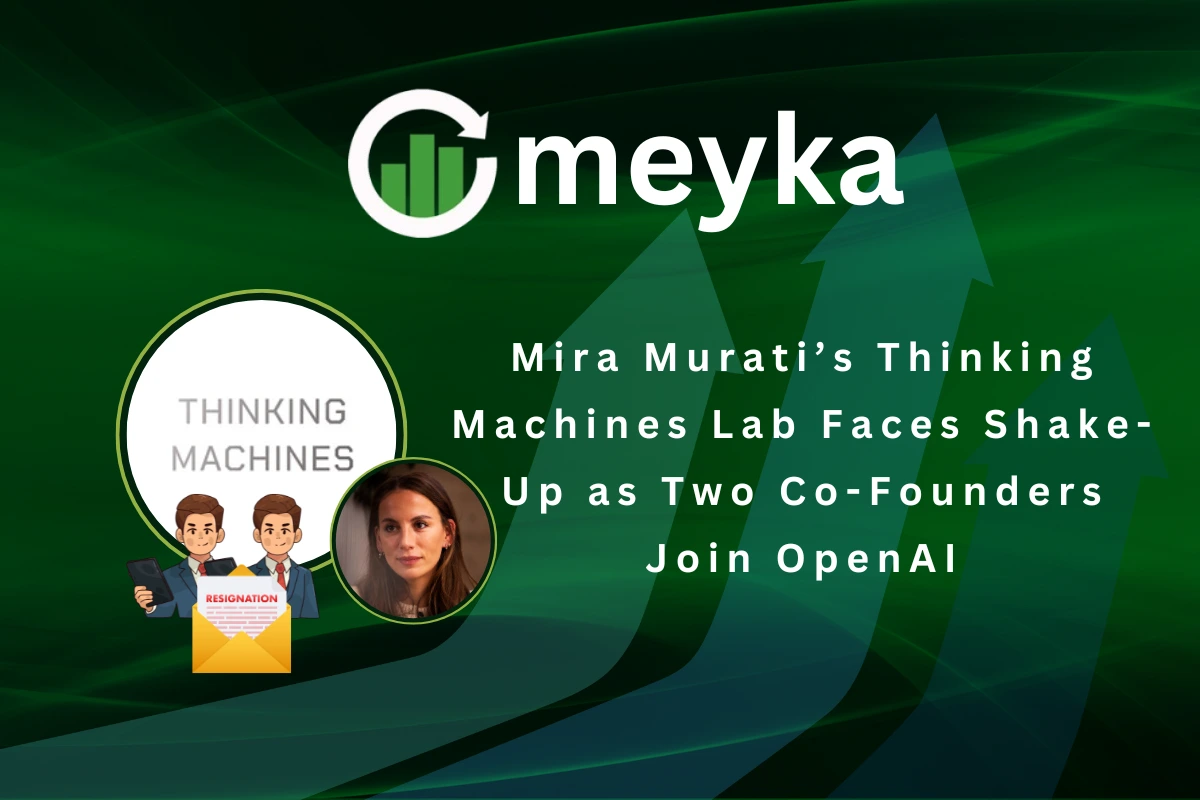
Mira Murati’s Thinking Machines Lab Faces Shake-Up as Two Co-Founders Join OpenAI

On January 14-15, 2026, the Mira Murati AI startup, Thinking Machines Lab, faced a major leadership shift. Two of its co-founders, Barret Zoph and Luke Metz, left the company to rejoin OpenAI, the leading AI research firm they once helped build. Another senior researcher also returned to OpenAI as part of the move.

Murati, the former Chief Technology Officer of OpenAI, started Thinking Machines Lab in early 2025 with big goals and strong funding. The company raised a massive $2 billion seed round and quickly drew top AI talent.

Now, less than a year later, these departures have sparked questions. What does this mean for the young startup’s future? And why are top leaders heading back to one of its biggest rivals? 

Let’s explore the context behind these moves and what they suggest about the fierce battle for AI talent.

Background: Who is Mira Murati, & What Is Thinking Machines Lab?

Mira Murati is one of the most prominent figures in the world of AI. She served as Chief Technology Officer at OpenAI until September 2024 before leaving to build her own company. Murati’s goal was to create a new kind of AI research and development lab focused on pushing the boundaries of intelligent systems while making them broadly useful.

In February 2025, Murati publicly launched Thinking Machines Lab, branding it as a place where teams could explore advanced AI methods in fresh ways. She attracted top AI talent from other tech leaders, including Meta, Mistral, and OpenAI itself.

The company also made a strong financial entrance. In July 2025, Thinking Machines Lab closed a massive seed funding round worth $2 billion, backed by major investors including Andreessen Horowitz, Accel, Nvidia, AMD, and Jane Street, giving it around a $12 billion valuation.

Murati’s leadership and the startup’s early momentum made it one of the most-watched AI ventures outside the big tech giants. Many industry watchers viewed Thinking Machines Lab as a potential challenger to established players like OpenAI and Meta in the race to shape future AI systems.

The Shake-Up to Thinking Machines Lab: Departures and Returns

On January 14-15, 2026, Thinking Machines Lab experienced a sudden and high-profile shift in leadership. Two of its co-founders, Barret Zoph and Luke Metz, announced they would be returning to OpenAI. A third senior researcher, Sam Schoenholz, also made the move back.

Murati announced that she and the company had “parted ways” with Zoph, who had been serving as Chief Technology Officer. She also named Soumith Chintala as the new CTO, praising his experience and contributions within the team.

Shortly after Murati’s announcement, Fidji Simo, OpenAI’s CEO of Applications, confirmed on social media that Zoph, Metz, and Schoenholz would be joining OpenAI. Simo wrote that the return had been “in the works for several weeks.”

These moves represent more than just simple job changes. Zoph and Metz had left OpenAI less than two years earlier to help start Thinking Machines Lab with Murati. Their return, especially alongside another senior researcher, underscores intense competition for elite AI talent in the industry.

Mira Murati: AI Talent as Strategic Competitive Asset

The departures highlight one of the most pressing realities in the AI sector: top researchers are extremely scarce and highly sought after. Skilled AI scientists who can lead research and build breakthrough models are rare. Companies are competing not just through products but by securing the best minds.

This pattern has been seen repeatedly across the AI landscape over the past few years. Teams spin out from giants like OpenAI and Meta to form new startups, only to see talent flow back as competition heats up. The ability to retain founders and senior researchers often signals stability and future innovation capacity.

For Thinking Machines Lab, losing co-founders less than a year after launch, especially one serving as CTO, could affect how investors, partners, and recruits see the company’s long-term prospects.

Internal Dynamics & Leadership Transition

The transition from Barrett Zoph to Soumith Chintala as CTO is significant. Chintala is widely respected in AI circles, best known for co-creating the open-source PyTorch framework that underpins much of modern deep learning research.

This kind of leadership reshuffle can help Thinking Machines Lab steady the ship. But it also raises questions about internal alignment and strategic direction. The abrupt departure of founding leaders often forces startups to adjust their plans and timelines.

Response from Mira Murati, Thinking Machines Lab & OpenAI

Murati’s public message focused on the future, emphasizing confidence in Chintala and the wider team. Her concise post avoided detailed reasons for the changes, signaling a desire to keep company momentum in focus.

OpenAI, for its part, framed the return of Zoph, Metz, and Schoenholz as a strategic reinforcement. OpenAI has been recalibrating its internal structure after leadership transitions and competitive pressures, and bringing back proven AI talent strengthens its research bench.

What’s at Stake for Thinking Machines?

Unlike long-established firms with shipping products, Thinking Machines Lab is still in an early research and development stage. It does not yet have a widespread commercial product. As a result, retaining top leadership can be as important as funding when it comes to convincing the market of future success.

This leadership loss may slow down certain initiatives or require the company to pivot in where it places its priorities. Investors will be watching closely to see how the company adapts and whether it can attract fresh talent.

Broader Implications for Mira Murati AI Ecosystem

The fluid movement of senior researchers between Thinking Machines Lab and OpenAI highlights a broader trend. AI leaders are continually realigning with organizations where they see the best opportunity for impact. For big players like OpenAI, securing veteran researchers reinforces their market position. For startups, it means constantly battling to offer something compelling, whether vision, culture, or unique research freedom.

This talent circulation reflects the high stakes in developing next-generation AI systems and models, shaping the industry’s competitive landscape well into 2026 and beyond.

Conclusion: Summary & Forward Look

The co-founder departures at Thinking Machines Lab mark a notable moment in the AI world. These shifts tell a story about how fierce talent competition is a defining force. They also remind the tech industry that building groundbreaking AI is not just about funding or vision, but people.

What happens next will be crucial: Thinking Machines Lab must prove it can continue its bold ambitions despite leadership changes, while OpenAI solidifies its technical base as the AI arms race continues.

Frequently Asked Questions (FAQs)

Why did the Thinking Machines Lab founders join OpenAI again?

In January 2026, OpenAI rehired them to strengthen research. The company values proven experts. The move reflects intense hiring pressure and a need to speed up key projects.

Is Thinking Machines Lab still active after the exits?

Yes. As of January 2026, the startup continues operations. It has strong funding, a new CTO, and active hiring. Leadership changes may slow plans, but not stop work.

What does this mean for the AI talent race?

In 2026, the shift shows fierce competition. Large labs pull experts back. Startups must offer a clear vision and stability to keep talent in a fast-moving market.

Disclaimer

The content shared by Meyka AI PTY LTD is solely for research and informational purposes. Meyka is not a financial advisory service, and the information provided should not be considered investment or trading advice.

Similar Posts

Leave a Reply

Your email address will not be published. Required fields are marked *