US Stock Market Today: Dow, S&P 500 and Nasdaq Rise as Wall Street Ends a Volatile Week
Strong Finish for the US Stock Market After a Turbulent Week
The US stock market closed the week on a positive note, with the Dow Jones Industrial Average, S&P 500, and Nasdaq Composite all posting gains. This rebound came after several sessions of sharp swings that tested investor confidence and highlighted ongoing uncertainty around interest rates, earnings, and economic growth.
Wall Street’s final push higher was driven by renewed buying in bank shares, a recovery in major technology stocks, and signs that investors are adjusting to the idea that interest rates may stay higher for longer. While volatility remained present, the week ended with a sense of balance rather than panic.
So what changed by the end of the week, and why did markets regain some strength?
Let us break down the moves, the data behind them, and what they mean for investors watching the US stock market closely.
US Stock Market Performance at a Glance
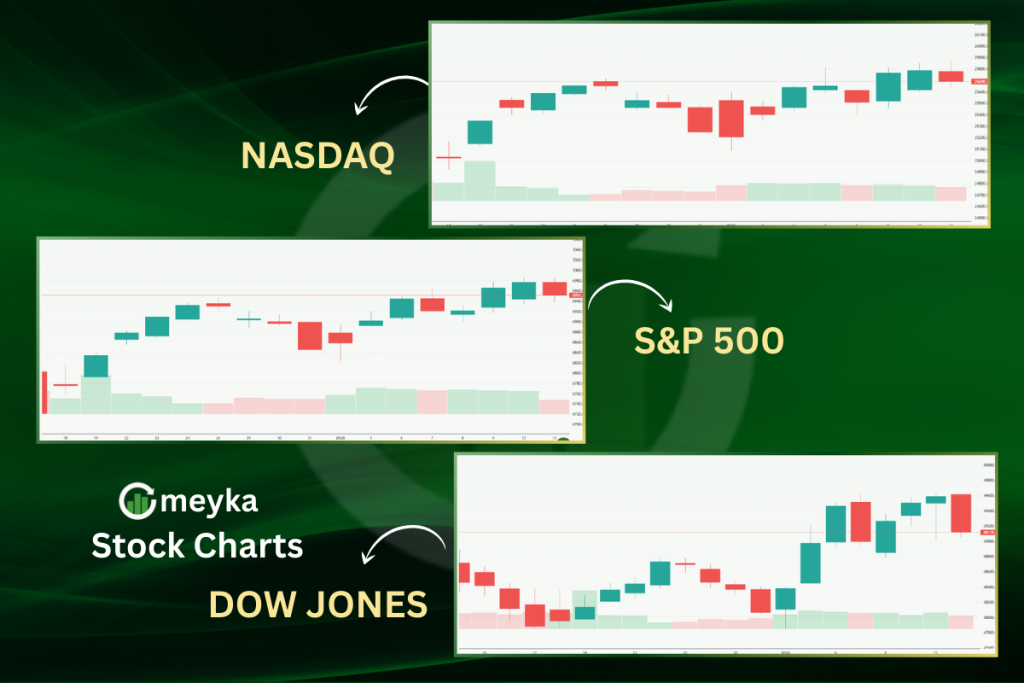
The major US indexes showed resilience as buyers stepped back in.
- Dow Jones Industrial Average moved higher as banking and industrial stocks gained support from steady bond yields and improving sentiment.
- S&P 500 ended the week in positive territory, helped by strength in financials, technology, and select consumer names.
- Nasdaq Composite outperformed on renewed interest in chipmakers and large growth stocks tied to long-term innovation.
These gains helped offset earlier losses and brought a sense of stability after what many traders described as a difficult and emotional trading week.
Why Did the US Stock Market Turn Higher at the End of the Week
The late-week rally did not happen by accident. Several factors worked together to lift sentiment.
First, bond yields stabilized after earlier sharp moves. When yields stopped climbing rapidly, equity investors found room to breathe. This helped rate sensitive sectors, including technology and financials.
Second, bank stocks gained ground as investors reassessed balance sheet strength and profit outlooks. According to reporting highlighted by ColoradoBiz, financial shares played a key role in lifting Wall Street, supported by expectations that higher interest rates could still support net interest margins.
Third, chip stocks rallied after recent pullbacks. Semiconductor names remain closely watched due to their role in data centers, artificial intelligence, and cloud computing.
A market comment shared by Winning Trading captured this shift in tone, noting that buyers appeared more confident stepping in after heavy selling earlier in the week.
Volatility Still Defines the US Stock Market Landscape
Even with Friday’s gains, volatility remains a defining feature of the US stock market. Earlier in the week, stocks faced back-to-back losses, as highlighted by Yahoo Finance, driven by concerns over inflation data and the future path of Federal Reserve policy.
Short-term traders continue to react quickly to headlines, while long-term investors are trying to filter noise from meaningful trends.
Why does volatility remain so high?
The answer lies in uncertainty. Investors are balancing strong corporate earnings against sticky inflation and mixed economic signals. This push and pull keeps markets moving sharply in both directions.
Key Economic and Market Drivers Investors Are Watching
- Inflation data remains central to market direction, as even small surprises can shift rate expectations.
- Federal Reserve messaging continues to influence bond yields and equity valuations.
- Corporate earnings guidance is shaping sector-level moves, especially in banks and technology.
- Global events and commodity prices add another layer of uncertainty.
These drivers explain why the US stock market can swing sharply within days, even when weekly performance ends positively.
Bank Stocks and Financials Lead the Recovery
Financial stocks were among the top performers as the week closed. Investors showed renewed confidence in large banks, encouraged by stable credit conditions and manageable loan loss expectations.
Higher interest rates, while challenging for some sectors, can benefit banks through improved lending margins. This dynamic helped lift the Dow and supported broader market sentiment.
A social media post from Bottom Phishing highlighted how select financial names attracted buyers as fear eased slightly toward the end of the week.
Technology and Chip Stocks Regain Momentum
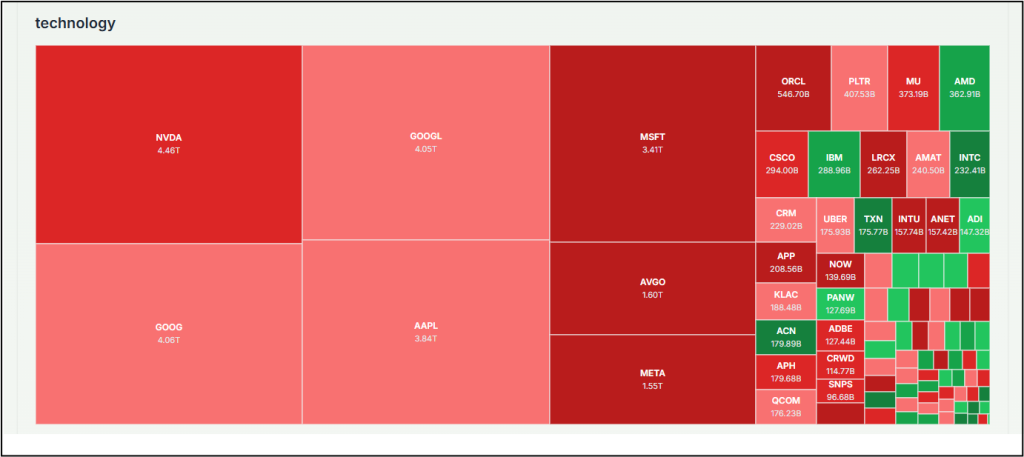
Technology shares, particularly in the semiconductor space, rebounded after recent weakness. These stocks remain sensitive to interest rates, but long term growth narratives continue to attract investors during pullbacks.
Demand linked to cloud computing, automation, and advanced analytics keeps this sector in focus. Some investors are also using AI Stock research methods to identify companies positioned to benefit from future digital growth trends.
The Nasdaq’s recovery reflects this renewed interest, even as traders remain cautious about valuations.
What Does the Data Say About Market Direction
Looking at recent data trends, analysts see a mixed picture.
Economic growth remains steady but slower than last year. Inflation has cooled from its peak but is not yet fully under control. Employment data remains relatively strong, supporting consumer spending.
Predicted market scenarios suggest that if inflation continues to ease gradually, the US stock market could see more stable gains in the coming months. However, any upside surprises in inflation could quickly bring volatility back.
Forecast ranges from market strategists’ point to modest upside for the S&P 500 in the near term, with pullbacks likely along the way.
Investor Strategy in the Current US Stock Market Environment
- Focus on quality companies with strong balance sheets.
- Avoid overreacting to daily market noise.
- Diversify across sectors to manage risk.
- Pay attention to earnings guidance rather than headlines.
These strategies are often highlighted in professional AI stock analysis reports, which aim to balance data driven insights with broader market context.
Role of Trading Tools and Market Analytics
Many active traders are relying on advanced trading tools to track momentum, volume shifts, and sector rotations. These tools help identify short term opportunities during volatile periods.
However, data alone is not enough. Market context, discipline, and risk management remain critical, especially in a market that can reverse quickly.
Broader Sentiment Across Wall Street
Despite the week’s volatility, sentiment has not turned deeply bearish. Instead, it reflects caution and selectivity. Investors are not abandoning equities but are more careful about where they place capital.
This environment often favors companies with clear earnings visibility and strong cash flow, while speculative names face more pressure.
Some institutional investors are also exploring selective exposure to innovation themes through carefully researched AI Stock ideas, rather than broad speculation.
What to Expect Next for the US Stock Market
- Continued sensitivity to inflation and interest rate data.
- Sector rotation rather than broad market rallies.
- Higher intraday swings compared to calmer market periods.
- Increased focus on upcoming earnings seasons.
These factors suggest that while gains are possible, smooth upward moves are unlikely in the short term.
Final Thoughts on the US Stock Market Outlook
The US stock market showed resilience by ending a volatile week higher, with the Dow, S&P 500, and Nasdaq all posting gains. This rebound reflects investor adaptability rather than full confidence.
Markets are learning to live with uncertainty. While risks remain, steady economic activity and selective strength in key sectors provide support.
For investors, the message is clear. Stay informed, stay disciplined, and focus on long term goals rather than short term swings. As Wall Street moves forward, patience and careful analysis will remain essential in navigating the next phase of the market.
FAQ’S
Not entirely. Volatility is likely to continue as economic data and Fed signals evolve.
That depends on the time horizon. Long-term investors may see opportunities, while short-term traders should remain cautious.
Markets are still debating this. Current expectations suggest patience from the Federal Reserve.
Disclaimer
The content shared by Meyka AI PTY LTD is solely for research and informational purposes. Meyka is not a financial advisory service, and the information provided should not be considered investment or trading advice.