Taiwan

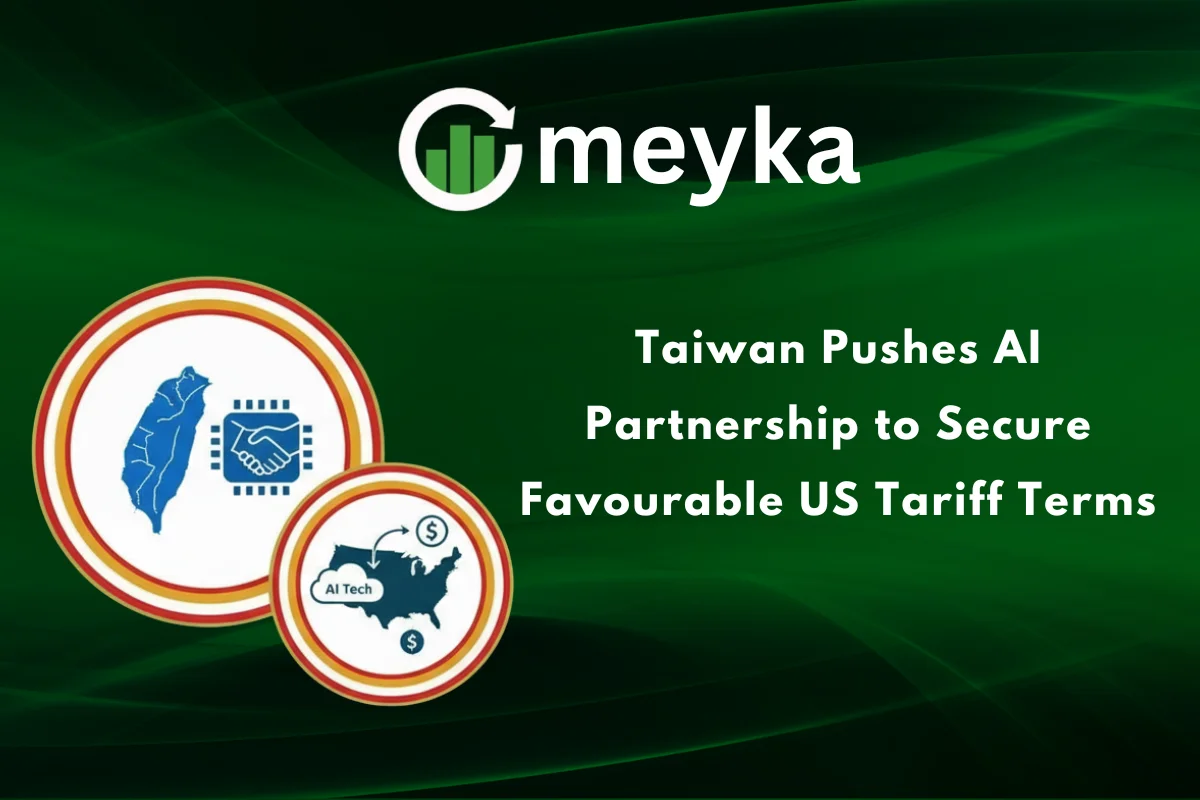
Taiwan Pushes AI Partnership to Secure Favourable US Tariff Terms

In a landmark shift for global trade and technology, Taiwan is intensifying efforts to secure a favourable tariff agreement with the United States by promoting deep cooperation in artificial intelligence (AI), semiconductors, and high-tech manufacturing. The move comes as part of broader negotiations aimed at lowering tariff barriers on Taiwanese exports while strengthening strategic ties with the U.S. in key technology sectors, especially AI and semiconductor production.

The deal is seen as a major policy victory for Taiwan, particularly given the island’s economic reliance on high-tech exports and its central role in global semiconductor supply chains, and has implications for technology-driven industries worldwide, including how AI-related hardware and services are priced and traded in the stock market and assessed in stock research.

What Taiwan Is Aiming for in the New Trade Talks

Taiwan has been in intensive dialogue with U.S. officials to reduce tariffs on its exports, shifting the standard reciprocal tariff rate from around 20% down to 15% for many products, and in some cases securing zero tariffs on sectors like generic pharmaceuticals and aircraft components.

As part of these negotiations, Taipei is emphasizing two-way cooperation in strategic tech areas such as AI, semiconductors, energy technologies, and electronics manufacturing, hoping that deeper industrial partnership will lead to tariff relief and stronger supply chain integration. Taiwanese negotiators argue this approach will benefit both countries by boosting U.S. manufacturing capacity while securing Taiwan’s critical role in high-end tech exports.

This tariff framework aligns with broader U.S. policy objectives to reshore advanced semiconductor manufacturing and reduce dependency on foreign supply, particularly for chips that power AI applications and data centres, which are increasingly vital in global technology infrastructure.

Record Investment Commitments and Strategic Leverage

A central part of the deal is Taiwan’s pledge to boost investment in U.S. semiconductor and AI production facilities, with Taiwanese companies committing at least $250 billion in direct investments, and Taiwan’s government backing these with up to $250 billion in credit guarantees, a historic commitment that reflects both economic cooperation and strategic alignment.

These credits will be extended to Taiwanese firms that expand in the U.S. market, particularly in AI chip manufacturing, energy infrastructure, and advanced logic chips, sectors that are at the heart of global technology competition.

The agreement also includes provisions that allow companies building new U.S. production capacity to import related technologies with lower or even zero tariff exposure, which encourages capital investment and transfer of expertise between the economies.

Taiwan’s Role in AI Supply Chains and the Global Tech Ecosystem

Taiwan is widely recognised as a cornerstone of global semiconductor and AI hardware supply chains, producing a large share of the world’s advanced chips used in devices ranging from mobile phones to data centre GPUs, and this negotiating position has given the island leverage in shaping favourable tariff terms.

Companies such as Taiwan Semiconductor Manufacturing Company (TSMC) have already been investing heavily in U.S. facilities, especially in Arizona, where multiple fabs and advanced packaging plants support major customers like Apple, Qualcomm, and Nvidia, whose products are essential for AI workloads.

By linking tariff reductions to expanded AI and semiconductor cooperation, Taiwan is seeking to ensure that its high-tech exports remain competitive while attracting even more foreign direct investment (FDI) into AI-related production abroad, a strategy that also reassures global markets about the security and resilience of supply chains.

Economic and Market Impacts of the Tariff Agreement

The tariff agreement has significant implications for Taiwanese exporters, especially in sectors that have seen tariff exposure and regulatory uncertainty. By stabilizing duties at a lower level, Taiwanese companies can plan long-term production and pricing strategies with greater confidence, reducing trade cost volatility.

For investors, the clarity offered by a favourable tariff outcome reshapes expectations for AI stocks and technology companies with exposure to Taiwan’s semiconductor ecosystem. Lower tariffs can improve earnings estimates and valuation models for firms that depend on cross-border supply and demand dynamics. Analysts conducting stock research are likely to revisit forecasts for chip makers, AI hardware suppliers, and broader tech sectors as tariff risk diminishes and investment flows become clearer.

The improved tariff framework also helps anchor Taiwan’s GDP growth prospects and supports continued export growth, which can indirectly affect investor sentiment toward Asian markets and global tech equities. Reduced tariff barriers typically boost trade volumes, create efficiencies, and invite capital inflows, all of which are favourable signals for market participants.

Balancing Geopolitics and Economic Integration

The Taiwan-U.S. trade negotiation occurs in a tense geopolitical environment, with pressures from neighbouring powers and ongoing strategic competition in technology leadership. While Taiwan pushes for deeper AI and semiconductor collaboration to secure economic benefits, it must also navigate complex relationships with other countries that watch these developments closely.

Taipei’s strategy emphasizes that the tariff and investment deal will strengthen supply chain resilience without undermining Taiwan’s technological independence, and it views AI partnership as a way to diversify global production locations while maintaining core research and manufacturing at home.

The agreement requires ratification in Taiwan’s legislature, where opinions differ on the balance between opening markets and protecting domestic industries, but government leaders stress that the long-term benefits of tariff relief and expanded AI cooperation outweigh short-term risks.

Future Outlook and Strategic Predictions

Looking ahead, Taiwan is poised to benefit from increased collaboration with the U.S. in AI research, semiconductor manufacturing, and technology investment, which may bring not only tariff benefits but also deeper integration into global innovation ecosystems.

Continued investment in AI infrastructure, cross-border cooperation, and diversification of supply chains will be crucial in sustaining economic growth and maintaining competitiveness in the modern technological landscape.

Investors and market watchers will closely monitor how companies like TSMC, media suppliers, and AI hardware developers respond to new tariff norms, and how this affects stock market valuations and investor behaviour in technology sectors.

The direction Taiwan takes with economic diplomacy and industrial strategy in AI and semiconductors will likely shape global tech competition for years to come.

FAQs

What is the main goal of Taiwan’s tariff negotiations with the US?

Taiwan aims to secure lower tariff rates on its exports by positioning itself as a strategic partner in AI, semiconductors, and advanced manufacturing to foster two-way investment and reduce trade cost burdens.

How much investment is Taiwan committing to the US technology sector?

Taiwanese companies have pledged at least $250 billion in direct investments in the United States, with an additional $250 billion in credit guarantees to support AI, semiconductor, and energy production.

Why is this tariff deal important for AI supply chains?

The tariff deal helps stabilize trade costs, encourages expanded manufacturing capacity in the U.S., and strengthens cooperation on AI technology, which improves supply chain resilience and investor confidence globally.

Disclaimer:

The content shared by Meyka AI PTY LTD is solely for research and informational purposes. Meyka is not a financial advisory service, and the information provided should not be considered investment or trading advice.

Similar Posts

Leave a Reply

Your email address will not be published. Required fields are marked *