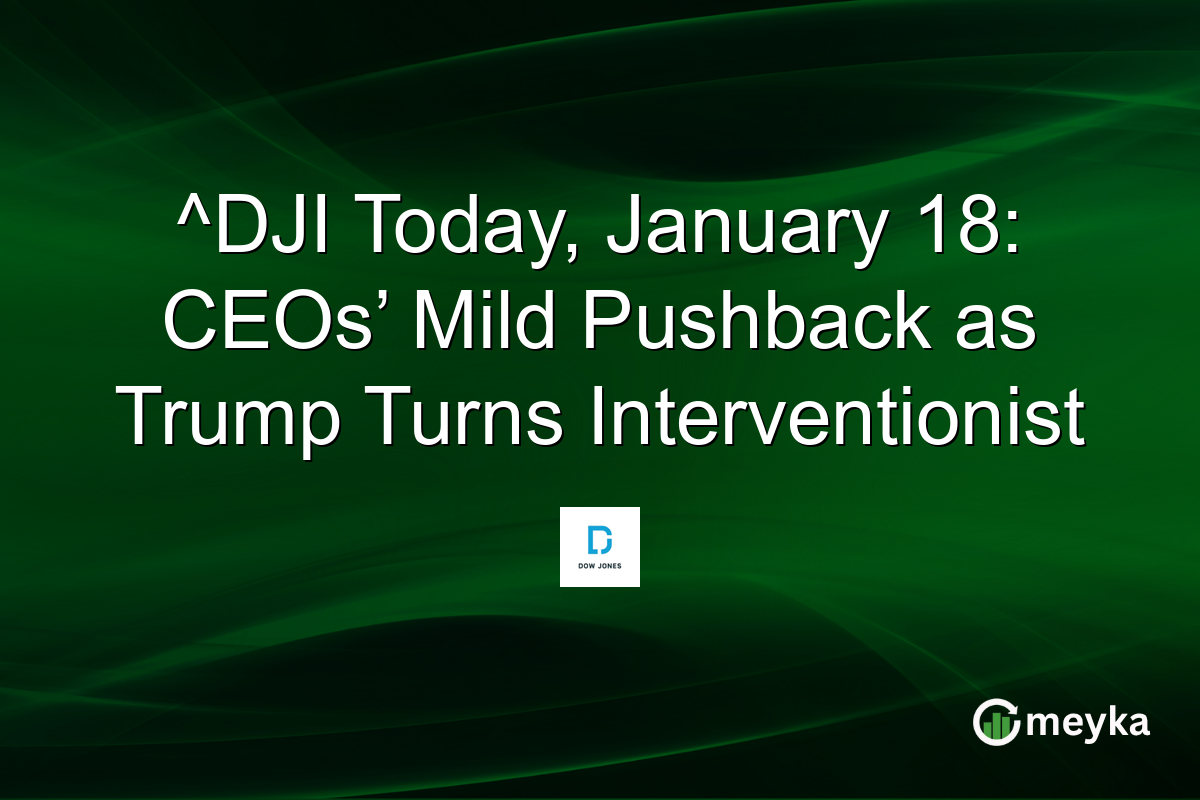
^DJI Today, January 18: CEOs’ Mild Pushback as Trump Turns Interventionist

^DJI Today, January 18: CEOs’ Mild Pushback as Trump Turns Interventionist

Trump tariffs are back in focus for Japan-based investors today. As the White House leans more interventionist into 2026, US CEOs show only mild resistance to tariffs, export controls, and industrial mandates. For ^DJI, that means near-term headline risk and wider swings in multinationals and cyclicals. We explain how American CEOs pushback shapes the policy path, what it implies for Japan’s exporters and the yen, and how to position as trade policy risk builds.

CEOs’ mild resistance and the policy path

Corporate America has voiced limited objections, suggesting a smoother runway for Trump tariffs, export controls, and tighter mandates into 2026. Reports show boardrooms preparing for faster execution rather than mounting a broad fight, implying policy follow-through could quicken. See coverage from American CEOs push back on Trump … mildly and ‘Maga has gone Maoist’: corporate America reels as Trump turns interventionist for context.

A quicker policy pace lifts headline sensitivity for Dow components tied to global demand. The index recently printed 49,359.34, down 83.11 points or 0.17%, with a day range of 49,246.24 to 49,616.70 and a year high at 49,633.35. With RSI at 65.04 and ATR at 481.83, moves near the Bollinger upper band at 49,496.38 can stretch. Trump tariffs could amplify sector rotations and intraday volatility.

Implications for Japan: exporters, yen, and pricing power

For Japan, Trump tariffs would challenge autos, electronics, and chip gear via higher US landing costs and stricter export rules. Firms may need to adjust sourcing, shift final assembly, or absorb price hits. US-facing revenue concentration and pricing power will set winners and losers. Supply chain clarity and contract terms with US buyers become key while trade policy risk stays elevated.

Trade shocks can jolt USD/JPY. Risk-off could lift the yen, but higher US inflation from Trump tariffs might widen US–Japan rate spreads and weaken the yen. A stronger yen trims imported input costs but pressures exporters’ margins. A weaker yen supports revenues in JPY yet risks imported inflation. Hedging tenor and pass-through strategy will matter for corporate guidance.

Dow technical picture and risk ranges

Momentum is firm but not extreme. RSI sits at 65.04, CCI at 136.81, and Williams %R at -5.30, signaling a near overbought stance. Price hugs upper volatility bands: Bollinger upper 49,496.38, Keltner upper 49,545.27. ATR at 481.83 frames typical daily swings. Trump tariffs headlines could push tests of these bands and raise whipsaws around liquidity pockets.

Into 2026, clean breaks above 49,633.35 would extend the uptrend. Failure to hold the upper bands can mean mean reversion toward the 50-day average at 47,931.04 and the middle Bollinger at 48,569.97. Trump tariffs talk may drive rotation from cyclicals to defensives, with pullbacks sharpening if export controls tighten or industrial mandates add cost.

How Japan-focused portfolios can respond

Consider trimming names most exposed to US list price caps or procurement rules while Trump tariffs risk builds. Favor firms with US-localized production or strong pricing power. Hedge USD/JPY earnings where feasible, stagger entries near ATR-based pullbacks, and use stop-loss levels outside recent ranges. Keep cash buffers for volatility and avoid forced trades on headlines.

Track White House trade announcements, agency rulemaking, and any broad tariff schedules as 2026 nears. Watch US earnings calls for guidance on sourcing, pass-through, and capex. In Japan, listen for exporter commentary on currency hedges and US demand. Persistent trade policy risk favors selective exposure and disciplined risk controls as Trump tariffs debates intensify.

Final Thoughts

Mild resistance from US CEOs suggests interventionist policies could advance faster, keeping Trump tariffs at the center of market risk. For Japan, the mix affects exporters’ pricing power, supply chains, and USD/JPY dynamics. The Dow’s momentum is firm, but proximity to volatility bands and an RSI near 65 points to choppier sessions around policy headlines. We suggest simple steps: prioritize firms with pricing leverage or US-local production, maintain currency hedges, stagger entries near support, and set stops beyond ATR noise. Keep focus on official announcements and earnings guidance to separate signal from noise and adjust exposures with discipline.

FAQs

What are Trump tariffs and why do they matter to Japan-based investors?

They are proposed or expanded import taxes on goods entering the US. For Japan, they can raise delivered costs for autos, electronics, and components, reshape supply chains, and shift FX flows. The result is changes to margins, pricing, and earnings visibility for exporters and global suppliers.

Which Japanese sectors are most exposed to US tariff policy?

Autos, auto parts, consumer electronics, and semiconductor equipment have higher US revenue shares and complex cross-border inputs. These groups face pricing pressure and potential delivery delays if rules tighten. Firms with US-local production, diversified sourcing, and strong brands can cushion the impact better than smaller suppliers.

How could tariff headlines affect the Dow in the near term?

Tariff and mandate headlines can boost intraday volatility, widen bid-ask spreads, and drive sector rotations. Momentum near the upper bands can fade on negative surprises, while constructive policy news can fuel breakouts. Watch RSI, ATR, and key levels like 49,633 to gauge the strength or failure of upside attempts.

What practical steps can retail investors in Japan take now?

Map portfolio US exposure, check contract terms with US buyers, and prioritize firms with pricing power. Use partial hedges on USD/JPY, set stop-losses outside recent ATR, and stage buys near support. Focus on management guidance and official announcements to avoid trading on rumors.

Disclaimer:

The content shared by Meyka AI PTY LTD is solely for research and informational purposes.  Meyka is not a financial advisory service, and the information provided should not be considered investment or trading advice.

Similar Posts

Leave a Reply

Your email address will not be published. Required fields are marked *