FTSE 100 Slides as EU Threatens $108bn Tariffs in Retaliation to Trump Trade Moves
FTSE 100 Drops as Trade Tensions Shake Global Markets
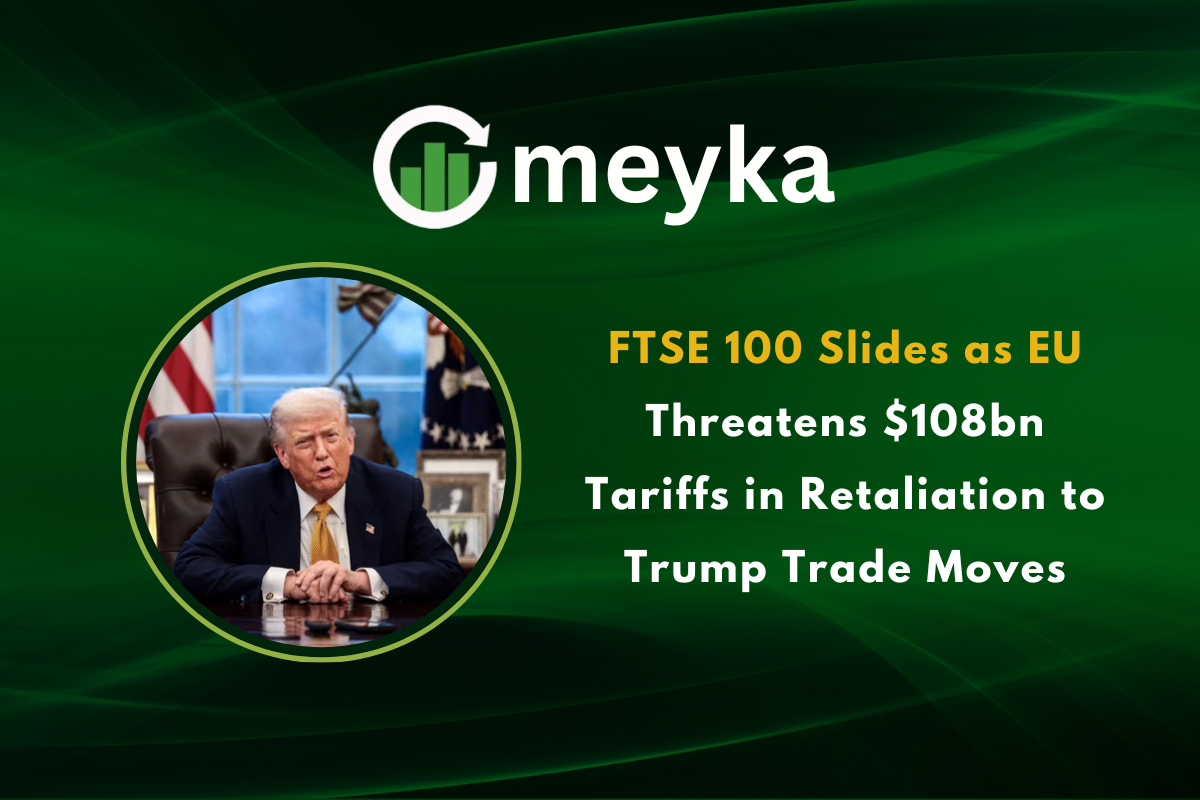
The FTSE 100 moved lower as fresh trade tensions hit global markets, after the European Union warned it could impose tariffs worth up to $108 billion on US goods. The warning came as a direct response to new trade moves announced by former US President Donald Trump, reopening fears of a broader trade conflict between major economies.
London markets reacted quickly. Export-heavy stocks, banks, and multinational firms led losses, reflecting concerns about slower growth, higher costs, and weaker global demand. Investors shifted toward caution, with trading volumes rising as uncertainty spread across Europe.
Why is this happening now, and why does it matter so much to the FTSE 100? The answer lies in how deeply the UK market is tied to global trade and political risk.
What Triggered the FTSE 100 Decline
Trade fears returned after reports showed that the EU is preparing retaliatory tariffs in response to US trade actions. According to live market coverage by The Guardian, EU officials outlined potential countermeasures that could target a wide range of American exports if tensions escalate.
Although the UK is no longer part of the EU, the FTSE 100 remains highly exposed to European and US trade flows. Many of its largest companies earn most of their revenue overseas. When global trade slows, London stocks feel the pressure almost immediately.
Early trading saw the index slide as investors priced in higher geopolitical risk and potential supply chain disruption.
Key Market Drivers Behind the FTSE 100 Slide
- Renewed fears of a US-EU trade war impacting global growth.
- Heavy exposure of FTSE 100 companies to international revenues.
- Rising volatility across global equity markets.
- Investor rotation away from risk-sensitive assets.
These factors combined to push the index lower, even as some domestic economic data remained stable.
How Big Is the EU Tariff Threat
The proposed $108bn tariff figure caught the attention of investors. It signals that the EU is ready to respond forcefully if US trade actions move forward. Such a scale would rival some of the largest trade disputes seen in recent decades.
A social media post by ConflictDISP highlighted how the tariff threat could widen global economic strain, especially if other regions respond in kind.
Markets dislike uncertainty more than bad news. At this stage, the tariffs are a threat, not a final decision. Still, the size alone was enough to trigger defensive trading.
Why the FTSE 100 Is Especially Sensitive
The FTSE 100 is often seen as a global index rather than a purely UK-focused one. Energy giants, mining firms, consumer brands, and banks generate income across Europe, the US, and emerging markets.
When trade barriers rise, these firms face several risks. Costs can increase. Demand can weaken. Currency moves can become more volatile.
This is why the index tends to react sharply to geopolitical headlines, even when they originate outside the UK.
Sectors Under Pressure in the FTSE 100
- Banks fell as slower global growth could hurt lending and investment.
- Mining stocks weakened on fears of reduced industrial demand.
- Consumer goods companies faced concerns over higher tariffs and costs.
- Industrial exporters saw pressure due to trade exposure.
Defensive sectors held up better, but they could not fully offset broader losses.
Currency Moves Add Another Layer of Risk
The British pound showed signs of volatility as investors assessed the impact of renewed trade conflict. A weaker pound can help exporters, but it also raises import costs and inflation risks.
Currency swings matter because many FTSE 100 firms report earnings in dollars or euros. Rapid moves can distort profit forecasts and complicate valuation models.
Steve Hanke shared commentary on social media, warning that trade conflicts often lead to currency instability, which can amplify market stress.
Investor Sentiment Turns Cautious
Risk appetite faded as markets digested the news. Fund managers reduced exposure to cyclical stocks and focused more on cash and defensive assets.
This shift is visible in market data. Volatility indicators rose, while flows into equity funds slowed. Some investors turned to data-driven AI Stock analysis tools to reassess exposure and stress test portfolios under different trade scenarios.
Even though the FTSE 100 is not an AI-focused index, global sentiment driven by technology and trade themes still affects it.
What Are Analysts Saying
Market analysts note that this move could be short-lived if trade talks cool down. However, if rhetoric hardens, the downside risk grows.
Some forecasts suggest that a prolonged trade conflict could shave several percentage points off global GDP growth over the next year. That would directly impact earnings expectations for FTSE 100 companies.
Analysts are watching upcoming statements from both EU and US officials closely.
Historical Context, Trade Wars, and Market Impact
- Past trade disputes often led to short-term market sell-offs.
- Prolonged conflicts caused earnings downgrades.
- Export-heavy indices like the FTSE 100 suffered more than domestic ones.
- Resolution or compromise usually sparked sharp rebounds.
History suggests volatility may remain elevated until clarity improves.
Social Media Reflects Growing Concern
Traders and analysts took to social platforms to share views. A post by juniortgr pointed out that markets may be underestimating the potential spillover into European growth.
Another post by MarzellCrypto highlighted how global equities tend to move together during trade shocks, even when fundamentals differ.
These discussions reflect a broader mood of caution.
Could the FTSE 100 Recover Quickly
The answer depends on politics, not just economics. If trade tensions ease, markets could rebound fast. Valuations in some FTSE 100 sectors already look attractive compared to historical averages.
However, if tariffs are implemented, earnings forecasts may need to be revised lower, which could cap upside in the near term.
This uncertainty is why many investors are relying on diversified strategies and advanced trading tools to manage risk rather than making large directional bets.
Impact on Long-Term Investors
Long-term investors may view this dip as noise rather than a trend. The FTSE 100 has weathered many geopolitical shocks over the years. Dividend yields remain relatively high compared to other global indices.
However, patience is required. Trade conflicts often take months to resolve, and markets can swing sharply during negotiations.
Some long-term funds are revisiting AI Stock research methods to better understand how global trade data, sentiment, and policy signals interact with equity prices.
What to Watch Next
Investors should monitor official statements from the EU and the US, currency movements, and earnings guidance from major FTSE 100 companies. Any sign of compromise could lift markets, while escalation would likely deepen losses.
Economic data from Europe and the US will also matter, especially indicators linked to manufacturing and exports.
The Bigger Picture for Global Markets
This episode highlights how fragile global market confidence remains. Even years after previous trade disputes, new policy moves can quickly revive old fears.
For global investors, understanding political risk is now as important as tracking earnings and interest rates. This is why some institutions integrate geopolitical data into broader AI stock-driven investment frameworks.
Conclusion: What This Means for the FTSE 100
The slide in the FTSE 100 reflects more than a single headline. It shows how deeply connected markets are to global trade and politics. The EU’s $108bn tariff threat has reintroduced uncertainty at a time when investors were hoping for stability.
While the long term outlook for many FTSE 100 companies remains solid, short term volatility is likely to persist. The path forward depends on diplomacy, not just data.
For now, investors are watching closely, managing risk carefully, and waiting for clearer signals on whether this trade dispute escalates or cools down.
FAQ’S
Not necessarily, but its global exposure makes it sensitive to trade news.
No, they are still a threat, not a final action.
Most analysts advise caution, not panic, focusing on diversification.
Disclaimer
The content shared by Meyka AI PTY LTD is solely for research and informational purposes. Meyka is not a financial advisory service, and the information provided should not be considered investment or trading advice.