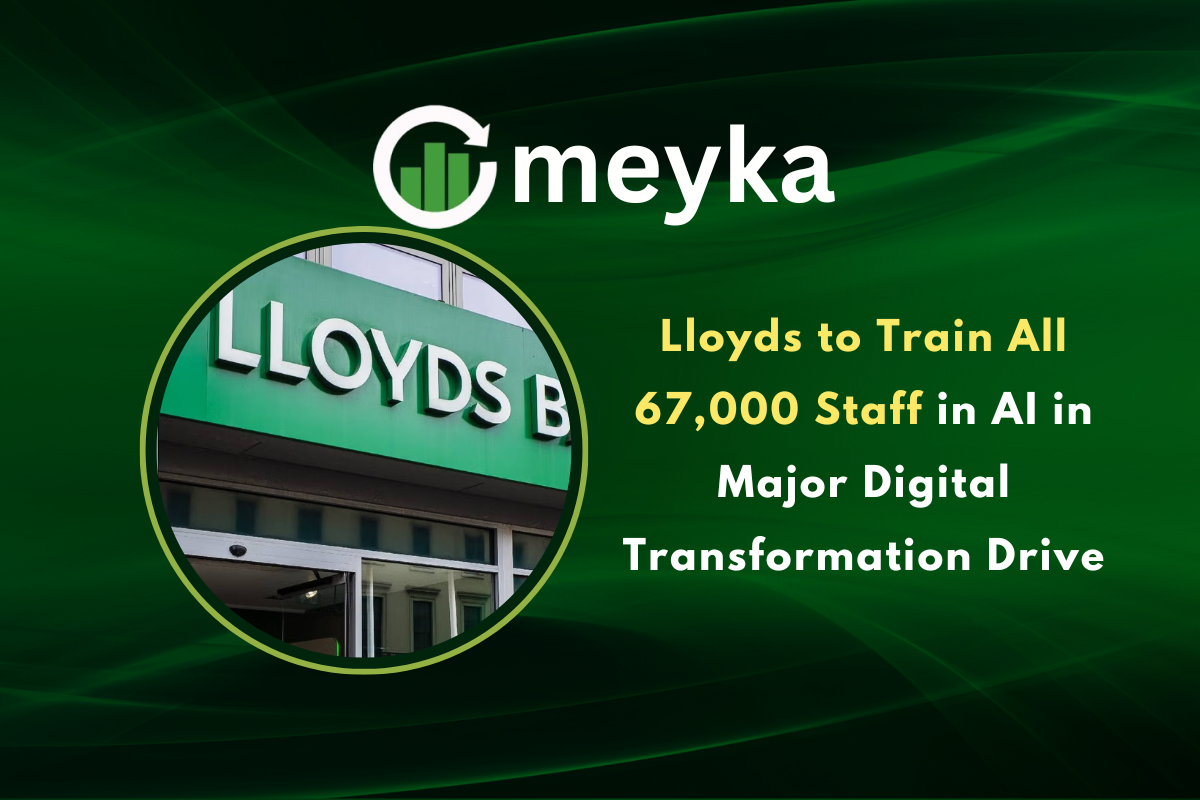
Lloyds to Train All 67,000 Staff in AI in Major Digital Transformation Drive
Lloyds, one of the biggest banking groups in the United Kingdom, has announced a bold and wide-ranging plan that could reshape how banks work in the digital age. The group will train all 67,000 employees in artificial intelligence, marking one of the largest workforce upskilling programmes ever launched by a UK bank.
This move places Lloyds at the centre of the growing global shift toward smarter, faster, and more digital financial services. The focus is not just on technology but on people, skills, and long-term growth.
Why is this happening now? And what does it really mean for customers, staff, and investors? Let us break it down step by step in simple language.
Lloyds Digital Push Explained in Simple Terms
The banking world is changing fast. Customers want quicker answers, safer systems, and services that feel personal. To meet these needs, Lloyds is investing heavily in digital tools and human skills.
The bank confirmed that every employee, from branch staff to senior leaders, will receive training in artificial intelligence. This is not limited to IT teams. It covers frontline workers, operations staff, and management roles.
The aim is clear: to make AI a normal part of daily work, not a complex tool used by only a few experts.
According to reports from trusted UK news outlets, this training programme is part of a wider digital transformation plan already underway at Lloyds. The bank has been investing billions of pounds in technology over recent years, including cloud systems, data platforms, and automation tools.
Now the focus has shifted to people.
What Kind of AI Training Will Lloyds Staff Get?
The training is designed to match different job roles and skill levels. Not everyone will learn coding or advanced data science. Instead, the goal is practical understanding.
Employees will learn what AI is, how it works, and how it can be used safely and responsibly in banking tasks.
Some staff will receive basic awareness training. Others, especially those in technology and data roles, will get deeper learning.
The bank wants employees to feel confident using AI tools to support decision-making, customer service, and daily operations.
This approach reflects a growing belief across the industry that technology alone does not create value. People who know how to use it do.
Why Lloyds Is Investing So Heavily in AI Skills
This decision is not random. It is driven by clear business needs and market pressure.
Banks face competition from digital-first firms, fintech companies, and global tech giants. These players move fast and rely heavily on automation and data.
By training all staff in AI, Lloyds aims to stay competitive while protecting jobs and improving productivity.
Instead of replacing workers, the bank is focusing on helping them work smarter.
This also aligns with responsible banking goals. Well-trained staff are better equipped to spot risks, reduce errors, and ensure fair outcomes for customers.
In short, AI is being treated as a support tool, not a replacement for human judgment.
How Lloyds AI Training Will Work Across the Bank
• The programme will cover all 67,000 employees, regardless of role or seniority
• Training will include basic AI awareness, ethical use, and real-world banking examples
• Specialist teams will receive advanced learning linked to data, automation, and analytics
• Learning will be delivered through digital platforms, workshops, and internal courses
This structured approach ensures that AI knowledge is shared widely while still allowing deeper expertise where needed.
What Does This Mean for Lloyds Customers?
For customers, the impact could be very positive.
Better-trained staff can use AI tools to respond faster to queries, spot fraud earlier, and offer more relevant support.
For example, AI can help identify unusual spending patterns quickly. Staff who understand these systems can act faster and more confidently.
Customer service teams may use AI-driven insights to resolve issues in fewer steps, reducing frustration and wait times.
Importantly, Lloyds has stressed that human oversight remains central. AI supports decisions but does not replace human responsibility.
This balance is key to building trust.
How This Fits Into Lloyds Long Term Strategy
This training programme is part of a broader plan to modernise the bank.
Over recent years, Lloyds has reduced its reliance on legacy systems and invested in digital infrastructure. The group has also streamlined operations and focused on core UK banking services. AI training supports all of these goals.
It helps staff adapt to new systems faster. It supports innovation. It also reduces the risk of digital skills gaps holding the business back.
From an investor’s point of view, this shows long-term thinking. Instead of short-term cost-cutting, Lloyds is investing in sustainable growth.
Is This About Cutting Jobs?
This is a common concern whenever AI is mentioned.
However, current information suggests that Lloyds is focusing on upskilling, not large-scale job losses. The bank has been clear that training is meant to help employees work alongside AI tools.
Some roles may change over time. Tasks may shift. But the emphasis is on transition, not replacement.
This approach reflects lessons learned across industries. Companies that invest in people tend to adapt better than those that rely only on automation.
Key Benefits Lloyds Expects From AI Training
• Improved productivity across teams
• Faster and more accurate customer service
• Better risk management and fraud detection
• Stronger digital culture within the organisation
These benefits are not just theoretical. Many banks worldwide are already seeing gains from similar programmes, though Lloyds stands out for its scale.
How Lloyds Compares With Other Banks
While many banks use AI, few have committed to training their entire workforce at this level.
Some focus only on specialist teams. Others rely on external vendors. Lloyds is taking a more inclusive approach.
This could give it an edge in execution, as more employees understand the tools they are using.
It also reduces dependency on small groups of experts, spreading knowledge more evenly across the organisation.
What Does This Mean for the UK Banking Sector?
This move could set a new standard.
Other banks may feel pressure to match or exceed this level of investment in skills.
Regulators and policymakers are also watching closely. A well-trained workforce reduces the risk of misuse and improves compliance with emerging AI guidelines.
In that sense, Lloyds is not just reacting to change but helping shape it.
How AI Training Links to Smarter Investing and Research
Although this announcement focuses on staff training, it also highlights a broader trend in finance.
AI is increasingly used in market research, risk analysis, and forecasting. Investors today often rely on AI Stock research and AI stock analysis tools to understand trends faster.
Banks with AI-literate teams are better positioned to support clients who use advanced trading tools and data-driven strategies.
Even interest in an AI Stock theme reflects how deeply technology is influencing financial decisions.
Trust, Ethics, and Responsible AI Use at Lloyds
A key part of the training focuses on ethics.
Employees will learn about bias, data privacy, and accountability. This matters because banking decisions affect real lives.
Lloyds has stated that responsible use of AI is non-negotiable. Systems must be transparent, fair, and secure.
This emphasis supports long-term trust, which remains one of the most valuable assets in banking.
Social Media and Public Response
The announcement has gained attention across professional networks and social platforms.
Industry experts have highlighted the scale of the move and its potential impact on workforce readiness.
The sources underline that the plan is active, real, and already shaping internal strategy.
Final Thoughts on Lloyds AI Transformation
The decision by Lloyds to train all 67,000 staff in artificial intelligence is more than a headline. It is a signal of how serious the bank is about the future.
By focusing on people as much as technology, the group is taking a balanced and responsible path. For customers, this could mean better service. For employees, it offers new skills and confidence. For investors, it shows long-term planning in a fast-changing world.
As AI continues to reshape finance, moves like this may define which institutions lead and which fall behind. For now, Lloyds has clearly chosen to lead.
Disclaimer
The content shared by Meyka AI PTY LTD is solely for research and informational purposes. Meyka is not a financial advisory service, and the information provided should not be considered investment or trading advice.