FTSE 100

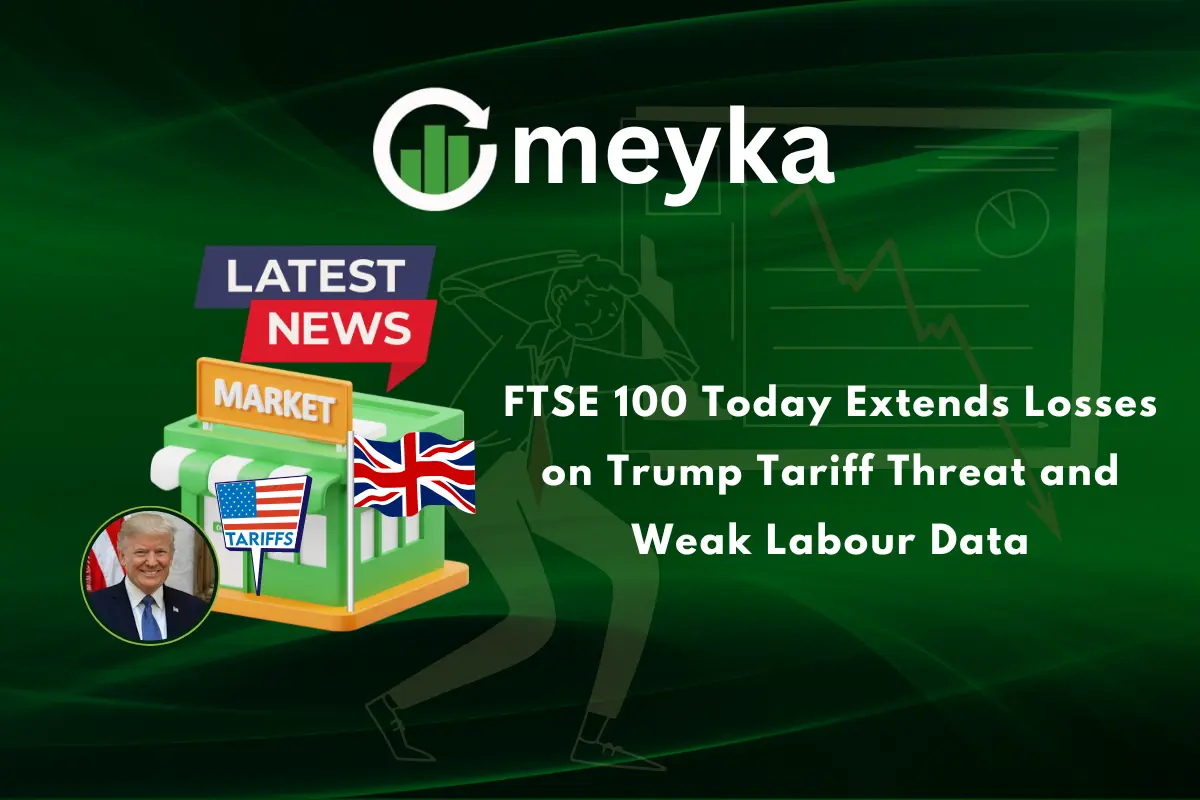
FTSE 100 Today Extends Losses on Trump Tariff Threat and Weak Labour Data

The FTSE 100 extended its losses on Tuesday, January 20, 2026, as investors turned cautious across global markets. London stocks opened lower and stayed under pressure through the session. Two strong signals drove the mood. One came from the United States. The other came from the UK economy itself.

Fresh tariff threats from U.S. President Donald Trump unsettled global trade sentiment. The comments raised fears of higher costs and slower growth for export-focused economies like the UK. At the same time, new UK labour data showed clear signs of cooling. Employment numbers weakened. Wage growth also slowed. This added to worries about domestic demand and future growth.

For investors, the timing mattered. Markets were already sensitive to policy risks and economic data. The mix of global trade tension and weak local signals pushed traders toward caution. As a result, selling pressure increased across key sectors of the FTSE 100.

The Catalyst: Trump’s Renewed Tariff Threat for UK

On January 19, 2026, the FTSE 100 fell again after U.S. President Donald Trump renewed threats to impose tariffs on Britain and seven other European countries. Trump said he could apply a 10% tariff on imports starting February 1, 2026, rising to 25% by June 1 unless a Greenland deal is reached.

Meyka AI: FTSE 100 (^FTSE) Index Overview, January 20, 2026

This tariff threat came from a dispute over Trump’s bid to buy Greenland. The markets saw it as a sign that global trade conflicts may expand. European indices like Germany’s DAX and France’s CAC 40 also sank, showing deep worry across markets.

Meyka AI: Global X DAX Germany ETF (DAX) Stock Overview, January 20, 2026

Investors pushed money into safer assets like gold and silver. Precious-metal miners rose as many traders viewed metals as a safe place when stock moves are uncertain. EU leaders called the tariff threats “blackmail.” Some even floated counter-tariffs against U.S. products. This sharp political tension pushed market fears higher.

The tariff move also cast doubt on recent trade talks between the UK, the EU, and the U.S. Earlier deals were already seen as favouring the U.S., and the new threat further unsettled traders.

Weak UK Labour Data: The Domestic Side Revealed

At the same time, fresh UK labour statistics added to the negative mood. According to the Office for National Statistics (ONS), the UK’s unemployment rate was around 5.1% in late 2025, the highest level in years. Employers shed jobs especially in retail and hospitality.

Wage growth also slowed. Private-sector wages recorded their smallest rise in over five years. This slowing of pay increases points to weaker consumer spending ahead. Weak labour data suggests demand for workers is weak. This raises questions about future economic strength. Falling employment can reduce confidence for households and businesses alike.

Some analysts think the Bank of England may cut interest rates if jobs remain weak. A rate cut could stimulate growth but also weaken the pound further. Together, the tariff threat abroad and poor job numbers at home made investors cautious. That combination helped extend the market’s losses on January 20, 2026.

UK Sector & Stock Winners and Losers

The tariff threat and weak UK jobs data did not hit all sectors equally. Banks, energy firms, and luxury retailers took a hit. Barclays, NatWest, Shell, and BP all slid as investors shied away from risk.

Luxury names like Burberry and Watches of Switzerland also traded lower. These firms rely on global demand, and tariffs could make their products costlier abroad.

Some groups held up better. Non-life insurance companies saw gains after Beazley’s shares jumped to a record high following a takeover interest from Zurich Insurance. Hiscox and Lancashire also traded higher.

Defence and utility stocks also drew attention. As traders sought safety, sectors seen as stable or tied to government spending, like BAES and Babcock, showed resilience. Gold miners also rose as the metal hit fresh highs.

This mixed performance meant the FTSE 100 did not fall as steeply as some European peers. Nevertheless, broad selling pressure weighed on the UK index throughout the session.

Technical Market Signals & Trading Sentiment

The FTSE’s technical moves showed stress in market structure. On January 19, the index lost ground against key support levels, highlighting risk aversion among traders.

Meyka AI: FTSE 100 (^FTSE) Index: Technical Analysis & Trading Signals Today, January 20, 2026

Volatility indicators rose sharply as geopolitical concerns and domestic data fed uncertainty. Higher volatility usually means traders demand a premium to hold stocks, especially in export-linked sectors.

Short-term traders cut positions in cyclical stocks and shifted funds into defensive plays. This behavior reflects an expectation that risk assets might stay under pressure until clearer economic signals appear.

Broader Economic Context & What’s Next?

The tariff threat underscores rising geopolitical risk in global trade. If implemented, these tariffs could slow export demand and weigh on GDP growth in countries like the UK. Some economists warn this could push the UK toward recession if trade barriers expand.

Meanwhile, weak UK labour data points to slowing domestic demand. Low wage growth and job losses tend to reduce household spending, which is a major growth driver for the UK economy. Investors will watch upcoming trade negotiations and central bank policy meetings closely. Any signs of easing trade tensions or stronger jobs data could reduce market stress.

On the other hand, if tariff threats escalate or labour conditions worsen, markets may stay volatile. This could mean more focus on defensive stocks and safe havens until confidence returns.

Conclusion & Key Takeaways

The FTSE 100’s recent slide reflects a mix of global and domestic pressures. Tariff threats from the U.S. sparked fear of wider trade conflicts. At the same time, weak UK employment figures raised doubts about economic strength. Together, these factors stretched market sentiment and pushed investors toward safer assets.

Looking ahead, traders will watch policy moves and data releases for signs of stability. The market’s direction now depends on whether trade tensions ease and labour conditions improve.

Frequently Asked Questions (FAQs)

Why is the FTSE 100 down today?

The FTSE 100 fell on January 20, 2026 after new U.S. tariff threats and weak UK labour data raised concerns about slower growth and pushed investors to sell riskier stocks.

How do Trump tariffs affect the FTSE 100?

Trump’s tariff threats increase trade costs and uncertainty. This hurts export-focused FTSE 100 companies and lowers investor confidence, leading to short-term market declines.

Will weak UK jobs data impact FTSE 100 stocks?

Yes. Weak UK jobs data suggests slower economic activity. This can reduce consumer spending and company profits, which often pressures FTSE 100 share prices.

Disclaimer

The content shared by Meyka AI PTY LTD is solely for research and informational purposes. Meyka is not a financial advisory service, and the information provided should not be considered investment or trading advice.

Similar Posts

Leave a Reply

Your email address will not be published. Required fields are marked *