Alphabet AI Chips: Why Analysts See a $900B Opportunity Ahead

Alphabet AI Chips: Why Analysts See a $900B Opportunity Ahead

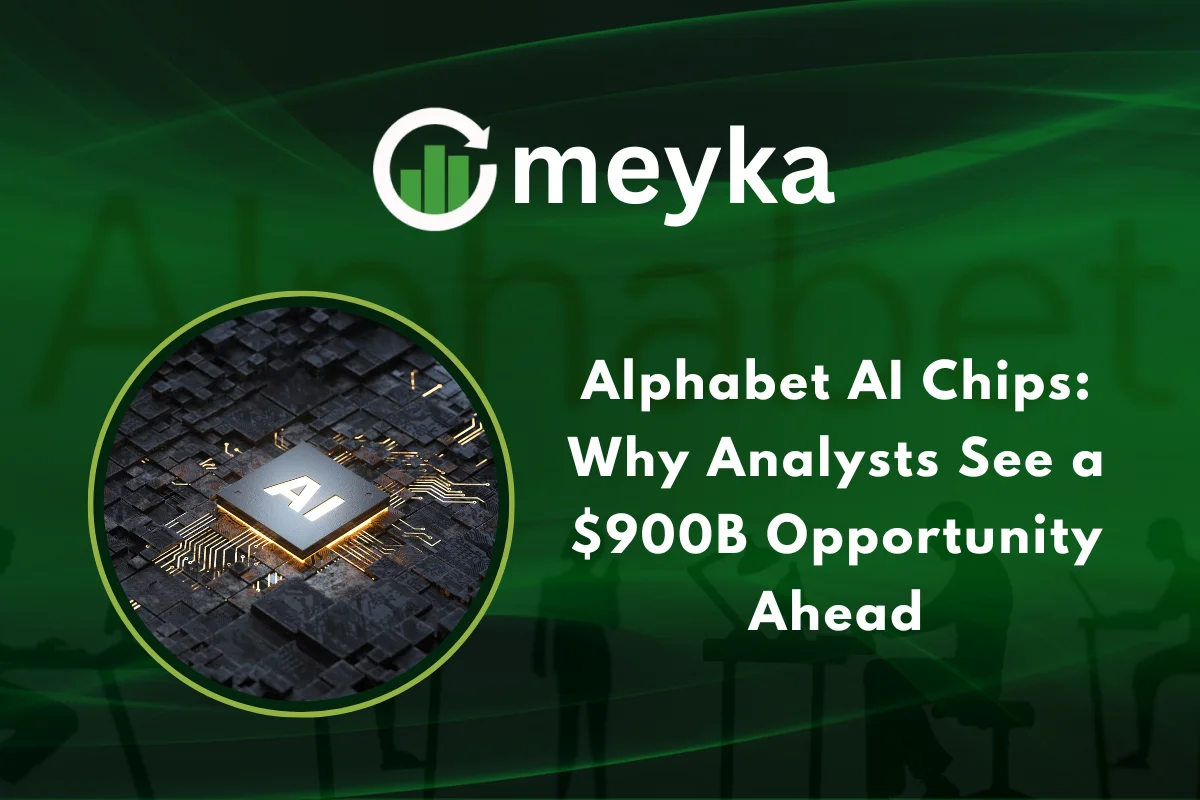
In 2025, Alphabet is emerging not just as a software and internet giant, but as a serious player in the global AI‑chip arms race. Analysts now believe that Alphabet’s in‑house silicon, especially its custom AI chips or Tensor Processing Units (TPUs), could underlie a market opportunity worth up to $900 billion. If that forecast holds, the impact could reshape the cloud industry, challenge chip incumbents, and reposition Alphabet as a hardware powerhouse.

What Are Alphabet AI Chips — And Why They Matter

Alphabet’s AI chips refer mainly to its custom‑designed TPUs. TPUs are specialized processors built to handle AI workloads — large language models, machine learning training and inference, data analytics, and more. Unlike general‑purpose CPUs or even GPUs, TPUs are optimized for tasks involving massive parallel computing and matrix math, giving them an edge in speed and energy efficiency.

Alphabet has been using TPUs internally for years in its data centers, powering services like Google Cloud, search, and other AI tools. Recently, the company accelerated its plans: it introduced advanced versions (like the “Ironwood” TPU) designed for broader AI workloads, and reportedly began exploring licensing or selling these chips to external clients.

This shift marks a strategic pivot: Alphabet is not simply relying on third‑party chip makers but building its own hardware stack — controlling performance, cost, and scaling directly.

Why Analysts Put the AI‑Chip Opportunity at $900B

The key driver of the $900 billion projection is a confluence of factors pointing to huge future demand:

  • Rising global demand for AI infrastructure: As companies worldwide adopt AI for cloud services, data analytics, autonomous systems, generative AI, and more, the underlying hardware needs are skyrocketing. TPUs and similar AI chips are at the heart of that demand boom.
  • Potential external sales and licensing of TPUs: Historically, Alphabet kept TPUs for internal use. Now, analysts estimate that increasing demand from large clients — including cloud providers and AI companies — could push external sales of TPUs, turning them into a major business line.
  • Efficiency and cost advantage over competitors: TPUs reportedly offer competitive performance per dollar compared with traditional GPUs from other chip makers, particularly on large AI workloads. This gives Alphabet a strong value proposition for enterprises wanting efficient AI compute power.
  • Cloud and AI‑as‑service tailwinds: Alphabet’s cloud division is already seeing strong growth thanks to AI demand. That growth, combined with chip business expansion, could create a compound multi‑billion dollar revenue stream over the next several years.

Taken together, these factors lead some analysts and market watchers to view Alphabet’s AI‑chip business as a potential multibillion‑dollar revenue generator, driving considerable upside if execution matches ambition.

What This Means for the Stock Market and Tech Investors

For investors and those watching AI‑stock trends, the rise of Alphabet AI chips carries several important implications:

  • Alphabet becomes more than a software & ad company: Historically known for internet services, search, advertising, and cloud, Alphabet is now evolving into a full‑stack AI hardware plus software company. That diversification can stabilize revenue and reduce reliance on ad cycles.
  • Potential re‑rating of Alphabet stock: If the AI‑chip business pans out, the stock may get a premium — not just as a cloud play, but as a hardware‑driven growth company. That may attract long‑term investors seeking exposure to the AI boom.
  • Increased competition for chip incumbents: Established GPU and chip makers may face pressure if Alphabet TPUs gain large adoption. This could shift investment flows within the semiconductor space.
  • AI infrastructure becomes central to enterprise growth: Businesses adopting AI at scale — from startups to large enterprises — may increasingly turn to companies like Alphabet for both software and hardware solutions. This could accelerate the growth of the AI‑cloud ecosystem.

For portfolios favoring tech growth and innovation, Alphabet may emerge as one of the core picks among AI stocks in the coming years.

Challenges and Risks Ahead

As promising as the opportunity sounds, there are significant challenges and risks investors should keep in mind:

  • Execution risk: Turning internal tech into a scalable external business is hard. Alphabet needs to scale production, manage supply chains, and support clients globally. Any misstep could delay or reduce potential gains.
  • Supply chain and semiconductor constraints: The global semiconductor supply chain remains under pressure from geopolitics, resource constraints, and manufacturing bottlenecks. These could hamper chip output or raise costs.
  • Competition from established chip firms: Other chipmakers — traditional GPU makers and emerging AI‑chip firms — will likely respond aggressively. Pricing, performance, and ecosystem compatibility will matter.
  • Regulatory and macroeconomic risks: Broader economic slowdown, trade restrictions, or regulatory shifts in key markets could dampen AI adoption or cloud spending.
  • Valuation concerns and over‑promise risk: The $900B figure is a projection based on favorable assumptions. If adoption is slower than expected, or competition intensifies, investors may reassess valuations downward.

How to Watch the Alphabet AI Chip Story in the Coming Months

If you want to follow this story closely — whether you’re an investor, tech enthusiast, or AI watcher — here are key metrics and developments to monitor:

  1. Sales or licensing announcements for TPUs to external clients: Deals with other companies or cloud providers will validate the external‑sales thesis.
  2. Revenue & margin impact of cloud + hardware business: Watch how cloud revenue grows in future quarters, and whether AI‑infrastructure contributes significantly.
  3. New TPU releases and performance benchmarks: Advances such as “Ironwood” or future generations that improve performance or cost will matter.
  4. Adoption rates among AI companies and enterprises: Broader adoption beyond Alphabet’s own services — especially by AI startups or large enterprises — will drive long‑term growth.
  5. Competitive moves from rival chip makers: How companies like those currently dominant in GPUs respond will affect market share and pricing dynamics.

Conclusion

Alphabet’s foray into AI chips could mark a major shift — from a software and cloud giant to a full‑fledged AI hardware contender. The projection of a $900 billion opportunity reflects not a guarantee, but a strong belief among analysts that AI demand, cloud growth, and custom silicon will reshape computing in the next decade.

For investors and tech watchers, Alphabet’s AI‑chip ambitions offer a high‑reward potential — if the company executes well, manages supply chains, and wins external customers. The road ahead has challenges, but the payoff could redefine how cloud services, enterprise AI, and data centers operate worldwide.

For now, Alphabet stands at a critical inflection point: success could cement its leadership in the AI revolution, making it a cornerstone of future AI‑stock portfolios.

FAQs

What exactly is meant by “Alphabet AI Chips”?

“Alphabet AI Chips” refers primarily to Tensor Processing Units (TPUs) — custom‑built processors by Alphabet designed specifically for AI workloads and deep learning tasks, providing better efficiency and performance than standard hardware.

Why do analysts believe the opportunity could reach $900 billion?

Because global demand for AI infrastructure — cloud computing, enterprise AI adoption, data centers — is exploding. If Alphabet successfully sells or licenses its TPUs at scale, the cumulative market value of those chips plus associated AI services could reach that figure over time.

What are the main risks that could derail this potential?

Key risks include supply‑chain and semiconductor manufacturing challenges, strong competition from existing chip makers, slower-than-expected cloud and AI adoption, and the difficulty of scaling a hardware business globally.

Disclaimer:

The content shared by Meyka AI PTY LTD is solely for research and informational purposes. Meyka is not a financial advisory service, and the information provided should not be considered investment or trading advice.

Similar Posts

Leave a Reply

Your email address will not be published. Required fields are marked *