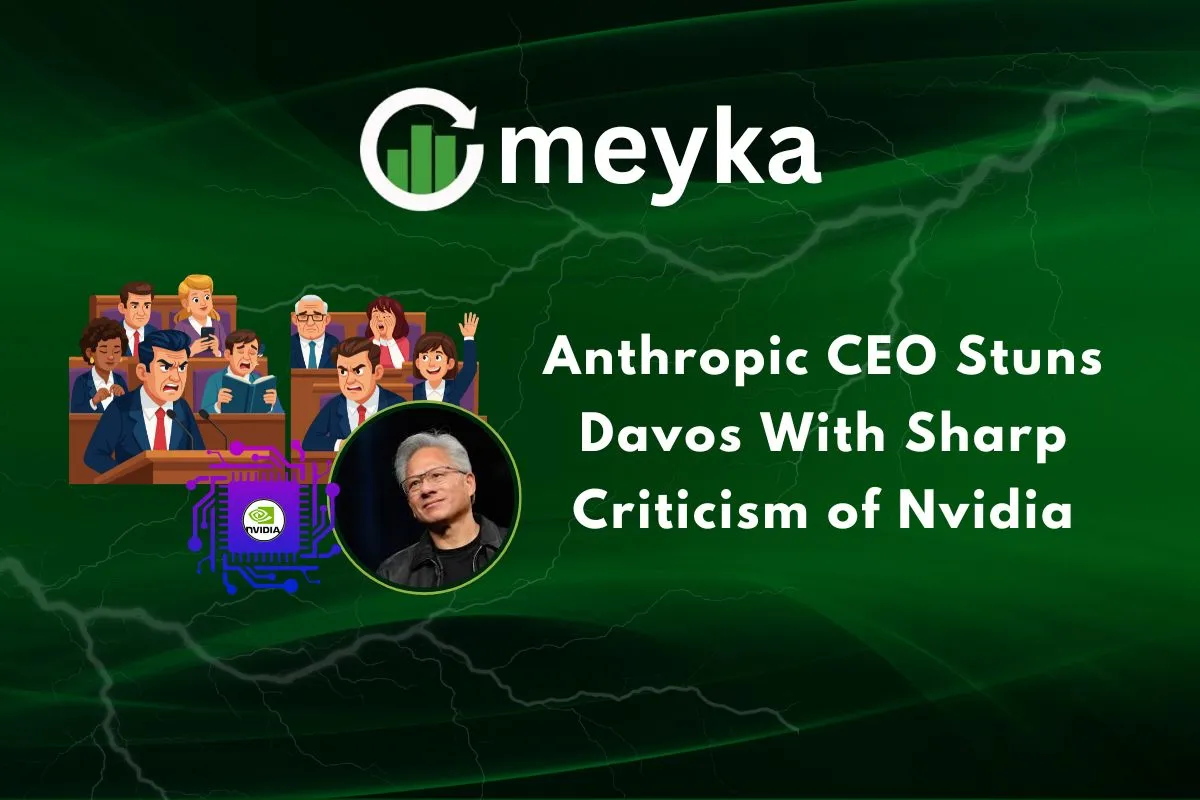
Anthropic CEO Stuns Davos With Sharp Criticism of Nvidia
On January 21, 2026, an unexpected moment at the World Economic Forum in Davos grabbed global attention. The CEO of Anthropic, Dario Amodei, stepped onto a stage known for careful words. Then he spoke with rare sharpness. His target was Nvidia, the world’s most powerful AI chip maker.
Amodei warned that selling advanced AI chips is not just a business decision. He compared it to handing over dangerous power in a tense world. The comment stunned investors, policymakers, and tech leaders sitting in the room. Davos is usually about balance and diplomacy. This time, it became a place of open conflict.
The timing mattered. Governments are already nervous about the AI race. Chip exports, national security, and global power are now deeply linked. Nvidia sits at the center of this storm.
Anthropic depends on AI chips, yet its CEO chose to speak out. This moment shows how AI debates are changing. They are no longer quiet. They are public. And they are political.
What Happened at Davos?
After speaking at the World Economic Forum in Davos in January 2026, Anthropic CEO Dario Amodei turned heads with a rare public critique of Nvidia’s AI chip exports to China. His comments were not about product features or competition. He framed the issue as a national security concern tied to global power shifts and policy decisions. In his words, allowing these sales was “out of control,” and akin to **“selling nuclear weapons to North Korea.””
This dramatic language cut through the usual corporate diplomacy. It put national security and tech competitiveness at the center of a debate that has mostly been behind closed doors. Amodei argued that these advanced chips could change the global balance of power by giving rival nations computing strength once thought exclusive to Western AI labs.
The Context: Trade Rules and Export Policy
The controversy did not arise in isolation. In January 2026, the U.S. government under President Donald Trump loosened export restrictions on Nvidia’s H200 AI chips, allowing conditional sales to China under a new regulatory framework. Under these rules, companies could export H200 chips after third-party testing and with limits on how many units could go to Chinese buyers.
This policy shift was meant to strike a balance between economic competitiveness and national security. Nvidia and its supporters argued that limited access to the Chinese market would help U.S. tech firms stay globally relevant and fund further innovation. But critics said that even restricted exports risked strengthening Chinese AI capabilities, including military and surveillance applications.
Amodei’s comments tapped directly into this debate. He said that allowing these chips to flow abroad, even under oversight, could erode U.S. technological advantage and weaken strategic leverage. His criticism echoed bipartisan concerns in Washington about preserving America’s edge in advanced computing and AI.
Why Anthropic’s Critique Special?
It was surprising to hear such blunt language from the CEO of a major AI company that itself relies on Nvidia hardware for training and running models. Anthropic uses high-performance chips like the H200 and predecessors to power its Claude AI systems. This dependency makes Amodei’s stance more striking.
His speech suggested a deeper shift in how some AI leaders see their role. Rather than just focusing on innovation and market growth, they are now framing AI development as a national priority with global strategic stakes. This reflects growing unease among tech executives and policymakers about how AI could reshape economic and military power.
Geopolitical and Industry Reactions on Amodei Response
Amodei’s comments at Davos sparked reactions across tech and policy circles. Industry voices reminded observers that strict export controls could push global competitors to develop their own chips faster, potentially narrowing the U.S. lead. Supporters of the export policy argued that engagement and commercial presence can also be a strategic tool.
Meanwhile, on the political front in the U.S., lawmakers from both parties have expressed concerns that relaxed export rules could reduce America’s computer advantage and the gap between U.S. and Chinese AI capabilities. Some estimates suggest that liberalized exports could shrink this advantage dramatically, raising questions about long-term competitiveness.
Chinese authorities, for their part, appear to be cautious as well. Despite approval in Washington, Chinese customs officials have reportedly restricted the import and production of Nvidia’s H200 chips, citing regulatory and strategic reasons. This tug-of-war highlights how technology trade is now deeply tied to diplomacy and national interests.
Broader Impacts on the AI Landscape
The clash between Anthropic and Nvidia’s export strategy underscores a larger truth: AI technology is not just commercial innovation. It has become a geopolitical asset tied to national security and economic influence. Countries and companies now view advanced computing power as a core part of strategic planning, not just product development.
For companies in the AI ecosystem, this era brings new risks and opportunities. They must navigate not only global demand but also export controls, political pressure, and security debates. Decisions made in boardrooms and capitals alike will help shape which nations lead the next wave of AI breakthroughs.
Nvidia, for its part, remains central in this story. The company lobbied for the export rule changes and argued that maintaining global market access is essential for innovation. But its role also places it at the crossroads of business interests and geopolitical tension, a position that will likely bring more scrutiny and debate.
Final Words: What It Means Going Forward
Amodei’s criticism at Davos was not just a momentary outburst. It reflects a broader shift in how AI leaders talk about technology’s role in society and security. As AI systems grow more powerful, discussions about export policy, national defense, and global competition will only intensify.
The debate over Nvidia’s H200 chips is one example of this shift. It shows that tech decisions now ripple far beyond the server room. They reach geopolitical strategy and diplomatic negotiations. As nations jockey for AI supremacy, the lines between technology, policy, and power are blurring.
Frequently Asked Questions (FAQs)
At the World Economic Forum on January 21, 2026, Anthropic’s CEO warned that exporting advanced AI chips could raise security risks and weaken U.S. control over powerful technologies.
Nvidia H200 chips are high-performance AI processors. In January 2026, they became controversial due to U.S. approval for limited exports to China under strict conditions.
AI chip exports can affect national security by sharing advanced computing power. In 2026, policymakers debated whether such exports could reduce the U.S. lead in AI technology.
Disclaimer
The content shared by Meyka AI PTY LTD is solely for research and informational purposes. Meyka is not a financial advisory service, and the information provided should not be considered investment or trading advice.