social media ban

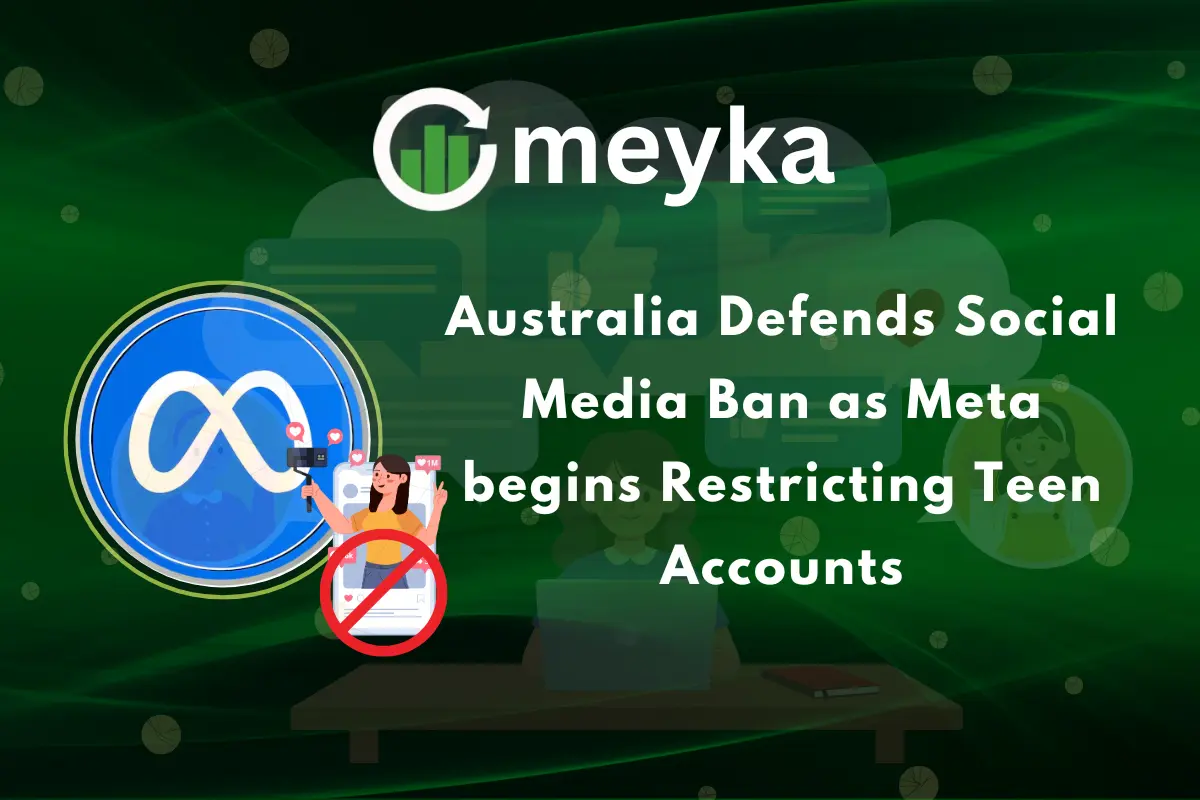
Australia Defends Social Media Ban as Meta begins Restricting Teen Accounts

Australia is stepping into a bold new era. Starting December 10, 2025, it will ban social media accounts for anyone under 16. At the same time, Meta, owner of Facebook, Instagram and Threads, has begun deleting or disabling accounts believed to belong to under‑16s.

This is more than a headline. It is a turning point. A moment where the world watches to see how far a government will go to protect young people or limit their online freedom. The stakes are high.

What Sparked the Debate? Inside Australia’s Push for Age‑Based Restrictions

Officials in Canberra say the ban is about safety. They argue many teens suffer from online pressure, face cyberbullying. They face addictive algorithms. These problems, they say, rise sharply when children are exposed too early to unsupervised social media.

Supporters call social media for children a “digital danger.” Some even describe it harshly as “behavioural cocaine” that traps minds and harms mental health.

Australia is framing the ban not as censorship, but as a protection. A bid to shield under‑16s from harm the government believes technology companies have not successfully prevented themselves.

Meta’s Teen Restrictions: What’s Changing Behind the Scenes?

Meta has already tried a less extreme path. In 2025, the company introduced “Teen Accounts.” These accounts add protections by default. Under‑16s would not be able to go Live without parental permission. Sensitive content in direct messages would be blurred automatically.

On April 8, 2025, Meta said it would expand Teen Accounts to Facebook and Messenger previously limited to Instagram. Meta says these changes helped. Around 97 % of teens aged 13-15 kept the protective settings. And many parents said they welcomed help to monitor usage.

But as the new law approached, Meta had to take a stronger step. On December 4, 2025, Meta began removing under‑16 accounts in Australia from Instagram, Threads, and Facebook. The companies involved also blocked new account creation by under‑16s.

Meta warned users affected to download their data, if they wanted to keep photos or messages. Meta says it is using technology including AI to identify under‑16s and apply the rules.

Government vs Big Tech: The Real Tension

The law behind the ban is backed by the government’s regulator, eSafety Commissioner. Officials argue that platforms have failed to protect young users. They say time for gradual fixes is over.

Meanwhile, Meta says this law is “rushed” and “excessive.” The company argues it has already invested in protective tools. They believe cutting teens off entirely may harm more than help.

Critics also raise questions about enforcement. Many ask: can social media companies reliably tell who is under 16? Not all users list their real age. And digital age checks using ID, or video selfie, or behavioral data are not always reliable or accepted by society.

Some worry this is a clash between regulation (government) and user freedom (big tech). It is a struggle over who controls childhood in the age of social media.

Global Context: How Other Countries are Handling Teen Social Media Use

Australia is not alone in trying reforms. Around the world, regulators grapple with online safety and teen exposure. Some countries like those in the EU have passed rules that require platforms to offer age‑appropriate design and stricter protections by default. In 2025 Meta itself expanded “Teen Accounts” globally to limit content and contact for younger users.

But Australia’s outright ban on under‑16s having accounts is the most sweeping step yet. Many other governments prefer lighter‑touch tools: safeguards, parental controls, content filters. Australia’s move is now viewed as a landmark among global regulators.

The Critics: Why Experts Warn the Ban Might Backfire

Not everyone agrees the ban will help. Some teenagers and rights advocates warn it could backfire. A 15-year-old identified as a plaintiff in a court challenge said that banning social media entirely might make internet use more secretive, not safer.

They argue that teens may turn to unregulated or lesser-known apps. That could make them more vulnerable. Public discussion, peer support, even mental‑health help sometimes happens online. Losing that, critics say, may isolate young people rather than protect them.

Others point out that age-verification technology raises privacy concerns. Collecting ID, video‑selfie, or using AI to “predict age” may store sensitive data or misclassify users. The risk of errors remains high.

There’s also the digital‑literacy question. Some experts warn that over‑regulation might leave teens unprepared for the real world online. Without guided exposure, they may not learn to navigate social media safely when they’re older.

Supporters’ View: Why Many Parents Back the Ban

At the same time, many parents and educators support the strict ban. They believe that incremental platform fixes are not enough. They point to rising concerns: cyberbullying, screen addiction, mental stress, anxiety, exposure to harmful content or peer pressure. For many families, the ban represents a safer childhood offline first.

Some parents feel that children under 16 are too young to manage the weight of social media. They worry about addictive features. They worry about algorithmic pressure. For them, forcing a break from these platforms is a path to healthier growth.

They see the ban as a reset. A chance to let kids rediscover face‑to‑face play, real friendships, real-world hobbies.

The Real Question: Regulation, Platform Responsibility, or Parenting?

At the heart of this issue is not just age. It is controlled. Who controls the boundaries of a young person’s digital life? Is it the platform, the government, or the family?

Supporters of the ban say the government must step in when platforms fail. They see regulation as essential. Others say platform responsibility, better tools, safer design should suffice. And many argue that parental guidance, open conversation, and digital education matter most.

The ban forces the world to ask: is it right to outsource parenting and education to laws and tech companies? Or does that shift responsibility too far?

What Happens Next? Australia’s Roadmap & Meta’s Likely Response

Starting December 10, 2025 the ban becomes law. Platforms like Meta’s Facebook, Instagram, Threads, plus TikTok, Snapchat, YouTube, X, Reddit, and others will have to remove or block under‑16 accounts or face fines of up to A$49.5 million.

Meta says it will give wrongly flagged users a chance. They can appeal by providing ID or video‑selfie if they believe their account was shut in error.

Still, the law has already drawn legal challenges. An advocacy group, Digital Freedom Project, has filed a case with the High Court of Australia. They argue the ban violates free speech and amounts to government overreach. The world will watch. Many other countries are considering similar moves. Some may follow. Others may find this too extreme.

Conclusion: A New Era of Digital Childhood

Australia’s social media ban marks the start of a new era. It challenges how we view childhood in a connected world. It asks tough questions about freedom, safety, and trust.

Whether this law will protect or restrict, only time will tell. But for now, Australia has drawn a line and it has forced the global debate into the open. This could change how young people grow up online.

Frequently Asked Questions (FAQs)

When does Australia ban social media for under‑16s?

Australia will ban people under 16 from using social media starting December 10, 2025. Platforms like Instagram, Facebook, TikTok, and YouTube must block account creation for these users.

Can kids under 16 still view content?

Even after December 10, 2025, children under 16 can watch public videos or posts. They just cannot make accounts, post content, or send messages on major platforms.

Can wrongly blocked users appeal?

If someone over 16 is mistakenly blocked, they can appeal. Platforms like Meta allow users to verify their age with ID or video to regain access.

Disclaimer

The content shared by Meyka AI PTY LTD is solely for research and informational purposes. Meyka is not a financial advisory service, and the information provided should not be considered investment or trading advice.

Similar Posts

Leave a Reply

Your email address will not be published. Required fields are marked *