social media ban

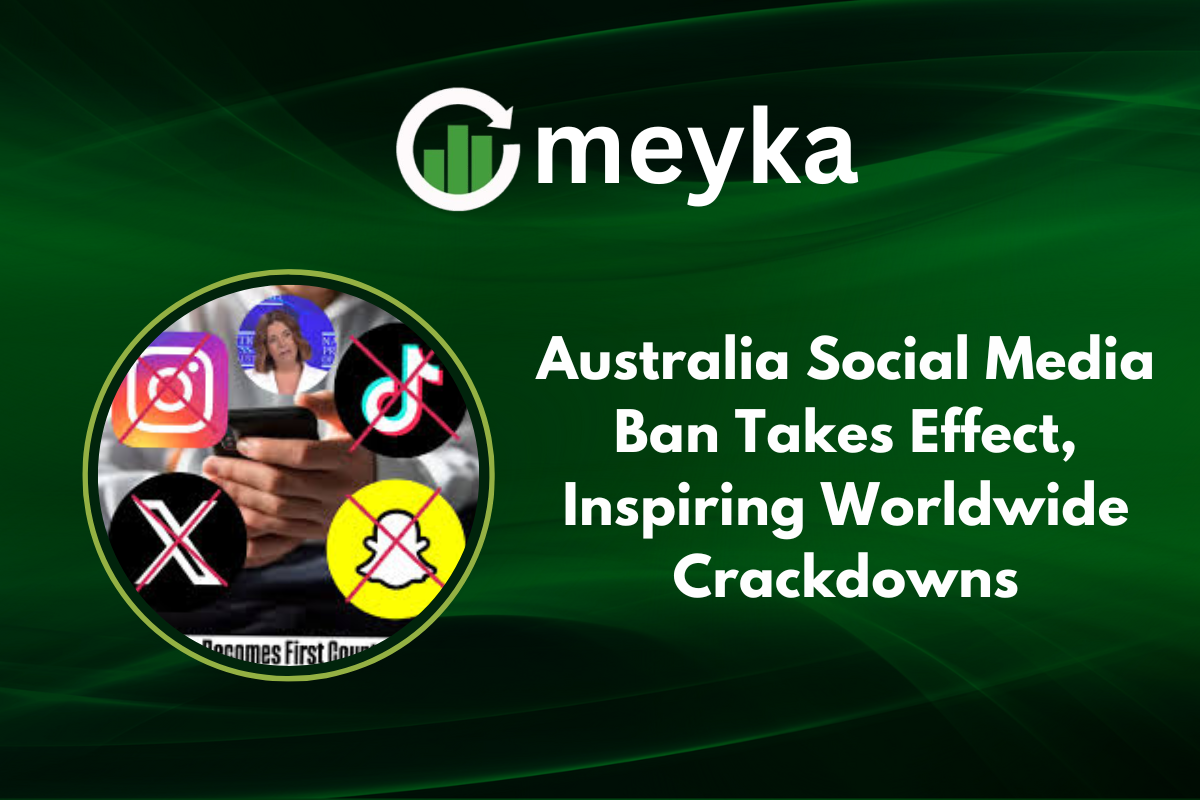
Australia Social Media Ban Takes Effect, Inspiring Worldwide Crackdowns

Australia’s groundbreaking social media ban is now in force and is setting a historic global example. On December 10, 2025, Australia became the first country in the world to enforce a law that clearly limits access to social media for children under 16 years old.

This major policy shift has attracted attention from lawmakers, tech companies, parents, youth groups, and global governments debating online safety reforms.

This article explains every important detail about the new social media ban, why it matters, how it works, and how it is inspiring similar efforts across the world.

What Is the Australian Social Media Ban?

The social media ban requires major social platforms that allow interactive social networking and content creation to block or remove accounts of users under the age of 16. These platforms include Instagram, TikTok, YouTube, Snapchat, Facebook, X, Reddit, Threads, Twitch, and others that allow users to post or interact with content.


Companies that fail to take “reasonable steps” to enforce this rule face heavy fines of up to A$49.5 million (around US$33 million) per violation. This law aims to curb concerns about mental health, addiction, bullying, and harmful content that many experts link to teen social media use. 

Why did Australia pass this ban?

Australia’s government said the law protects children from risks associated with social media use. Supporters believe that adults should control how and when young people access online social networks. This is also seen as a major step in tackling ongoing problems like anxiety and harmful instant feedback loops that teens often face online.

Critics argue it threatens freedom of expression and may isolate young Australians from global social spaces. A constitutional challenge is already in motion, aiming to stop the law through Australia’s High Court.

How the Social Media Ban Will Work

Age Verification for Every User

Tech companies must verify user ages with age estimates, ID checks, facial recognition, or other methods. Some platforms will use age estimation technologies or ask users to upload identification details to prove they are 16 or older.

Platforms also must report monthly to Australia’s eSafety Commissioner about accounts they have blocked or removed that belong to under-16s.

How Will This Affect Teens?

Will kids under 16 still be able to watch videos?

No, not really. They must prove their age to keep a full account. Without a verified age, they cannot post, comment, or interact. Some sites may allow viewing without an account, but social features will be limited.

What happens to current teen accounts?

Existing accounts for Australians under 16 will be blocked unless users verify their age. Platforms like Meta have already warned users they must download or delete their data in advance. 

Are any platforms excluded from the rules?

Yes. Apps used for health, education, gaming, or messaging only could be exempt. This means apps like WhatsApp or Google Classroom might not fall under the social media ban if they meet strict criteria.

Government and Political Response

Australia’s Prime Minister Anthony Albanese celebrated the social media ban as a major victory for children’s safety. He encouraged young people to focus on offline activities and suggested reading, creative learning, and real-world relationships instead of constant online engagement.

Communications leaders say this law offers parents more control and supports positive mental health outcomes. Supporters believe setting this legal standard will pressure tech companies to improve age checks globally. 

Social Media Reaction and Tweets from Around the World

 “Australia’s new social media ban, now in effect, makes this a landmark shift in global digital law.” — @TheFeedSBS

“Other countries are watching Australia’s social media ban and debating similar youth protection laws.” —@TheSitRepPH

“Many teens feel confused and anxious about the sudden social media ban in Australia.” — @Terri_1987a

These real-world responses show how the social media ban is widely discussed across communities, parents, and youth groups, and not only in Australia.

Criticism, Legal Battles, and Rights Concerns

The social media ban is not without controversy. Critics, including free speech advocates and privacy groups, argue the ban is too broad and may violate implied rights of political communication. 

A group called the Digital Freedom Project has filed a legal challenge asserting that the ban deprives teens of their right to communicate and access information online.

They also argue that requiring personal ID or biometric data for age verification could lead to privacy risks for all users. The High Court of Australia may soon hear arguments that challenge the law on constitutional grounds.

The Global Impact: Nations Watching and Planning Similar Laws

Australia’s bold move is prompting other countries to consider similar age limits. Many governments are now exploring whether they should follow suit to protect young users from harmful social media content.

Countries like Denmark, Malaysia, and the United Kingdom have already looked at age restrictions, and some are debating parental consent or age minimums. European regulators and privacy experts have shown increased interest in age verification rules to protect children online. Australian officials say this could be the first of many similar global policies.

Mental Health Debate Around the Social Media Ban

A related Reuters video highlights concerns about the ban’s impact on young people’s mental health. Some teens feel that losing online spaces may reduce social support networks, which are sometimes crucial for vulnerable youths.

At the same time, parents and psychologists argue that removing addictive feeds and harmful online pressures will benefit mental well-being in the long run.

Watch Here: Australia’s social media ban prompts mental health concerns

Will this ban improve teen mental health?

Some experts say yes, children may experience less anxiety and negative comparisons. Others warn that teens will feel isolated without online support communities.

What support is offered during this change?

Some NGOs and child safety organizations are offering guidebooks and counseling resources to help families navigate the transition.

What Happens Next After the Social Media Ban

Enforcement and Monitoring

From now on, Australia’s eSafety Commissioner will monitor compliance closely. Platforms that fail to block or verify ages may face millions in fines. The law also requires companies to provide monthly reporting on actions taken to enforce age limits.

This means big tech companies must invest in new verification systems and technology updates to detect and block underage users worldwide.

Future Updates and Global Responses

Global lawmakers and digital safety experts will track how this law works in practice over the coming months and years. Many governments have signaled they may introduce similar laws or strengthen existing protections for children online.

The world is watching closely as Australia leads a major shift in how nations regulate social media use and digital safety.

Conclusion

Australia’s social media ban is now active, blocking users under 16 from top platforms unless strict age checks are met. This is a global first and may inspire similar laws in many countries. Parents, youth, lawmakers, and tech companies alike are responding to this major change with a mix of hope, concern, and legal challenge.

Whether the law will stay in place if challenged in court, and how it will affect internet culture and young people’s lives, will be among the biggest global digital stories for 2026 and beyond. Australia’s move marks a new era in online safety and regulation of big tech worldwide.

FAQ’S

What is Australia’s social media ban for under-16s?

Australia’s social media ban blocks children under the age of 16 from having accounts on major platforms like Facebook, Instagram, TikTok, and Snapchat. Platforms must verify every user’s age and remove accounts that belong to underage teens.

Why did Australia introduce the social media ban?

The government says the ban protects children from online harm, bullying and mental health risks. Officials also say it gives parents more control and encourages healthier offline activities for young people.

How will tech companies enforce the social media ban?

Platforms must use age verification tools such as ID checks, facial age estimation or other approved methods. They also must report every month to the eSafety Commissioner about accounts removed or blocked because of age violations.

Can teens under 16 still watch videos on social media?

They may be able to view some content without an account, but they cannot sign in, interact, comment, or post. If an account is not age-verified, the platform must block it or limit access.

Will other countries follow Australia’s social media ban?

Many nations are already studying Australia’s model. Countries in Europe, Asia, and the Pacific are discussing similar age limits, stronger parental consent rule,s and new online safety laws for children.

Disclaimer

The content shared by Meyka AI PTY LTD is solely for research and informational purposes. Meyka is not a financial advisory service, and the information provided should not be considered investment or trading advice.

Similar Posts

Leave a Reply

Your email address will not be published. Required fields are marked *