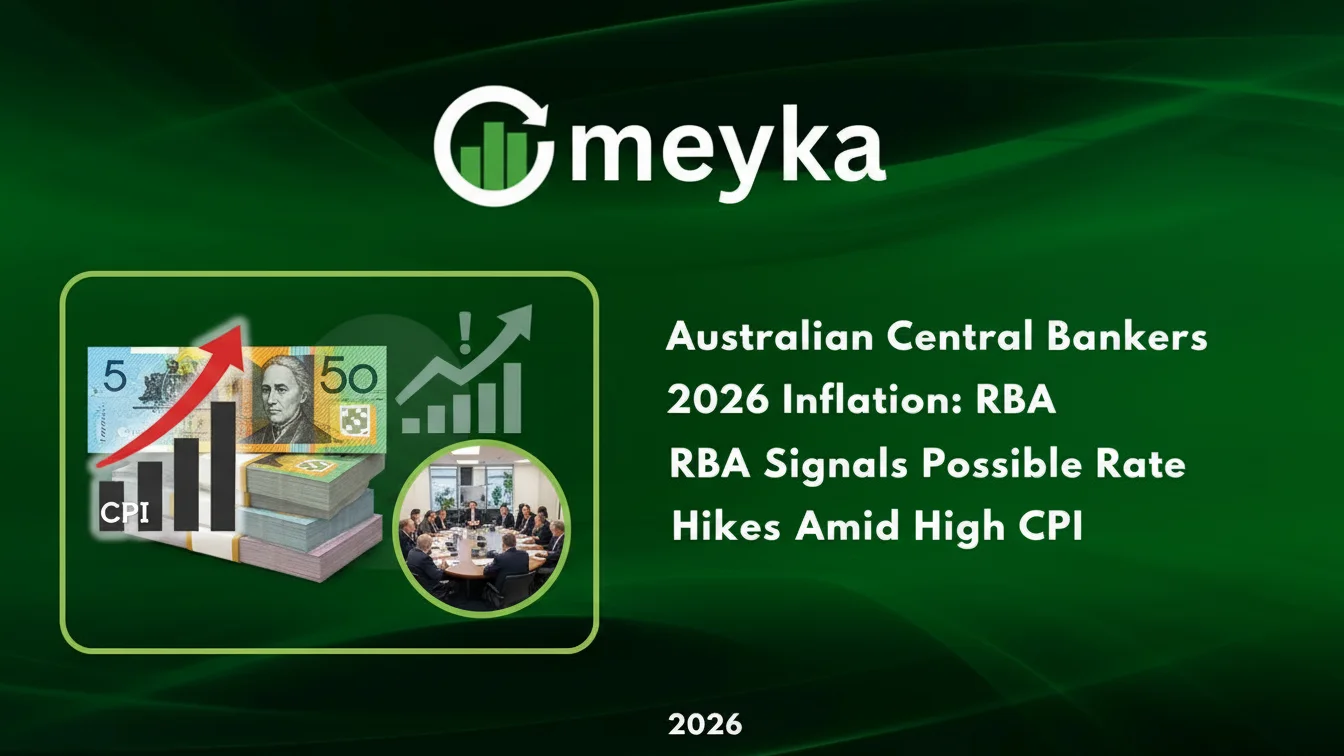
Australian Central Bankers 2026 Inflation: RBA Signals Possible Rate Hikes Amid High CPI
Australia is once again in the spotlight as concerns about Inflation rise, prompting officials at the Reserve Bank of Australia (RBA) to signal that interest rate hikes may be necessary in 2026. With the consumer price index (CPI) remaining higher than expected, policymakers are weighing their options to balance price stability with broader economic goals.
These developments are important not only for everyday Australians but also for global investors and those watching financial markets such as the stock market, bond markets, and sectors sensitive to interest rate changes.
What Is Driving Rising Inflation in Australia
Inflation refers to the increase in the prices of goods and services over time, reducing purchasing power. In Australia, Inflation has been driven by a mix of domestic and global pressures. Rising energy costs, supply chain delays, labour shortages, and strong demand for housing and services have all contributed to sustained price growth in key parts of the economy.
The CPI data for late 2025 showed that prices were still climbing faster than the RBA’s preferred range. This has raised questions about whether earlier rate cuts might have been premature and whether more tightening is necessary to bring price gains back under control.
Reserve Bank of Australia Signals Possible Rate Hikes
The RBA has maintained its commitment to keeping inflation within a target range, generally between 2% and 3% annually. However, recent CPI figures suggest that price increases have exceeded this range, prompting central bankers to consider tightening monetary policy by raising interest rates.
Governor Michelle Bullock and other senior RBA officials have publicly acknowledged the persistence of inflation, noting that some sectors remain overheated. While the bank has been cautious in its messaging, the suggestion that rate hikes are possible has influenced market expectations and triggered reactions across asset classes.
Higher interest rates can slow inflation by increasing the cost of borrowing for consumers and businesses, which often reduces spending and investment. However, rate increases can also dampen economic growth if done too rapidly or too early.
Impact on Households and Borrowers
For everyday Australians, the prospect of higher interest rates matters because many households carry debt, including mortgages, car loans, and student loans. When the central bank raises the official cash rate, lenders typically pass on higher costs in the form of higher borrowing rates.
This means that monthly payments for variable rate home loans could rise, reducing disposable income for many families. With inflation already straining household budgets through increased prices at the supermarket and rising rent, higher interest costs could add to financial pressure.
On the positive side, savers may benefit from higher interest rates on deposits and savings accounts. However, the overall economic impact depends on how quickly rates rise and how households adjust their spending habits.
Broader Market Reactions: Stocks, Bonds, and Commodities
Financial markets pay close attention to central bank signals. The hint from the RBA about possible rate hikes has already influenced market behaviour:
- Stock Market: When inflation remains high and interest rates rise, investors often reassess valuations, especially for growth-oriented sectors. Companies with long-term earnings forecasts, such as tech or AI stocks, can be especially sensitive to higher rates because future profits are worth less in present value terms. This can lead to volatility in equity markets.
- Bonds: Bond yields typically rise with rate hike expectations. Higher yields make older bonds with lower coupons less attractive, potentially reducing bond prices. This can affect retirement portfolios and institutional investors alike.
- Currencies: A higher interest rate often supports currency strength. In Australia’s case, speculation about rate hikes has put upward pressure on the Australian dollar as traders price in tighter monetary policy relative to other economies.
- Commodities: Some commodity prices can react to rate expectations because of changes in demand from major economies. For example, demand for base metals could soften if higher rates slow global growth.
Why Inflation Persists Despite Earlier Rate Cuts
Economists and analysts note that inflation in Australia has remained sticky for several reasons. First, global supply chain disruptions caused by geopolitical tensions and pandemic aftereffects have kept input costs elevated. Second, labour market shortages, especially in skilled trades and services, have given workers bargaining power, helping push wages higher. While wage growth has not spiralled out of control, it has contributed to overall price pressures.
Additionally, housing costs, including rent and property prices, have remained elevated in many parts of Australia, influencing the housing component of the CPI. These mixed forces make it harder for the RBA to engineer a smooth return to low and stable inflation.
What Experts Are Saying About 2026 Outlook
Market economists and central bank watchers have varying views on what 2026 might hold. Some believe that only gradual rate hikes will be needed to nudge inflation closer to the RBA’s target range. Others argue that stronger measures could be necessary if CPI figures continue to exceed expectations.
Analysts conducting stock research suggest that companies in sectors such as financials, consumer staples, and utilities may weather a rate hike cycle better than high-growth companies with heavy debt loads. Banks, for example, can benefit from higher net interest margins when rates rise. At the same time, sectors that depend heavily on borrowing for expansion could face headwinds.
The RBA’s approach will likely be guided by future CPI data releases, wage growth trends, global economic conditions, and domestic spending patterns. Policymakers balance the risk of persistent inflation with the risk of slowing economic activity too much.
How Investors Can Prepare
For investors, staying informed about inflation trends and central bank signals is critical. Here are some general strategies to consider in a high-inflation and rising rate environment:
- Diversification: Spreading investments across asset classes can reduce risk if inflation pressures change market dynamics.
- Quality Stocks: Companies with strong balance sheets and pricing power may withstand inflation better than highly leveraged firms.
- Inflation-Linked Instruments: Some bonds and financial products are specifically designed to protect against inflation erosion, which can be useful in uncertain periods.
- Sector Rotation: Being mindful of how different sectors react to rate changes can help in adjusting portfolio weights. Defensive sectors like healthcare and consumer staples often outperform in volatile environments.
Investors should also weigh their risk tolerance, time horizon, and financial goals before making significant changes. Stock research based on fundamentals rather than short-term sentiment can provide a more stable framework for decision-making.
Global Context: How Australia Fits In
Many advanced economies are facing similar inflation challenges, albeit at different levels and with different policy responses. The United States Federal Reserve, European Central Bank, and Bank of England have all grappled with inflation pressures in recent years, leading to a mix of rate hikes and pauses.
In comparison, Australia’s situation reflects specific domestic drivers such as housing costs and labour market conditions, as well as global commodity prices that influence food and energy costs. The RBA’s strategy will continue to evolve in response to both local and international trends.
Looking Ahead: What to Expect Next
As Australia moves further into 2026, the key economic indicators investors and households will watch most closely include:
- Monthly and quarterly CPI figures that show how prices are trending.
- Unemployment and wage data that indicate labour market tightness.
- Central bank statements that signal policy intentions.
- Global economic trends that affect trade and commodity prices.
Understanding these elements allows households and investors to better anticipate changes and adjust behaviours or investment positions accordingly.
FAQs
Inflation rises when demand for goods and services outpaces supply or when production costs increase, pushing up prices across the economy.
Higher interest rates make borrowing more expensive, which can slow consumer and business spending and help reduce inflation, but too many increases can also weaken economic growth.
Inflation can reduce purchasing power and affect corporate profits, prompting investors to reassess valuations, especially for growth-oriented stocks.
Disclaimer:
The content shared by Meyka AI PTY LTD is solely for research and informational purposes. Meyka is not a financial advisory service, and the information provided should not be considered investment or trading advice.