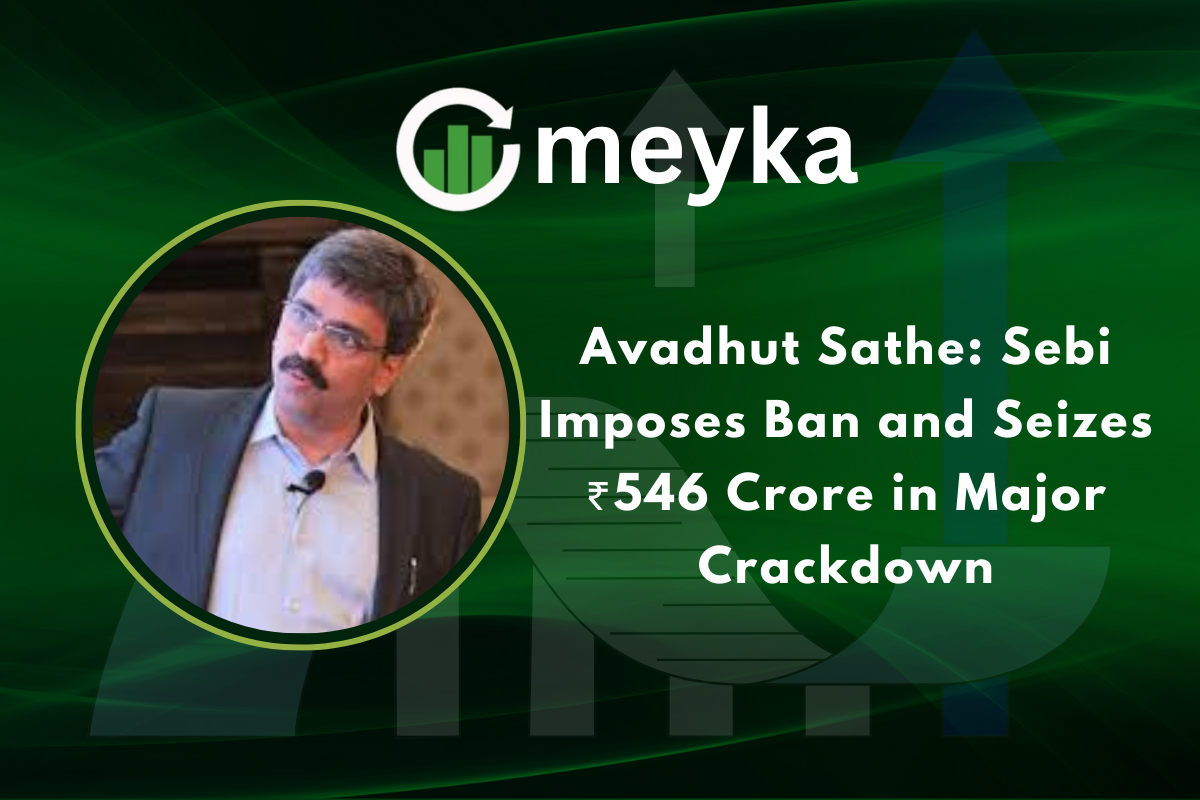
Avadhut Sathe

Avadhut Sathe: SEBI Imposes Ban and Seizes ₹546 Crore in Major Crackdown

What happened to Avadhut Sathe

On 4 December 2025, the Securities and Exchange Board of India (SEBI) issued a sweeping action against finfluencer Avadhut Sathe and his firm Avadhut Sathe Trading Academy Pvt Ltd (ASTAPL). SEBI barred Sathe and his firm from the securities market and ordered the impounding of ₹546.16 crore as “unlawful gains”.

The regulator’s interim order found that Sathe and his academy offered investment advice and stock-market recommendations under the guise of “training and education”, without being registered as required by law.

This move marks one of SEBI’s biggest crackdowns so far on a financial influencer, signalling stricter regulatory oversight on unregistered advisory platforms.

Who is Avadhut Sathe, and what was his setup

Avadhut Sathe is a Mumbai-based finfluencer and the founder of Avadhut Sathe Trading Academy (ASTA). His firm claimed to provide stock-market education and training to retail investors. Over the years, he built a large following; his YouTube channel reportedly had over nine lakh subscribers. 

ASTA had multiple branches across major Indian cities and offered courses and live-market trading sessions to students, positioning itself as a trading academy rather than a formal advisory or research firm.

According to SEBI’s investigation, between July 2017 and October 2025, the firm collected around ₹601.37 crore from more than 3.37 lakh investors, but a large portion, ₹546.16 crore, was determined to be “unlawful gains” made via unregistered advisory services.

Why SEBI took action: What went wrong

Unregistered advisory disguised as education

SEBI found that despite claiming to provide educational courses, ASTA was effectively giving stock-specific recommendations, buy/sell calls, option-trade guidance, target and stop-loss levels, and guiding investors on capital allocation.

Because neither Sathe nor his firm was registered as an investment adviser or research analyst, this conduct violated securities laws. The regulator described this as misleading and risky for investors.

Misleading claims and selective performance display

The investigation revealed that the academy selectively showcased only profitable trades of participants to lure new clients, giving a distorted view of real returns.

SEBI noted that many investors likely enrolled expecting “fail-proof” trading methods and unrealistic profits, a claim often associated with market manipulation or unverified advice.

Use of live market data and private groups

During its probe, SEBI found that ASTA used live exchange data in its sessions and operated closed WhatsApp groups where personalised trading advice was given, both restricted activities when unregistered.

Because of these findings, SEBI deemed the operations unlawful and harmful to retail investors and issued the ban and disgorgement order. 

What exactly has SEBI ordered

  • Sathe, ASTAPL, and associated entities are barred from securities market activities, no buying, selling, advising, or acting as analysts.
  • All collected fees must be returned: ₹546.16 crore seized as unlawful gains; accounts frozen until funds are placed under lien to SEBI.
  • They must cease all unregistered advisory or research services, stop using live market data, and remove all adverts boasting profits or performance of past students.
  • No further fees can be collected from existing course participants.

SEBI has described this as a necessary crackdown to protect investors and warn other finfluencers who might be bypassing legal registration requirements.

What prompted SEBI’s investigation and raid

Earlier in August 2025, SEBI raided ASTA’s Karjat-based trading academy. Officials seized digital devices and trading data to probe allegations of penny-stock promotion and unregistered advisory activities.

The raid was part of a broader regulatory campaign to check unregulated “finfluencers”, online market educators claiming to offer guaranteed returns or insider knowledge.

Following months of investigation, including review of client records, communication data, and fee collection history, SEBI concluded that the scope and scale of operations warranted urgent intervention.

How this impacts retail investors and the finfluencer ecosystem

For retail investors, this is a warning: the allure of easy profits from “live trading calls” or “secret picks” can be misleading. Even large followings or flashy marketing do not replace proper licensing and transparency.

For genuine financial advisors and registered analysts, SEBI’s action helps safeguard the reputation of lawful advisory services.

For finfluencers and trading educators, this will likely trigger stricter compliance requirements, more scrutiny, and possibly new regulations governing advisory services offered online.

This crackdown may curtail unregulated investment groups and push more investors to rely on certified professionals, reducing risk from unverified advice.

What critics and experts are saying

Many market experts applauded SEBI’s decisive action. Some urged that this should mark a turning point for investor protection and discourage “get-rich-quick” marketing tactics.

One Twitter post reacting to the news stated:

“SEBI’s ₹546 cr impound order against Avadhut Sathe is a big win for small investors. No more fake hype and unregistered advice.” — @ETNOWlive 

Another user added:

“This shows why you must check regulatory registration before following any stock-picking course or influencer.” — @SarangSood

The broader financial community is now watching closely, wondering if more finfluencers will face similar action.

What next for Avadhut Sathe and ASTA

  • SEBI may pursue full adjudication, possibly leading to a permanent ban or penalty, depending on the response to the show-cause notice in the coming weeks.
  • Investors who paid fees may seek refunds under SEBI’s disgorgement order, but the process could take time and depends on court or regulatory direction.
  • ASTA’s websites, advertisements, and social-media promotions likely must be taken down, or face further legal consequences.

The crackdown may also prompt regulatory proposals to tighten oversight of finfluencers and prevent unregistered advisory services.

What everyday investors should learn

  • Always verify registration: Before trusting any stock tip, course, or “insider advice”, check if the adviser is registered with SEBI or the relevant authority.
  • Beware of promises of guaranteed returns: Stock markets are volatile. Any claim of easy profits or “fail-proof” methods should be taken with caution.
  • Do due diligence: Research companies independently, rely on diversified portfolios, and avoid rushing into schemes promoted by influencers or groups.
  • Report suspicious advisors: If you suspect misleading promotions or unregistered advising, report to SEBI or local authorities; public vigilance helps keep markets safe.

Conclusion

The SEBI action against Avadhut Sathe, banning him and his academy, seizing ₹546 crore, and ordering disgorgement, underlines how seriously regulators are now cracking down on unregistered financial influencers.

This is not just about one man or one academy. It is a signal to the whole investment-education ecosystem: compliance, transparency, and regulation matter more than flashy marketing or social media hype.

For retail investors, it is a cautionary tale. For legitimate advisors, a reminder that regulation exists for a reason. And for the broader market, perhaps a step toward safer, more accountable investing.

As SEBI continues to clamp down on such operations, investors and educators alike must tread carefully, because when it comes to money and markets, legal compliance and trust matter the most.

FAQ’S

What is the Supreme Court judgment on SEBI?

The Supreme Court allows SEBI to regulate and investigate market violations to protect investors. It has upheld SEBI’s powers in cases involving fraud, insider trading, and unregistered advisory. The Court says SEBI can act strongly when public money is at risk.

What is the 75% rule of SEBI?

The 75 percent rule applies to delisting. A company can delist its shares only if 75 percent of public shareholders tender their shares in the exit offer. It ensures fair approval and protects minority investors.

What action can SEBI take against entities violating its regulations?

SEBI can impose monetary penalties, market bans, and disgorgement of unlawful gains. It can freeze bank accounts and issue show-cause notices. SEBI can also raid premises, cancel registrations, and restrict trading activity.

What is the 25% rule of SEBI?

The 25 percent rule requires listed companies to maintain at least 25 percent public shareholding. This rule ensures transparency and prevents promoter dominance. Companies must meet this requirement within the prescribed time limit.

Disclaimer

The content shared by Meyka AI PTY LTD is solely for research and informational purposes.  Meyka is not a financial advisory service, and the information provided should not be considered investment or trading advice.

Similar Posts

Leave a Reply

Your email address will not be published. Required fields are marked *