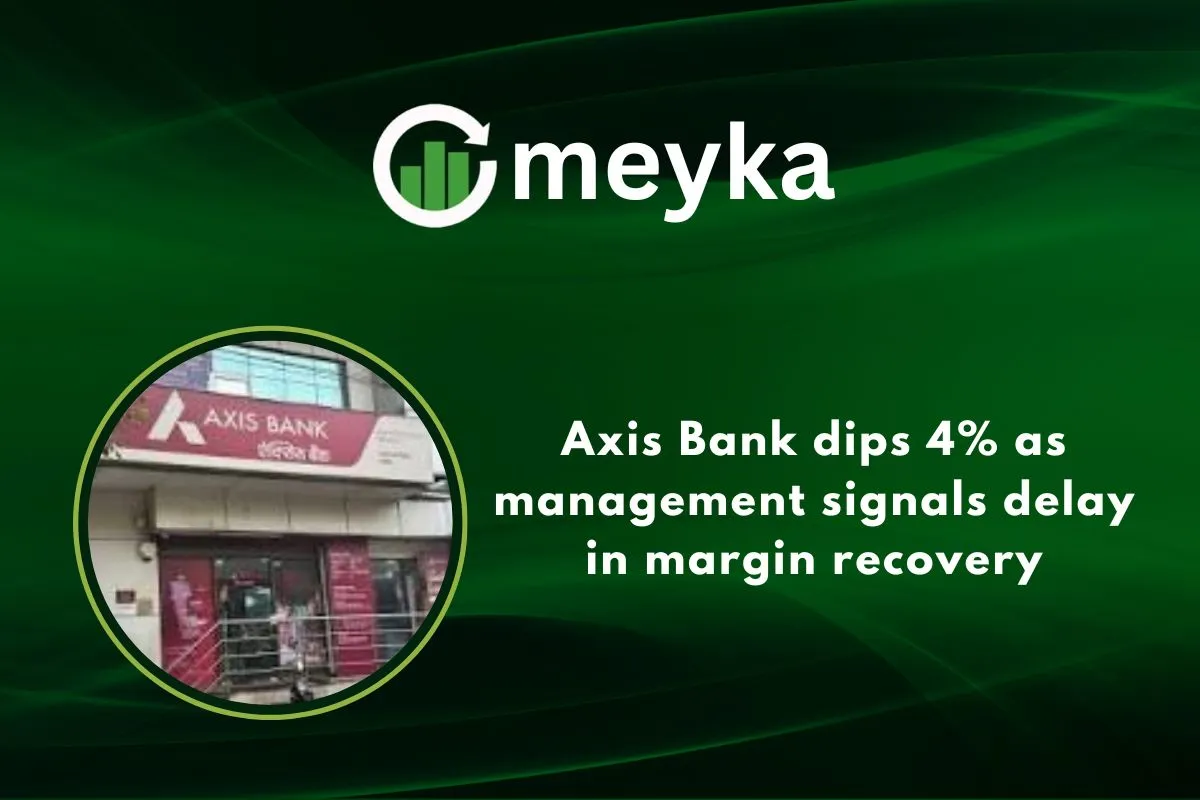
Axis Bank dips 4% as management signals delay in margin recovery
We saw a sharp move in Axis Bank shares this week as they tumbled around 4%, hitting a one‑month low. Investors reacted after bank management signaled a delay in the recovery of the bank’s net interest margin (NIM). This shocked many, as margins are one of the key measures of a bank’s profitability and health in the market. The drop also weighed on the broader markets, dragging indices like the Nifty lower. For people watching Indian banking stocks, this is a timely reminder that even strong names like Axis Bank aren’t immune to macro pressure.
Axis Bank’s Stock Performance
On December 16, 2025, AxisBank shares fell about 4% intraday to ₹1,231, underperforming some peers. Despite this, the stock has gained around 12.28% over the past 12 months. Short‑term traders remain cautious, reacting strongly to management’s guidance on margin recovery.
Management Commentary and Margin Outlook
- NIM Update: Axis Bank management flagged a delay in net interest margin (NIM) recovery.
- Current Pressure: NIM, the difference between interest earned on loans and paid on deposits, is under stress.
- Timeline Shift: Earlier forecast expected recovery by Q3 FY26, now likely Q4 FY26 or early next fiscal year.
- Impact on Profits: Even a one-quarter delay can reduce profitability and affect earnings forecasts.
- Investor Reaction: Analysts and traders may rethink short-term expectations due to slower margin improvement.
- Simple Takeaway: When NIM rises, profits grow; when NIM stays weak, profits remain under pressure.
Implications for Investors
- Earnings Outlook: Delayed margin recovery may slow profit growth and affect dividends.
- Investor Caution: Traders may reduce positions, increasing short-term stock volatility.
- Long-Term View: Axis Bank’s strong deposit growth and retail lending franchise support future earnings.
Sectoral and Macroeconomic Context
- Industry Pressure: Indian banks face margin stress from higher funding costs, slow credit growth, and competition.
- RBI Influence: Interest rate changes affect margins across the sector.
- Risk Management: Tightened lending norms and higher provisions can reduce short-term earnings.
- Global Trend: Banks worldwide face high funding costs and moderate loan demand.
- Long-Term Outlook: Credit demand and deposit growth remain healthy, supporting future recovery for banks like Axis Bank.
Factors Driving Margin Pressure
- Higher Deposit Costs: Banks pay more to attract deposits, raising funding costs.
- Competitive Loan Pricing: Loan spreads narrow due to intense competition.
- Provisioning & Risk Costs: Higher credit costs and provisions impact profits.
- Slower Loan Growth: Reduced loan expansion limits interest income.
Conclusion
The recent 4% drop in Axis Bank’s share price shows how sensitive markets are to bank guidance, especially around margins. Delays in NIM recovery have shifted the short‑term outlook and triggered selling interest. At the same time, we also know that the bank has strong balance sheet fundamentals and long‑term potential. For investors, it’s a moment to balance caution with patience. Watching changes in margins, loan growth, and costs will be key to understanding where Axis Bank heads next. In the end, Axis Bank’s experience this week reminds us that banks are deeply tied to economic cycles. Margins may lag, but long‑term trends often rebalance over time.
FAQS
Axis Bank shares dropped after management signaled a delay in net interest margin (NIM) recovery, raising concerns about near-term profitability.
Key factors include higher deposit costs, competitive loan pricing, increased provisioning, and slower loan growth.
Short-term investors may face volatility and cautious sentiment, while long-term investors can benefit from Axis Bank’s strong deposit growth and retail lending franchise.
No. Many Indian banks face margin pressures due to interest rate changes, funding costs, and regulatory provisions, but sector fundamentals like credit demand remain strong.
Disclaimer:
The content shared by Meyka AI PTY LTD is solely for research and informational purposes. Meyka is not a financial advisory service, and the information provided should not be considered investment or trading advice.