Bajaj Auto shares

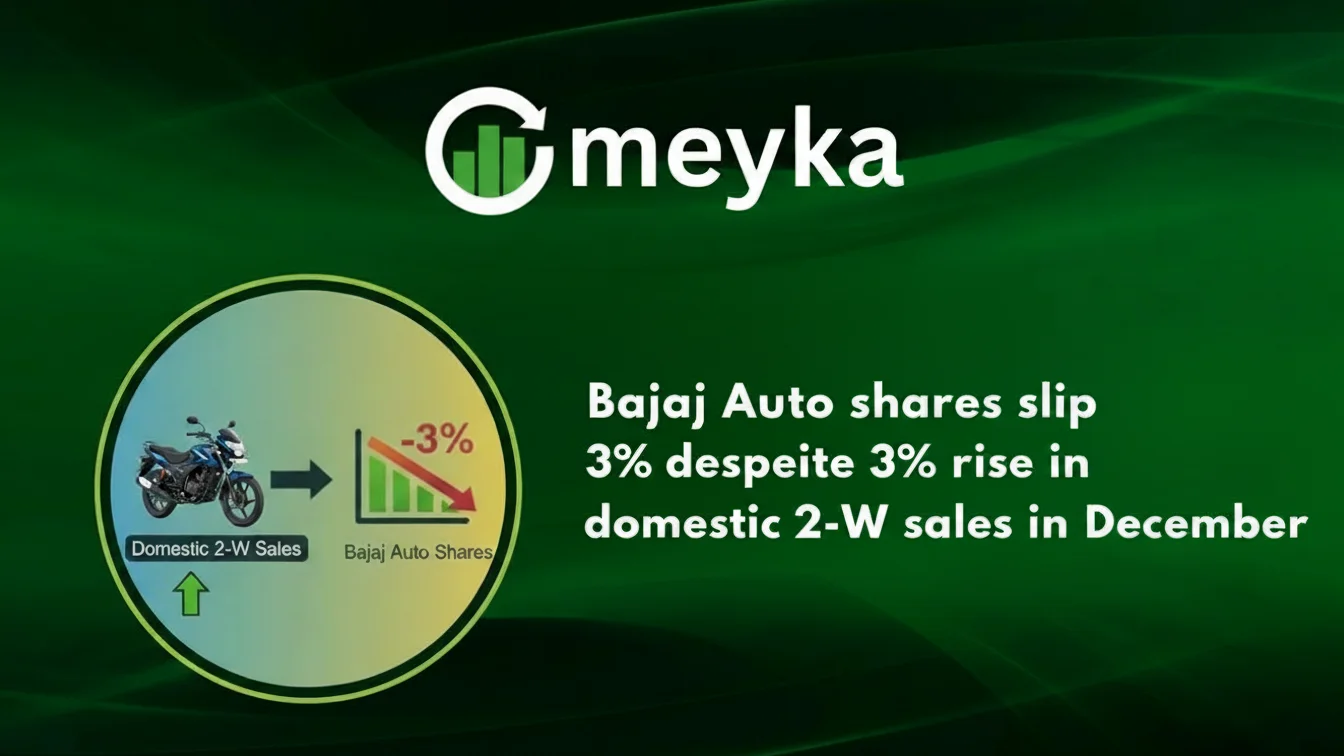
Bajaj Auto Shares Slip 3% Despite 3% Rise in Domestic 2-W Sales in December

Bajaj Auto shares fell about 3 percent on January 2, 2026, even though the company posted a modest increase in domestic two-wheeler sales for December. The stock market reaction surprised many because sales growth is typically viewed as positive news for investors. This drop highlights how market expectations, export performance, and broader economic factors influence share prices.

December 2025 Sales Overview

Bajaj Auto reported its December 2025 sales with a mixed set of results. Total sales increased 14 percent year-over-year to approximately 3.69 lakh units, compared with around 3.23 lakh units in December 2024.

In the key two-wheeler segment:

  • Domestic two-wheeler sales rose 3 percent to around 1.32 lakh units, a modest increase.
  • Exports of two-wheelers grew much faster, up 24 percent to about 1.78 lakh units, showing demand from overseas markets remains strong.
  • Commercial vehicle sales also improved, rising about 17 percent overall, with exports up 32 percent.

Domestic sales growth was much slower than overall volume growth, and this may partly explain the share price reaction on the day.

Why Bajaj Auto Shares Dropped

Even though sales increased, Bajaj Auto shares declined for several reasons:

1. Modest Domestic Demand Growth

The domestic two-wheeler market is a key driver for Bajaj Auto’s revenues and margins. A 3 percent rise in domestic two-wheeler sales was seen as underwhelming by some investors, who were expecting stronger growth given the robust performance of many peers in the auto segments.

2. Market Expectations vs Reality

Investors often set forecasts ahead of sales releases. When actual sales figures fall short of expectations, even slightly, stock prices can weakly react, especially in a market where sentiment and momentum matter. Short-term traders may have sold shares to lock in gains or cut exposure.

3. Heavy Focus on Exports

While exports grew strongly, domestic sales matter more for many Indian investors. Strong export numbers may not immediately translate into higher valuations if domestic demand is seen as slow. In December, export growth of about 24 percent in two-wheelers was strong but did not fully offset the moderate domestic growth in traders’ minds.

4. Sector Rotation in the Stock Market

Broader market dynamics can also influence stock movements. Investors increasingly show interest in high-growth sectors, including AI stocks and technology, which may divert capital away from traditional auto companies. This pattern often impacts cyclical stocks like Bajaj Auto when rotation occurs. Stock research shows that sector sentiment and capital flows play a significant role in daily price action.

What This Means for Investors

A share price drop around earnings or sales is not always a sign of fundamental weakness. Here are some key points investors should keep in mind:

  • Sales Growth Still Positive: Bajaj Auto’s overall sales and export performance were solid, with total volumes up 14 percent and strong demand in key overseas markets.
  • Domestic Market Recovery Is Gradual: The Indian two-wheeler market has seen mixed demand conditions, and slower growth in urban and rural areas has affected sales momentum. Investors may be watching for a sharper recovery in domestic demand before revising long-term outlooks.
  • Exports and Diversification Help: The strong growth in exports and commercial vehicles indicates Bajaj Auto’s diversified strength beyond domestic sales. This can be a positive long-term factor in earnings growth and cash flows.
  • Valuations and Price Movements: Stock prices fluctuate due to market expectations, not just fundamentals. Short-term volatility often reflects trader positioning and profit booking, rather than long-term prospects.

Industry Context

Two-wheeler sales across India have shown growth overall, with total registrations increasing for the year. One report said two-wheeler registrations grew about 7 percent in 2025 compared to the previous year, setting a new high.

Global trends also show strong competition in electric two-wheelers and changing consumer preferences, which are reshaping industry dynamics.

Comparisons with Peers

Other companies in the two-wheeler space, such as TVS Motor, have also reported strong results and even led in certain segments like electric scooters. One report mentioned TVS had a leading position in India’s electric two-wheeler market in December.

These comparisons can influence investor sentiment toward auto stocks broadly. If competitors show stronger domestic or niche segment growth, capital may shift accordingly.

Technical and Market Signals

Technical traders focus on price action, trends, and support-resistance levels. When a stock like Bajaj Auto falls 3 percent, it may attract short-term selling pressure, which is amplified by automated trading and algorithmic strategies. This does not always reflect long-term fundamentals.

Stock research combining technical and fundamental analysis helps investors differentiate between temporary dips and structural declines.

Conclusion

The drop in Bajaj Auto shares by around 3 percent despite a 3 percent rise in domestic two-wheeler sales in December highlights the complex nature of stock price movements. Sales growth alone does not drive share prices, especially when overall market expectations, sector rotation, and investor sentiment are at play.

Investors should consider the broader picture, including total sales growth, export performance, industry trends, and valuation metrics. While short-term fluctuations can be driven by sentiment, strong fundamentals and diversification in sales channels can support long-term investment value.

FAQs

Why did Bajaj Auto shares fall even though sales grew?

The share price fell because the domestic sales growth was modest compared with expectations, and broader market sentiment may have favored other sectors or driven profit booking around earnings data.

Are rising exports a positive sign for Bajaj Auto?

Yes, strong export growth helps diversify revenue and can support overall sales momentum even if domestic demand is moderate.

Should investors be concerned about a short-term share price drop?

Short-term price movements alone are not always a cause for concern, but investors should conduct proper stock research, consider long-term trends, and evaluate fundamentals before making decisions.

Disclaimer:

The content shared by Meyka AI PTY LTD is solely for research and informational purposes. Meyka is not a financial advisory service, and the information provided should not be considered investment or trading advice.

Similar Posts

Leave a Reply

Your email address will not be published. Required fields are marked *