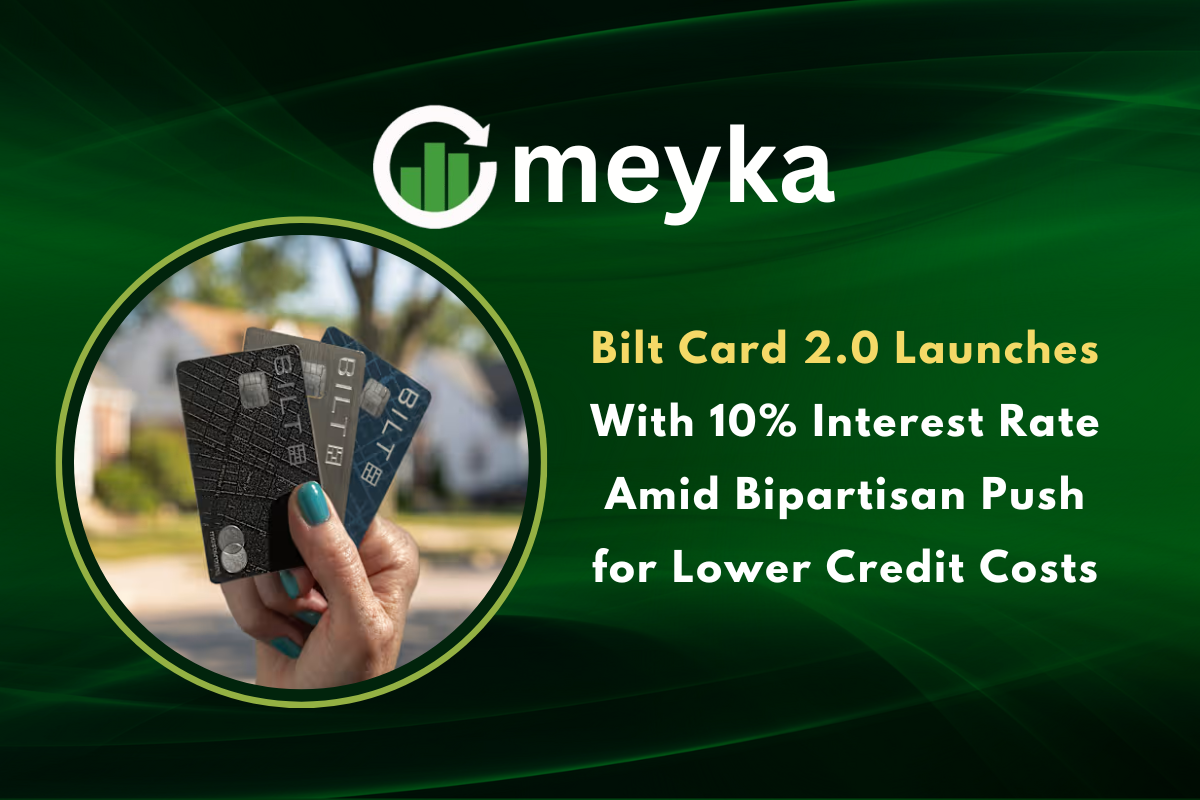
Bilt Card 2.0 Launches With 10% Interest Rate Amid Bipartisan Push for Lower Credit Costs
The launch of Bilt Card 2.0 marks a major moment in the US credit card market. At a time when Americans are struggling with high borrowing costs, rising interest rates, and growing debt, Bilt has introduced a credit card with a 10 percent interest rate. This move directly answers a strong bipartisan push in Washington to lower credit card costs for consumers.
The bilt card 2.0 is not just another rewards card. It is designed as a response to real problems faced by renters and everyday card users. With average credit card interest rates crossing 20 percent nationwide, a 10 percent rate stands out as rare and meaningful.
So why is this launch important now, and what makes it different from traditional cards? Let us break it down in a clear and simple way.
What Is Bilt Card 2.0 and Why It Matters Right Now
The bilt card 2.0 is the latest credit card offering from Bilt, a fintech company known for letting renters earn rewards on rent payments without transaction fees. With this new version, Bilt expands its mission beyond rewards and directly targets the cost of borrowing.
According to reports from Yahoo Finance and The Globe and Mail, Bilt Card 2.0 introduces a flat 10 percent interest rate on purchases. This is far lower than the national average credit card APR, which often ranges between 22 and 29 percent.
Why is this happening now?
Lawmakers from both political parties have increased pressure on banks and card issuers to reduce high interest rates that trap consumers in long term debt. Bilt’s move aligns closely with this political and public push.
This launch is also part of a wider conversation about fairness in consumer finance. High credit card rates have become a major issue for families dealing with inflation, rent increases, and everyday expenses.
Key Features of Bilt Card 2.0
- 10 percent interest rate on purchases, significantly lower than most credit cards
- No annual fee, keeping access open to more users
- Rent rewards program, allowing users to earn points on rent payments
- Points redeemable for travel, rent credits, and transfers to airline and hotel partners
- Designed for responsible borrowers, not for revolving high balance debt
This combination of low interest and rewards is rare in the current market.
Why is the interest rate capped at 10 percent?
Bilt states that the card is built for financially responsible users who pay on time and want predictable borrowing costs. It is not meant to encourage overspending.
How Bilt Card 2.0 Fits Into the Bipartisan Push for Lower Credit Costs
The bilt card 2.0 arrives at a moment when credit card interest rates are under political scrutiny. Lawmakers from both parties have openly criticized banks for charging high APRs while consumers struggle with rising living costs.
Recent discussions in Congress have focused on:
- The impact of high interest rates on working families
- The long term debt cycle caused by compounding credit card interest
- The need for more competition in the credit card industry
Bilt’s leadership has publicly said that the new card is meant to prove that lower interest rates are possible without sacrificing business sustainability.
This position has gained attention on social media and financial forums.
One widely shared post on X highlighted the move as a challenge to major banks:
The post sparked debate about why large issuers cannot offer similar rates.
Market Reaction and Public Response to Bilt Card 2.0
The reaction to bilt card 2.0 has been strong and mixed, with many praising the low interest rate and others questioning eligibility and scale.
A financial commentator noted that this launch could reshape how consumers think about credit cards:
Many users welcomed the focus on affordability rather than flashy sign up bonuses. Others asked whether the card would remain accessible or limited to a small group of high credit score users.
Why does public trust matter here?
Because years of complex terms and rising rates have made many consumers skeptical of new card offers.
How Bilt Card 2.0 Compares to Traditional Credit Cards
Most traditional credit cards today focus on rewards while quietly charging very high interest rates. The bilt card 2.0 flips this model by putting the interest rate at the center.
Typical cards in 2026 offer:
- Interest rates between 22 and 29 percent
- Rewards tied to spending categories
- Penalty APRs for late payments
In contrast, Bilt Card 2.0 offers a clear rate structure and avoids penalty pricing language.
A viral discussion on X pointed out how unusual this is in the current market:
This transparency has helped Bilt build credibility among financially aware users.
Who Is Eligible for Bilt Card 2.0
Bilt has not positioned the card as a mass market product for everyone. Eligibility is expected to favor users with:
- Strong or good credit profiles
- Stable income
- History of on time payments
Why this matters
Lower interest rates come with lower risk tolerance. Bilt aims to avoid the debt traps often associated with high interest cards.
Some critics argue this limits access, while others say it encourages healthier credit habits.
A popular post discussing eligibility concerns gained traction online:
Rewards Structure and Rent Benefits Explained
Bilt remains focused on renters, which is its core audience. The bilt card 2.0 continues to allow users to earn points on rent without charging transaction fees.
Points can be used for:
- Rent credits
- Travel bookings
- Airline and hotel transfers
- Lifestyle rewards
This makes the card especially attractive for renters who want both rewards and lower interest costs.
Why is rent a big deal?
Rent is often the largest monthly expense for young professionals. Turning rent payments into rewards without extra fees is still rare.
Risks and Limitations of Bilt Card 2.0
No financial product is perfect, and bilt card 2.0 has some limits.
- Availability may be limited at launch
- Credit approval standards may be strict
- Not ideal for users who carry large revolving balances
A skeptical but balanced take appeared in this post:
These concerns are valid, but they do not erase the importance of offering a lower interest option in a high cost market.
Why Bilt Card 2.0 Could Change the Credit Card Industry
The biggest impact of bilt card 2.0 may not be the card itself, but the pressure it puts on competitors. When one issuer proves that a 10 percent interest rate is possible, it raises uncomfortable questions for others.
Why have rates climbed so high?
Why are consumers given rewards but charged extreme interest?
Can banks still profit with lower rates?
Bilt’s launch forces these questions into the spotlight.
Expert View on the Future of Lower Interest Credit Cards
Financial analysts suggest that if Bilt Card 2.0 succeeds, it could inspire similar products from other fintech firms. Traditional banks may be slower to respond, but public and political pressure is growing.
This aligns with broader efforts to bring fairness, transparency, and responsibility back into consumer credit.
Conclusion
The launch of bilt card 2.0 with a 10 percent interest rate is a bold and timely move. It responds directly to rising consumer frustration, bipartisan political pressure, and the growing demand for fair credit products.
By combining low interest, rent rewards, and clear terms, Bilt Card 2.0 challenges the idea that high credit card rates are unavoidable. While it may not be available to everyone, its impact on the conversation around credit costs is already clear.
As more consumers question the true cost of borrowing, bilt card 2.0 stands as a signal that change in the credit card industry is possible.
Disclaimer
The content shared by Meyka AI PTY LTD is solely for research and informational purposes. Meyka is not a financial advisory service, and the information provided should not be considered investment or trading advice.