Bluescope Steel Shares

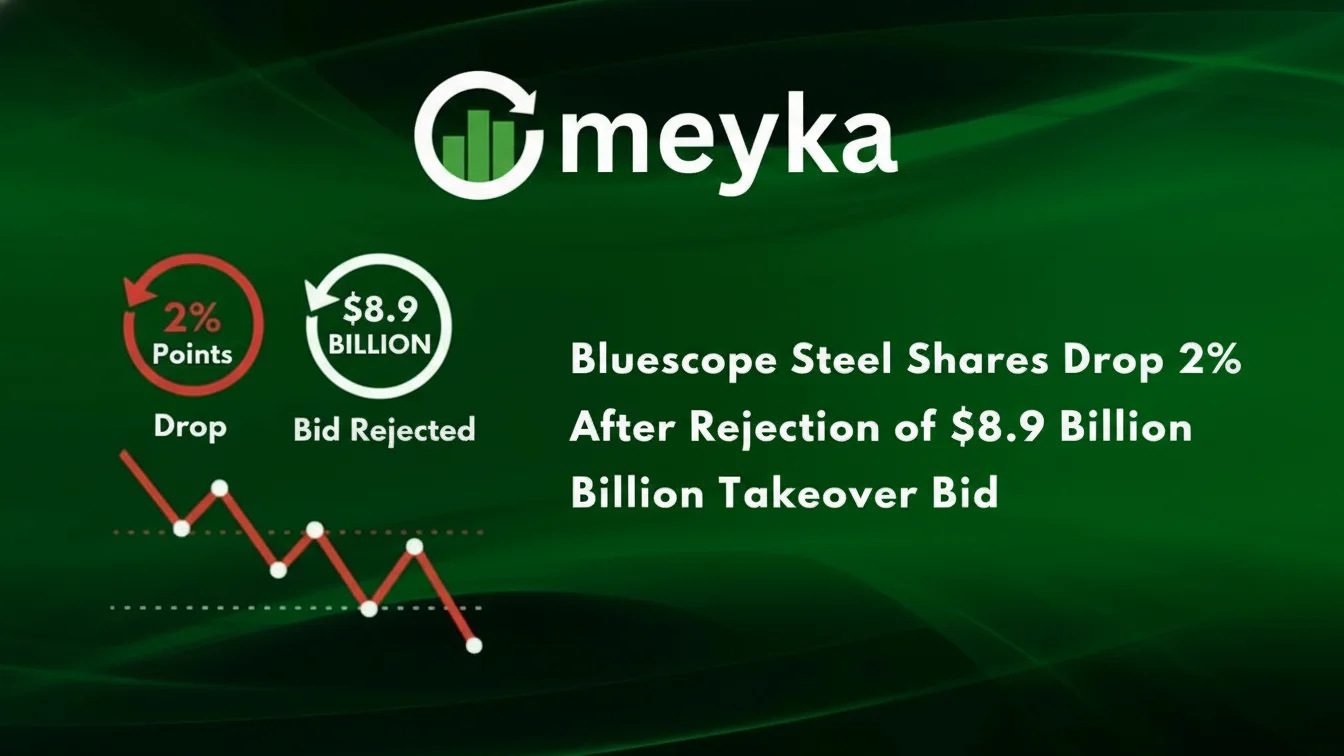
Bluescope Steel Shares Drop 2% After Rejection of $8.9 Billion Takeover Bid

BlueScope Steel Shares experienced a notable drop today after the Australian steel giant announced the rejection of a US$8.9 billion (A$13.2 billion) takeover offer from a consortium led by SGH Limited and U.S. steel producer Steel Dynamics. The share price fell roughly 2 percent, reflecting investor disappointment but also strong confidence in BlueScope’s future strategy, long-term value, and operational strengths.

Financial markets across Australia and global materials sectors responded sharply to this corporate decision, with analysts dissecting the board’s rationale and future prospects for the company’s strategic moves and earnings potential.

Why BlueScope Rejected a Major Takeover Offer

BlueScope’s board unanimously rejected the takeover proposal, stating that the bid “very significantly undervalued” the company’s assets, growth potential, and future earnings trajectory. According to the company’s official release and today’s market news, the offer was set at A$30 per share. However, because the offer would be reduced by future dividend payments and subject to extensive conditions, the effective value to shareholders was likely lower.

Chair Jane McAloon made it clear that the board would not accept an offer that mistreated shareholders or that offered short-term gains at the expense of long-term value creation. The bid was described as an attempt to acquire BlueScope “on the cheap, a phrase that reverberated across financial media today.

This marks at least the fourth time BlueScope has turned down a takeover offer, including multiple proposals from the same consortium, underscoring the company’s confidence in its internal growth initiatives.

Bluescope Steel Shares: Market Reaction That Mattered

Despite rejecting the bid, Bluescope Steel Shares did not collapse. The stock traded near the offer price level of A$29.27, suggesting investors still believed a revised bid could emerge. However, the immediate fall of about 2% signals unease among traders who saw the takeover as a potential catalyst for higher valuations.

Shares have been volatile over recent weeks because of mixed operational results and external pressures like steel price fluctuations, global tariff policies, and cost pressures on raw materials. Analysts now anticipate that the company’s earnings guidance and strategic land asset monetization plans will be key drivers of share price movements in the near term.

Major index performance today also reflected this sector stress. While the broader Australian market closed higher, materials stocks like BlueScope lagged behind.

Strategic Strengths Behind the Rejection

1. Asset Value Far Exceeds Offer

BlueScope highlighted that the takeover bid failed to recognize the full value of its global assets, including its North American steel operations, land holdings, and projected earnings growth. The company owns approximately 1,200 hectares of industrial land, which, once rezoned, carries potential development value that significantly outstrips the 30-dollar share offer.

This land, recently monetized partly via the West Dapto deal, could generate billions in future returns if developed for industrial or residential purposes.

2. Growth Initiatives and Earnings Upside

BlueScope also pointed to numerous internal growth projects that are expected to boost annual earnings by up to A$500 million by 2030, alongside expected operational efficiencies worth hundreds of millions more.

These include expansions of its North Star mini-mill in the U.S., enhanced coated steel capacity in Australia, and business improvements that could lift EBIT significantly if historical steel spread and forex conditions normalize.

3. Balance Sheet Strength and Capital Discipline

Unlike the bid strategy, which involved significant debt financing, BlueScope enters this year with very low net debt and a strong balance sheet. The board emphasized that using the company’s strength to fund a leveraged takeover undermines long-term shareholder interests.

Is This a Turning Point for Investors?

For investors tracking BlueScope Steel Shares, the immediate drop might appear concerning, but market sentiment is mixed. Some traders think the share price may rebound if bidders return with an improved offer in the mid-$30 range. Others point to the strong fundamentals and land asset value as more critical determinants of future returns.

Strategically, BlueScope’s ability to deliver on its growth plan and cost improvements will likely be the benchmark used by analysts and large institutional investors.

Financial data platforms and active stock researchers are also noting that companies with strong operational pipelines and cash flow resilience tend to outperform peers over extended horizons — especially amid cyclical commodity markets. This makes BlueScope’s rejection decision more plausible as a long-term value play.

How Global and Industry Forces Are Shaping the Story

BlueScope’s decision also intersects with broader industry dynamics:

  • U.S. steel tariffs under recent policies have sharpened the value of domestic steel operations, making acquisitions more appealing to foreign buyers.
  • Steel price spreads in Asia remain uncertain, influencing valuations in the region.
  • Long-term investors increasingly focus on AI-driven stock research tools and real-time analytics to separate noise from fundamental trends.

These forces indicate that while short-term stock performance can be volatile, deeper structural value — especially in diversified steel makers like BlueScope- can withstand transient market pressures.

What This Means for Stock Analysts and Traders

For analysts tracking materials stocks, BlueScope’s rejection sends a clear signal: the company values strategic independence and internal growth capacity more than immediate buyout gains. Investors who use advanced stock research platforms are likely to monitor future earnings reports, production updates, and land asset monetization pathways as catalysts for share price appreciation.

It also means that any renewed takeover attempts must be materially more serious to attract board support. This sets a valuation floor that protects long-term shareholder interests and aligns with conservative investment principles.

Frequently Asked Questions

Why did Bluescope Steel Shares drop after the takeover rejection?

The shares fell because investors had priced in a takeover premium, which disappeared after the board rejected the offer as undervaluing the company.

Does this rejection mean Bluescope is planning major changes?

The company’s board and management reaffirmed its long-term growth strategy and highlighted future earnings potential, suggesting confidence in internal value creation.

Could bidders return with a higher offer?

Analysts believe an improved offer in the mid-$30 range or above could attract more serious consideration from the board and investors.

Disclaimer:

The content shared by Meyka AI PTY LTD is solely for research and informational purposes. Meyka is not a financial advisory service, and the information provided should not be considered investment or trading advice.

Similar Posts

Leave a Reply

Your email address will not be published. Required fields are marked *