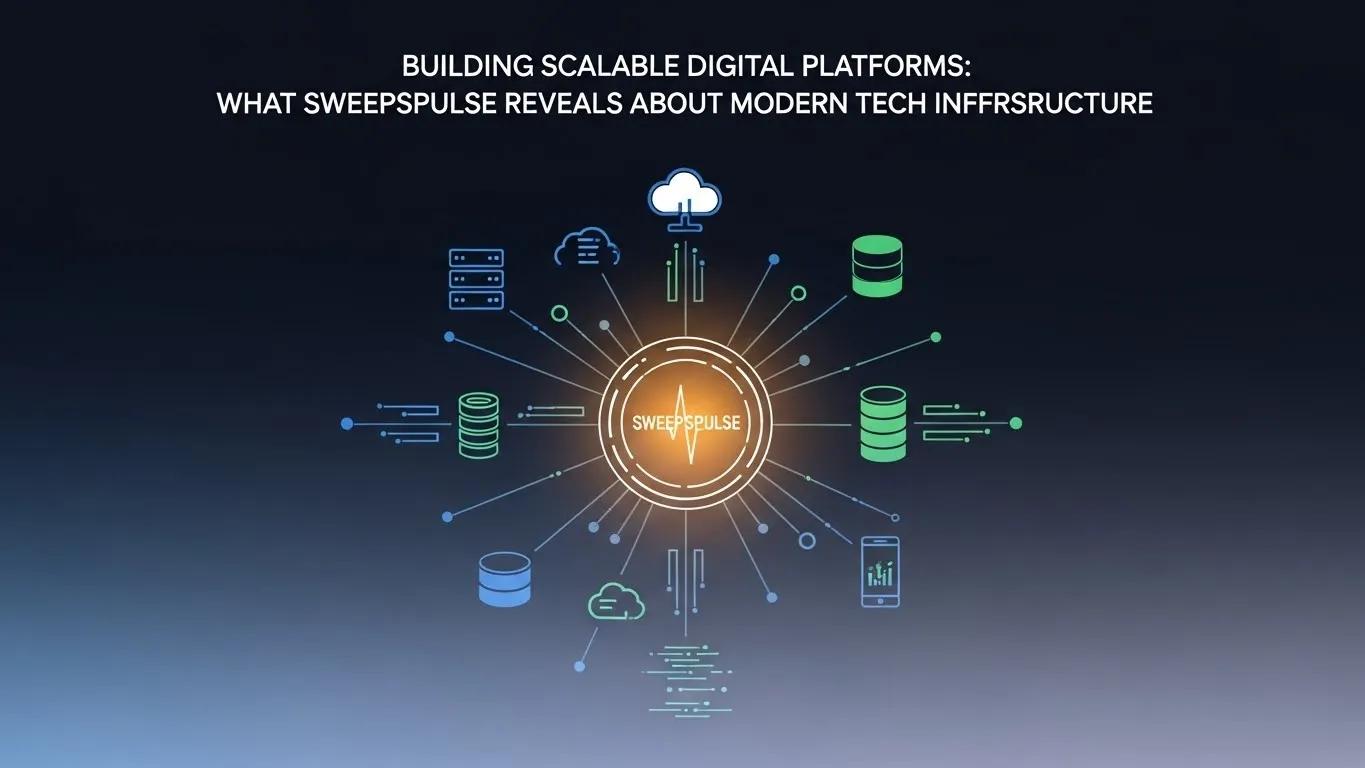
Building Scalable Digital Platforms What SweepsPulse Reveals About Modern Tech Infrastructure

Building Scalable Digital Platforms: What SweepsPulse Reveals About Modern Tech Infrastructure

Scalability has become one of the defining challenges for modern digital platforms. As products evolve from small launches into complex ecosystems, the ability to grow without sacrificing performance, security, or user experience determines long-term success. Platforms that fail to plan for scale often encounter instability, rising costs, and development bottlenecks that are difficult to reverse.

SweepsPulse offers a practical example of how modern tech infrastructure can be designed to support sustainable growth. By examining its technical foundations rather than its surface features, we can identify broader lessons relevant to startups, SaaS companies, and digital businesses operating in fast-changing markets.

Designing for Growth From Day One

One of the most important principles behind scalable platforms is proactive architectural planning. Scalability is not something that can be bolted on later without cost or risk. SweepsPulse reflects an early commitment to modular design, which allows individual system components to evolve independently.

Instead of relying on a single monolithic application, the platform is structured around distinct functional layers. This separation of concerns improves maintainability and reduces the impact of changes or failures in one area of the system.

Key benefits of this approach include:

  • Faster development cycles, since teams can work on separate components in parallel
  • Reduced system-wide risk during updates or deployments
  • Easier integration of new features or third-party services

By avoiding tight coupling between components, SweepsPulse positions itself to adapt more easily as product requirements evolve.

Cloud Infrastructure as a Scalability Foundation

Modern scalable platforms increasingly rely on cloud-native infrastructure, and SweepsPulse is no exception. Cloud environments provide flexibility that traditional hosting models cannot match, particularly when user demand fluctuates.

Instead of provisioning fixed resources, cloud-based systems allow platforms to scale capacity up or down automatically. This ensures performance stability during peak usage while avoiding unnecessary infrastructure costs during quieter periods.

From a business standpoint, this approach delivers several advantages: Predictable operational costs aligned with actual usage, improved reliability through redundancy and failover mechanisms and faster global deployment without the need for physical infrastructure Cloud-native architecture enables SweepsPulse to support growth without locking itself into rigid technical constraints.

Performance as a Core User Experience Metric

Scalability is often discussed in terms of volume, but performance is just as critical. A platform that technically supports more users but becomes slow or unresponsive under load ultimately fails its audience.

SweepsPulse emphasizes performance optimization at multiple levels of the stack. Rather than relying on a single solution, it combines several complementary techniques to maintain responsiveness as the platform grows.

These include:

  • Intelligent caching to reduce repeated data requests
  • Distributed content delivery to minimize latency for global users
  • Efficient database queries to prevent bottlenecks as data volume increases

Data Handling and System Intelligence

Data plays a central role in modern digital platforms, not just as stored information but as an active driver of decision-making. SweepsPulse demonstrates how scalable data infrastructure supports both operational stability and strategic insight.

Instead of processing data in large, infrequent batches, the platform incorporates real-time and near-real-time data flows. This allows system health, usage trends, and performance metrics to be monitored continuously.

Security Built Into the Infrastructure

As platforms scale, security challenges grow alongside them. Increased traffic, more integrations, and larger data volumes all expand the potential attack surface. SweepsPulse reflects a security-first mindset that treats protection as a foundational layer rather than an afterthought.

Rather than relying solely on perimeter defenses, the platform integrates security throughout its infrastructure. Access controls, data encryption, and continuous monitoring are embedded into the system’s core architecture.

This layered approach delivers several benefits:

  • Reduced risk of single points of failure
  • Stronger protection for user data and platform integrity
  • Easier compliance with evolving regulatory and industry standards

By designing security as part of scalability, SweepsPulse avoids the common pitfall of retrofitting protections after growth has already occurred.

A Step-by-Step Approach to Building Scalable Platforms

The infrastructure strategy behind SweepsPulse follows a clear, sequential logic that prioritizes long-term flexibility over short-term convenience. Rather than attempting to predict every future requirement, the platform is built through deliberate, repeatable steps that support controlled growth.

Step 1: Establish a scalable technical foundation
The first step is selecting cloud-compatible technologies and frameworks that can scale horizontally. This ensures the platform is not limited by fixed infrastructure and can adapt as usage patterns evolve.

Step 2: Define and separate core system functions
Critical components such as user management, data handling, and service delivery are isolated into distinct layers or services. This separation allows each function to scale, update, or recover independently.

Step 3: Build automation into daily operations
Automation is introduced early for deployments, system monitoring, and resource management. This reduces operational friction and minimizes the risk of human error as complexity increases.

Step 4: Monitor real-world performance continuously
Rather than optimizing based on assumptions, the platform relies on live performance metrics and usage data. This enables informed decisions about where scaling efforts are truly needed.

Step 5: Refine and adapt through iteration
Scalability is treated as an ongoing process. Infrastructure and workflows are regularly reviewed and adjusted based on growth trends, user behavior, and technical insights.

Following these steps allows digital platforms to expand without sacrificing reliability or performance, creating a strong foundation for sustainable growth.

Lessons for Modern Digital Businesses

The technical decisions behind SweepsPulse offer valuable insights for any organization building or scaling a digital platform. While specific tools and technologies may change, the underlying principles remain broadly applicable.

Key takeaways

  1. Design for scalability early, not reactively
  2. Use modular architecture to support flexibility and speed
  3. Treat performance, security, and data as core infrastructure concerns

Conclusion

SweepsPulse illustrates how modern tech infrastructure can support scalable, resilient digital platforms in a complex and demanding environment. Its approach demonstrates that scalability is not a single feature or technology, but the result of thoughtful architectural decisions across infrastructure, performance, data, and security. For businesses navigating digital growth, the lesson is clear. Investing in scalable foundations early creates the conditions for long-term success, adaptability, and user trust. In an era where digital platforms must evolve continuously, infrastructure is no longer just a technical concern; it is a strategic one.

Disclaimer:

The content shared by Meyka AI PTY LTD is solely for research and informational purposes. Meyka is not a financial advisory service, and the information provided should not be considered investment or trading advice.

Similar Posts

Leave a Reply

Your email address will not be published. Required fields are marked *