Trade

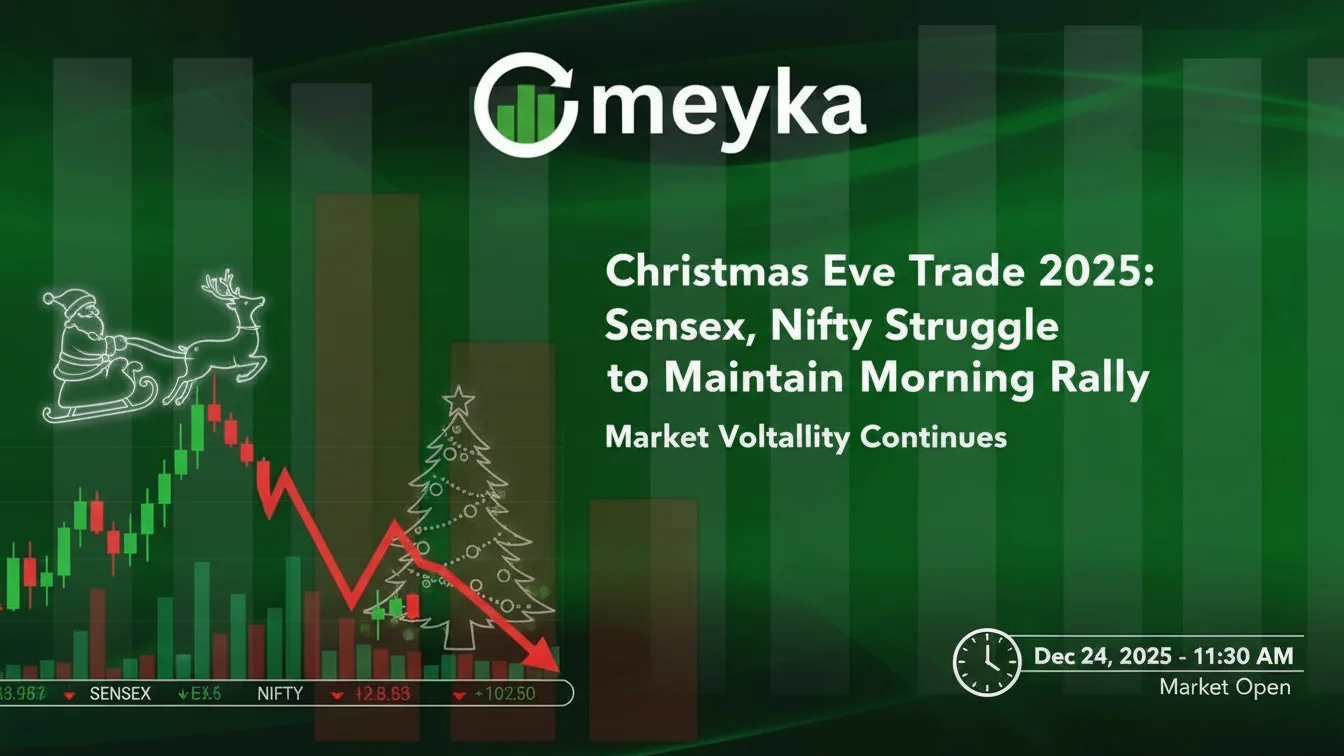
Christmas Eve Trade 2025: Sensex, Nifty Struggle to Maintain Morning Rally

On Christmas Eve Trade 2025, India’s key equity benchmarks Sensex and Nifty opened with positive momentum but struggled to hold onto early gains as investors weighed mixed global cues and domestic profit booking. The stock market witnessed a cautious mood as traders adjusted positions ahead of the year-end, trying to balance optimism with lingering concerns over inflation, interest rate direction, and earnings trends.

The early rally reflected renewed confidence in economic growth and corporate performance after positive cues from U.S. markets. However, profit booking and risk-off sentiment led to volatility, with both major indices retreating from their morning highs by mid-session. This trading pattern highlights the challenges markets face in maintaining consistent upward movement during thin year-end volumes and holiday trading.

Morning Rally Fades on Profit Booking

In the early hours of Christmas Eve Trade, the Sensex climbed by over 150 points while the Nifty50 gained more than 40 points, powered by strong buying in financial and technology stocks. Investors responded positively to fresh inflows and optimism surrounding economic data.

However, as the session progressed, profit-taking emerged among large-cap stocks, prompting a reversal in sentiment. Traders cited cautious positioning ahead of global market closures for the holidays and mixed corporate earnings as reasons for reduced risk appetite.

This shift shows how sensitive Indian markets can be to short-term sentiment swings, especially during festive periods when trading volumes are thinner than usual.

Sector-Wise Movement and Market Drivers

Financial stocks initially led the rally with banks and NBFCs showing strength as investors weighed expectations of stable credit growth. The early gains in the Trade session were also supported by positive momentum in technology shares. AI-enabled firms and software service companies displayed resilience after renewed global demand projections for digital transformation projects.

Despite initial optimism, most sectors gave up gains by mid-day. Realty, metal, and energy stocks faced selling pressure, dragging benchmark indices lower. This sector rotation reflects the market’s struggle to hold broad-based strength in the face of fading optimism.

Global Cues and Their Impact on Indian Markets

Global markets influenced the Christmas Eve session as traders digested mixed signals from international data. U.S. markets showed resilience after reports of strong economic figures, but also hinted at potential headwinds in manufacturing and consumer sentiment.

Asian markets were subdued, with moderate gains in some regions and pressure in others. Mixed global performance reduced clarity on direction, leading Indian investors to adopt a cautious stance. As a result, the domestic stock market experienced choppy price action throughout the session.

Lower trading volumes on Christmas Eve amplified volatility as traders scaled back positions ahead of major global holidays. In thin markets, even moderate buy or sell orders can translate into noticeable index moves, contributing to intraday swings seen in the Sensex and Nifty.

Influence of Macroeconomic Factors

India’s economy has shown stable growth, attracting both domestic and foreign investors. However, inflation data released earlier in the week revealed that consumer prices remained elevated, raising questions about the Reserve Bank of India’s future monetary stance. These macroeconomic indicators added an element of uncertainty to the Christmas Eve Trade session.

Rising crude oil prices also weighed on market sentiment, as higher input costs can affect corporate earnings and consumer demand. Energy and transport stocks were particularly impacted, dragging broader indices lower during the afternoon session.

Role of AI Stocks and the Technology Sector

Technology stocks helped cushion some losses as investors focused on long-term growth themes. Strong demand for digital services and automation sustained interest in AI stocks and IT service providers.

Companies with exposure to cloud computing, machine learning, and data analytics continued to attract investor interest despite broader market weakness. Analysts suggest that India’s technology sector may continue to act as a defensive play in uncertain markets, providing stability amid cyclical pressures.

Still, the sector could not fully offset selling across other segments, highlighting the need for diversified portfolios in turbulent trading conditions.

Investor Sentiment and Market Psychology

Investor sentiment during the Trade session was mixed. Early optimism gave way to caution as market participants focused on risk management rather than aggressive buying. Traders noted that year-end tax planning, rebalancing of portfolios, and profit booking ahead of January could be significant factors behind the subdued action.

Many institutional players preferred to adopt a wait-and-watch stance, waiting for clearer signals from global markets and corporate earnings guidance. Retail investors also showed hesitation, reluctant to take large positions with so little volume and high sensitivity to news events.

Technical Levels and Chart Patterns

From a technical perspective, both Sensex and Nifty retreated from key resistance levels established earlier in the week. The Nifty50 struggled to hold above 22,300, while the Sensex eased back from levels near 74,800 during mid-session.

Low trading volumes and a lack of fresh catalysts made it difficult for indices to sustain breakout attempts. Market technicians noted that breaking key support levels in such conditions could trigger further downward pressure, although strong long-term uptrends remain intact.

Importance of Stock Research in Uncertain Markets

As markets fluctuate, disciplined stock research becomes increasingly important. Investors and advisors are focusing on corporate earnings quality, balance sheet strength, and future growth prospects rather than short-term price moves.

Research driven approaches help identify companies with resilient business models, consistent cash flows, and sustainable competitive advantages. Such insights are critical for making informed decisions, especially in times of volatility like the Christmas Eve Trade session.

What This Means for Investors Going Forward

The mixed performance of the Sensex and Nifty on Christmas Eve serves as a reminder that markets can be unpredictable, particularly in low-volume environments. While optimism around economic growth and sector strengths exists, short-term volatility and profit booking are natural in festive trading sessions.

Investors are advised to maintain a diversified approach, balancing exposure to growth sectors like technology with defensive positioning in stable income-generating stocks.

Looking ahead to the new year, clarity on inflation, interest rate policy, and earnings outlook will likely drive market direction more than seasonal trading patterns.

FAQs

Why did Sensex and Nifty struggle during the Christmas Eve Trade 2025?

The markets faced profit booking, mixed global cues, and low trading volumes, which made it hard for early gains to sustain throughout the session.

How do macroeconomic factors affect seasonal trading sessions?

Inflation concerns, interest rate expectations, and global economic data influence investor confidence and can lead to cautious trading in seasonal or low-volume periods.

What role do AI stocks play in market resilience?

AI-related companies and technology stocks often provide defensive strength during volatile periods due to strong demand for digital services and long term growth potential.

Disclaimer:

The content shared by Meyka AI PTY LTD is solely for research and informational purposes. Meyka is not a financial advisory service, and the information provided should not be considered investment or trading advice.

Similar Posts

Leave a Reply

Your email address will not be published. Required fields are marked *