December 27: Silver Price Rockets 9% to Record, Extends Precious-Metals Rally
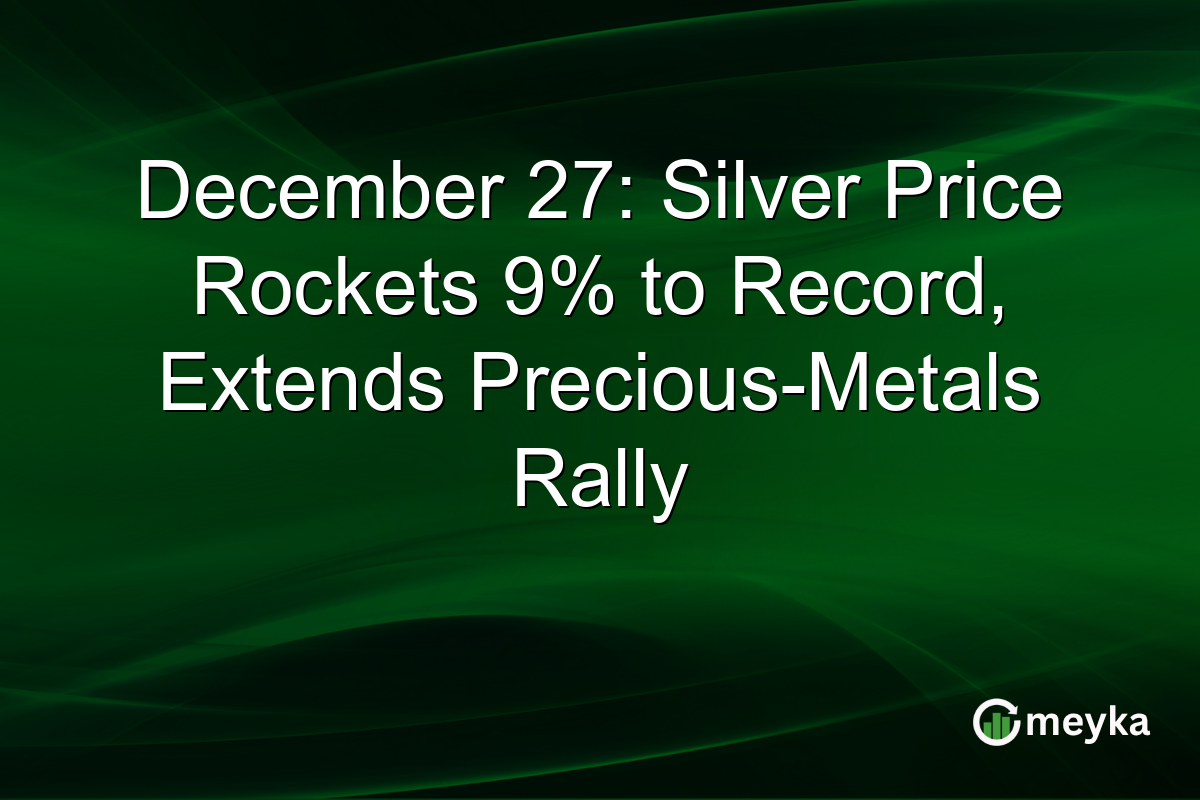
The silver price rocketed 9% to a fresh record on 27 December, extending a broad precious metals rally. Reports cite strong haven demand, persistent central‑bank buying of gold, and rising retail interest as key drivers. For UK investors, the move reshapes risk and opportunity across ETFs, bars, and coins in pounds. In this guide, we explain the catalysts, the implications for portfolios, and smart ways to trade heightened volatility, with clear, practical steps for the weeks ahead. See the latest reporting from Reuters for context source.
What drove today’s surge
A wave of safe-haven flows lifted the complex as geopolitical and growth worries linger. Continued central-bank gold buying tightened the precious space and improved sentiment toward silver. When risk aversion builds, the silver price often benefits alongside gold, despite its industrial role. That backdrop set the stage for a sharp repricing as buyers chased momentum and shorts covered.
Gold leadership mattered. Strong gold gains pulled silver higher through relative-value trades and cross-commodity flows. Retail interest also picked up, adding to intraday swings and liquidity pockets, as highlighted by the Wall Street Journal source. Together, these flows pushed the silver price to a silver record high.
Silver’s industrial story underpins the precious metals rally. Demand from solar photovoltaics and electronics remains firm, encouraging investors to pay up for future tightness. While the market reacts to macro headlines, steady end‑use demand reduces downside tails. That mix of cyclical and defensive support makes the silver price sensitive to both growth data and risk sentiment.
What it means for UK investors
The silver price in pounds reflects both global metal moves and GBP shifts. A stronger pound can offset some dollar gains, while a weaker pound amplifies them. UK investors should track GBPUSD when sizing exposure. If you expect sterling strength, consider that it could temper returns from unhedged silver products held in GBP.
UK investors typically use exchange-traded products, allocated bars, or coins. ETPs offer simplicity and tight spreads. Physical bars and coins add tangibility, but silver purchases in the UK are generally subject to 20% VAT, which widens breakevens. Premiums vary by product and dealer, so compare total cost, not just the headline silver price.
Check platform fees, product spreads, and storage. Many UK precious metals ETPs are eligible for ISAs and SIPPs, but confirm terms. Physical silver is not VAT‑exempt, though many UK legal‑tender coins like Britannias are CGT‑free. Keep clear records of purchase price, premiums, and fees to track true entry and exit levels.
Trading and risk management
A 9% daily move shows how fast the silver price can swing. Use small position sizes, especially with leveraged products or CFDs. Define risk per trade and stick to it. Set stop losses where your thesis fails, not at round numbers. If adding, pre-plan levels to avoid chasing parabolic spikes.
Expect wider ranges and quick reversals after a silver record high. Consider average true range to set stops and targets that reflect current volatility. Use limit orders to control entry. For shorter time frames, a simple trend filter, like price relative to the 20-day average, helps avoid fading strong moves too early.
Liquidity can thin around data releases and late sessions, widening spreads. Trade during higher-liquidity windows aligned with London and New York hours when possible. Check instrument depth before placing size. For physical buyers, confirm live dealer premiums, delivery times, and buyback policies before committing at a fast-changing silver price.
Outlook and key watchpoints
Track real yields and the dollar. Falling real yields typically support the silver price by lowering opportunity cost. Sterling moves matter for UK returns, so Bank of England guidance is relevant. A hawkish BoE that lifts GBP could blunt local gains, while a softer GBP would magnify metal strength in pounds.
Monitor ETF and ETP flows for clues on sustained demand. Rising holdings point to broad investor buy‑in, while outflows can mark fatigue. Futures positioning, especially large speculators, can flag crowding risks. When positioning is stretched, the silver price can whipsaw on modest news as traders rebalance.
Watch global PMIs, US inflation prints, and China activity indicators. Strong solar installation updates would support industrial demand. Any change in central-bank gold purchases could shift sentiment across the precious metals rally. Headline risk remains high, so plan scenarios for both continuation and sharp pullbacks from a silver record high.
Final Thoughts
The 9% spike to a record caps a powerful phase for precious metals. The silver price is riding a mix of haven demand, central-bank support for gold, and solid industrial use. For UK investors, think in pounds, not dollars, and compare total ownership costs. ETPs offer clean exposure with tight spreads, while physical purchases face VAT and dealer premiums. Volatility is elevated, so size positions conservatively, set clear stops, and avoid chasing vertical moves. In the days ahead, we will watch real yields, GBP trends, ETF flows, and China data. Build a plan that works in both continuation and pullback scenarios, and act only at pre‑defined levels.
FAQs
A surge in safe-haven demand, ongoing central-bank gold buying, and strong momentum from gold pulled silver higher. Retail participation added fuel, tightening liquidity and widening intraday ranges. Industrial demand from solar and electronics supports the fundamental story, helping the market accept higher prices after the breakout.
Most use exchange-traded products for simplicity and tight spreads. Others buy allocated bars or coins. Remember UK silver purchases usually incur 20% VAT, and premiums vary by dealer. Check wrapper eligibility for ISAs or SIPPs, compare total costs, and confirm storage or buyback terms before investing.
Volatility is high after a record move, so prices can reverse quickly. Currency swings affect GBP returns. Physical buyers face VAT and premiums, which raise breakevens. Leveraged products magnify losses. Always pre‑define risk per trade, use stop losses, and avoid adding to losing positions without a clear plan.
It depends on real yields, the dollar, and data on growth and inflation. Sustained ETF inflows and firm industrial demand would help. A rise in real yields or a stronger pound could cap gains for UK holders. Plan for both continuation and pullback and adjust size accordingly.
Disclaimer:
The content shared by Meyka AI PTY LTD is solely for research and informational purposes. Meyka is not a financial advisory service, and the information provided should not be considered investment or trading advice.