Net Zero
|

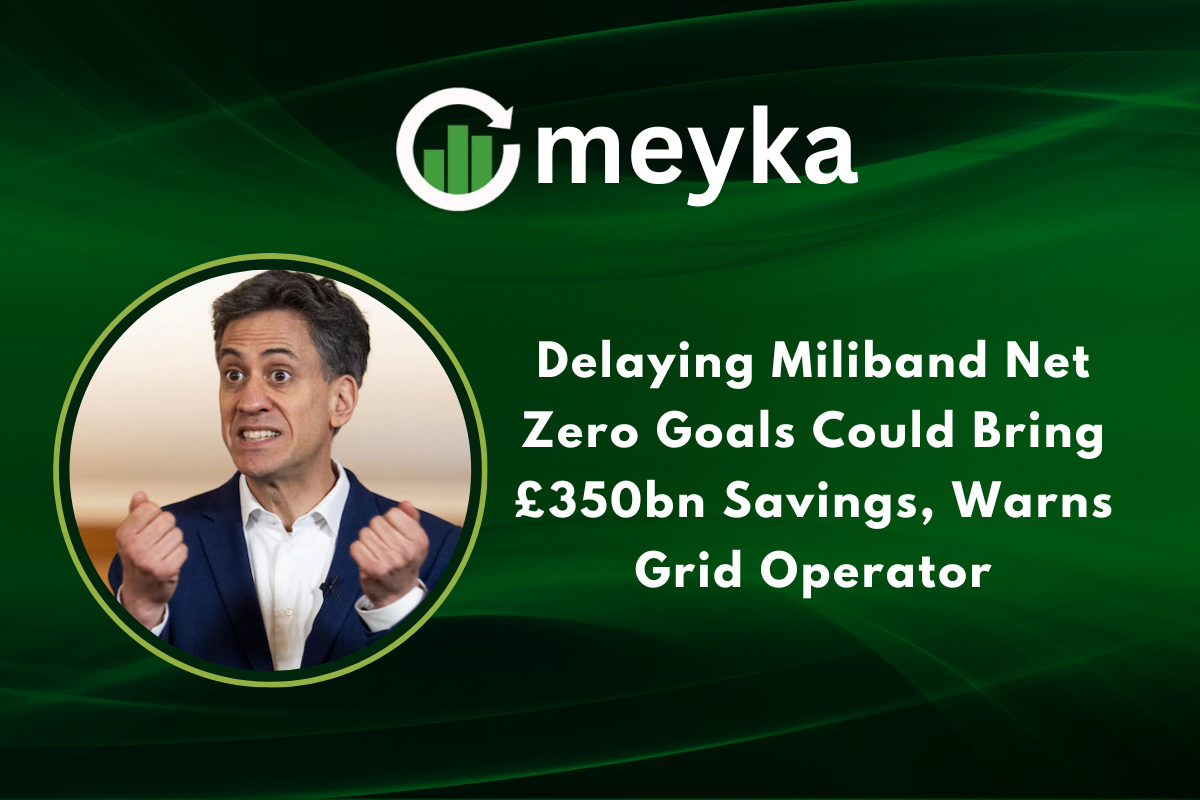
Delaying Miliband Net Zero Goals Could Bring £350bn Savings, Warns Grid Operator

The Net Zero Debate Intensifies

The UK’s push towards Net Zero emissions is at a critical crossroads. According to the latest analysis from a leading grid operator, delaying certain Net Zero milestones could deliver the country savings of up to £350 billion over the coming decades.

This revelation comes as policymakers, energy experts, and environmental groups clash over the best path to balance climate commitments with economic realities.

Why is this happening? The grid operator’s report highlights that immediate, aggressive investment in renewable energy infrastructure, carbon capture technologies, and electrification initiatives demands significant upfront spending. 

By strategically delaying some of these investments, the UK could reduce short-term fiscal pressure while still pursuing long-term Net Zero objectives.

What Are Miliband’s Net Zero Goals?

Former UK Energy Secretary Ed Miliband has been a vocal advocate for ambitious Net Zero targets. His roadmap includes:

  • Achieving Net Zero greenhouse gas emissions by 2050
  • Rapid expansion of renewable energy sources such as wind, solar, and tidal power
  • Electrifying transport and industry to cut carbon emissions
  • Implementing advanced carbon capture and storage technologies

These goals are designed to transition the UK to a low-carbon economy, but the grid operator warns that the cost of immediate compliance may be unsustainable without phased implementation.

The £350 Billion Savings Explained

The grid operator’s analysis suggests that a phased approach to Net Zero implementation could save the UK £350 billion by:

  • Spreading infrastructure costs over a longer period
  • Reducing the need for high-cost emergency energy storage solutions
  • Optimizing the deployment of renewables based on demand forecasts and energy market conditions

In practical terms, this does not mean abandoning Net Zero, but rather adopting a more strategic, financially sustainable timeline.

Does delaying Net Zero harm climate goals?
Not necessarily. Phased implementation allows for smarter investment in technology, infrastructure, and energy storage, minimizing short-term economic disruption while maintaining long-term emissions reductions.

Economic Implications for Households and Businesses

Delaying aggressive Net Zero spending could have immediate financial benefits for both households and businesses:

  • Lower electricity bills due to optimized grid investments
  • Reduced corporate energy costs
  • More predictable investment planning for industries reliant on renewable infrastructure

The grid operator notes that spreading the financial burden could prevent spikes in energy costs that often accompany large-scale, rapid deployment of green technologies.

Environmental and Energy Market Impact

Critics argue that delaying Miliband’s Net Zero targets might slow down environmental progress. However, the grid operator emphasizes that:

  • Phased implementation allows time for more efficient, lower-emission technologies to mature
  • Energy storage innovations can maximize renewable integration without immediate full-scale deployment
  • Markets can adjust gradually, avoiding oversupply and energy price volatility

How will the UK energy market respond?
A phased Net Zero approach could stabilize energy prices, attract investment in smart grids, and support a smoother transition to renewables without abrupt market disruptions.

Global Comparisons: Lessons from Other Countries

Other nations pursuing Net Zero goals provide lessons on balancing ambition with affordability:

  • Germany’s energy transition (Energiewende) faced high costs due to rapid renewables deployment
  • The US focuses on gradual electrification and incentives for clean technology adoption
  • Nordic countries leverage energy storage and flexible energy markets to optimize Net Zero progress

These examples support the grid operator’s argument that a strategic delay can maximize financial efficiency while still delivering climate benefits.

Policy Considerations and Government Response

The UK government now faces pressure to adjust policy in line with economic realities:

  • Reviewing subsidies for renewable projects
  • Adjusting timelines for industry electrification
  • Incentivizing innovation in energy efficiency and carbon capture

Will the government officially delay Net Zero targets?
At this stage, no official delay has been announced. However, policymakers are considering flexible approaches to manage costs and maintain progress toward Net Zero emissions.

Social Implications of Delaying Net Zero

Phased Net Zero adoption could impact communities differently:

  • Low-income households could benefit from lower short-term energy bills
  • Workers in renewable industries may see gradual job growth rather than abrupt shifts
  • Urban and rural areas may experience more coordinated infrastructure development

This approach may also allow time for public engagement and adaptation to new energy practices.

Technological Opportunities in a Phased Approach

Delaying some Net Zero initiatives does not mean ignoring innovation. The grid operator highlights opportunities for:

  • Smarter energy storage solutions
  • AI-driven grid management
  • Low-cost carbon capture and utilization
  • Next-generation electric vehicle charging infrastructure

Strategic implementation can ensure that technology adoption is both cost-effective and efficient.

Does delaying Net Zero slow technological progress?
On the contrary, it may accelerate effective innovation by allowing technologies to mature and scale more efficiently.

Conclusion: Balancing Economy and Climate

The debate over Miliband’s Net Zero goals highlights the challenge of balancing environmental ambition with economic pragmatism. According to the grid operator, a phased approach could save the UK £350 billion while still keeping the country on track to achieve long-term emissions reductions.

Policymakers, businesses, and households must now weigh the benefits of immediate action against the financial advantages of a more strategic timeline. Ultimately, Net Zero remains an essential goal, but its path may be adapted to ensure both environmental success and economic resilience.

FAQ’S

What are Miliband’s Net Zero goals?

Miliband aims for Net Zero emissions by 2050, focusing on renewable energy, electrification, and carbon capture technologies.

How much could the UK save by delaying Net Zero?

A phased approach could save the UK up to £350 billion over several decades.

Does delaying Net Zero harm climate targets?

No, strategic delays allow technology to mature and reduce costs while maintaining long-term emissions reductions.

How will households benefit from delaying Net Zero?

Households could see lower energy bills and more gradual adaptation to new energy systems.

Will businesses benefit from the delay in Net Zero targets?

Yes, businesses could have predictable energy costs and phased infrastructure investment, supporting growth.

Disclaimer

The content shared by Meyka AI PTY LTD is solely for research and informational purposes. Meyka is not a financial advisory service, and the information provided should not be considered investment or trading advice.

Similar Posts

Leave a Reply

Your email address will not be published. Required fields are marked *