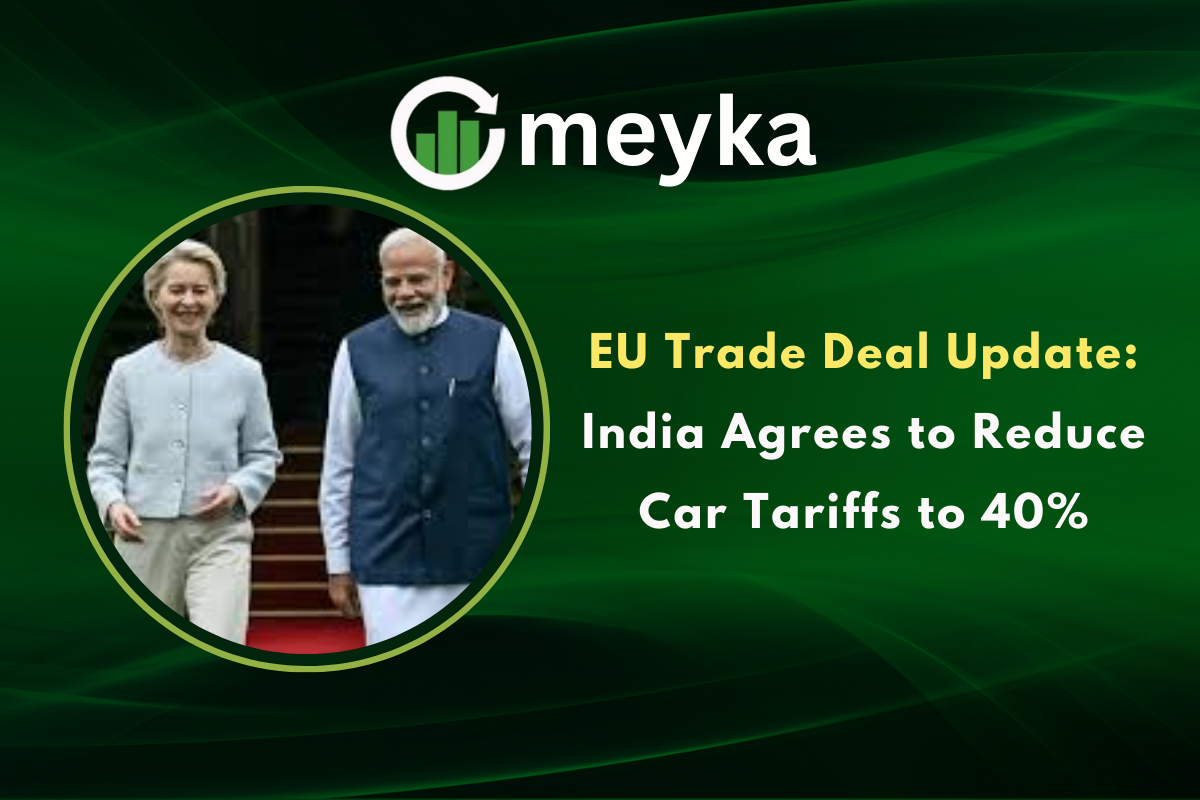
EU Trade Deal

EU Trade Deal Update: India Agrees to Reduce Car Tariffs to 40%

The EU Trade Deal talks between India and the European Union have reached a major turning point. According to sources familiar with the negotiations, India has agreed to cut import tariffs on European cars to 40 percent, a sharp reduction from the current high duty structure. This move is being seen as one of the most important breakthroughs in years of long-running trade discussions.

The decision signals a strong push by both sides to finalize a long-awaited free trade agreement. For Europe, it opens doors to the fast-growing Indian auto market. For India, it promises stronger investment flows, better technology access, and deeper economic ties with the European bloc.

Why is this update creating such strong reactions across global markets? Because car tariffs have always been the most sensitive issue in the EU Trade Deal negotiations.

What the EU Trade Deal Means and Why It Matters Now

The EU Trade Deal is aimed at creating a comprehensive free trade agreement between India and the European Union. Talks were restarted in recent years after long pauses caused by political and economic differences. Since then, negotiators have worked to resolve complex issues like tariffs, market access, data protection, and labor standards.

Car imports have remained the biggest roadblock. India currently imposes some of the highest auto import duties in the world. These high tariffs protect domestic manufacturers but make foreign vehicles extremely expensive for Indian buyers.

By agreeing to reduce car tariffs to 40 percent, India is showing flexibility for the first time on this scale. European officials have long demanded lower duties for brands like Volkswagen, BMW, Mercedes-Benz, and Renault.

This shift suggests that both sides now see strategic value in closing the deal sooner rather than later.

Why Is India Willing to Cut Car Tariffs Now

Several factors are driving this decision. India wants greater access to European markets for its pharmaceuticals, textiles, and information technology services. The EU is one of India’s largest trading partners, with bilateral trade already crossing significant levels.

Lowering car tariffs could help unlock broader concessions from the EU. It could also attract European manufacturers to invest directly in Indian production facilities.

In simple words, India is trading short term protection for long term growth.

Details of the Car Tariff Reduction Under the EU Trade Deal

Under the proposed framework, India would reduce tariffs on imported European cars to 40 percent. This is still higher than tariffs in many global markets, but it represents a substantial cut from current levels that can go well beyond 100 percent for some vehicles.

The reduction is expected to be gradual rather than immediate. Sources suggest a phased approach, allowing Indian automakers time to adjust. Luxury and premium vehicles may be included earlier, while mass market segments could follow later.

This approach aims to balance domestic industry concerns with international trade commitments.

How Will This Affect European Carmakers

European carmakers have long argued that high tariffs limit their presence in India. Lower duties could make their vehicles more affordable and competitive.

Companies are also exploring local manufacturing options. Reduced tariffs could encourage joint ventures, technology transfers, and electric vehicle development in India.

Key Points of the EU Trade Deal Car Tariff Plan

  • India agrees to cut EU car import tariffs to 40 percent
  • The reduction is expected to follow a phased timeline
  • Luxury and premium vehicles may benefit first
  • The move aims to unlock the broader free trade agreement

Benefits Expected From the EU Trade Deal Update

  • Improved access for European automakers in India
  • Higher foreign investment in Indian manufacturing
  • Technology sharing in electric and green mobility
  • Stronger trade ties between India and the EU

Impact on Indian Auto Industry and Consumers

For Indian consumers, the EU Trade Deal could mean more choices and slightly lower prices for imported cars. While a 40 percent tariff is still high, it narrows the price gap between domestic and foreign vehicles.

For domestic automakers, the deal brings both opportunity and challenge. Increased competition may push Indian companies to improve quality, safety, and innovation. At the same time, partnerships with European firms could boost local capabilities.

Why is competition important here? Because it often leads to better products and fair pricing for consumers.

Will Indian Carmakers Be Protected

Indian negotiators are pushing for safeguards. These include longer transition periods and limits on certain categories. The government is also focusing on strengthening local manufacturing under its industrial policies.

This ensures the domestic industry is not suddenly exposed to full scale foreign competition.

EU Trade Deal and Electric Vehicles

Electric vehicles play a growing role in the EU Trade Deal discussions. European companies are leaders in clean mobility technologies. India wants access to these technologies to support its climate goals.

Lower tariffs could make European electric cars and components more accessible. This could speed up India’s transition to greener transport.

It also aligns with global climate commitments and sustainable growth plans.

Global Market Reaction to the EU Trade Deal News

Global markets reacted positively to the update. Auto stocks in Europe saw mild gains following reports of the tariff cut. Analysts view the move as a signal that the broader trade deal is nearing completion.

Trade experts believe that finalizing the agreement could significantly boost bilateral trade volumes over the next decade.

A YouTube analysis video shared by financial commentators highlighted how this deal could reshape India EU trade relations and attract new investments.

Political and Strategic Importance of the EU Trade Deal

Beyond economics, the EU Trade Deal has strong strategic value. Both India and the EU are looking to diversify trade partnerships amid global uncertainty.

Strengthening ties reduces dependence on limited markets and improves supply chain resilience. For India, closer EU ties also balance relationships with other major economies.

This makes the agreement important not just for trade but also for geopolitics.

Why the EU Is Pushing Hard for This Deal

The European Union sees India as a key growth market. With a large population and rising income levels, India offers long-term demand for European goods and services.

Lower tariffs make this market more accessible and attractive.

Challenges That Still Remain

Despite progress, challenges remain. Issues like labor standards, environmental rules, and intellectual property protection are still under negotiation.

Some Indian industry groups have raised concerns about rapid liberalization. European negotiators are also seeking strong commitments on regulatory transparency.

Why does this matter? Because trade deals succeed only when both sides feel protected and respected.

What Happens Next in the EU Trade Deal Talks

Negotiators are expected to continue discussions in the coming months. Officials aim to finalize key chapters before the end of the year.

If successful, the deal could become one of the largest trade agreements for both sides.

Observers believe that the car tariff compromise could unlock solutions to other pending issues.

Long Term Outlook for India’s EU Trade Relations

The EU Trade Deal has the potential to reshape economic relations for decades. It could boost exports, create jobs, and support innovation.

India’s willingness to cut car tariffs shows growing confidence in its economy and manufacturing strength. For Europe, it offers access to one of the world’s fastest-growing markets.

Is This a Win-Win Deal

Most experts believe so. While adjustments will be needed, the long term gains appear strong for both sides.

The key will be careful implementation and continued dialogue.

Conclusion

The EU Trade Deal Update marking India’s agreement to reduce car tariffs to 40 percent is a major milestone in global trade talks. It reflects compromise, strategic thinking, and mutual interest.

While challenges remain, this move brings the free trade agreement closer to reality. For businesses, investors, and consumers, the deal promises new opportunities and stronger economic ties.

As negotiations continue, this decision could be remembered as the moment when the EU Trade Deal truly moved forward.

FAQ’S

What is the EU Trade Deal between India and the European Union?

The EU Trade Deal is a proposed free trade agreement aimed at lowering tariffs and improving market access between India and the EU across sectors like automobiles, services, and manufacturing.

Why is India reducing car tariffs to 40 percent under the EU Trade Deal?

India agreed to cut tariffs to move negotiations forward, attract European investment, and gain better access for Indian exports like pharmaceuticals and IT services in the EU market.

When will the reduced car tariffs take effect?

The tariff reduction is expected to be phased over time. Officials have not announced an exact date, but gradual implementation will allow Indian automakers to adjust.

How will the EU Trade Deal affect Indian car buyers?

Indian consumers may see more European car options and slightly lower prices, especially in the premium segment, although vehicles will still carry import duties.

Is the EU Trade Deal finalized?

No, the deal is not finalized yet. The tariff cut agreement is a major step, but negotiations on labor rules, environmental standards, and regulations are still ongoing.

Disclaimer

The content shared by Meyka AI PTY LTD is solely for research and informational purposes. Meyka is not a financial advisory service, and the information provided should not be considered investment or trading advice.

Similar Posts

Leave a Reply

Your email address will not be published. Required fields are marked *