Renault Technology

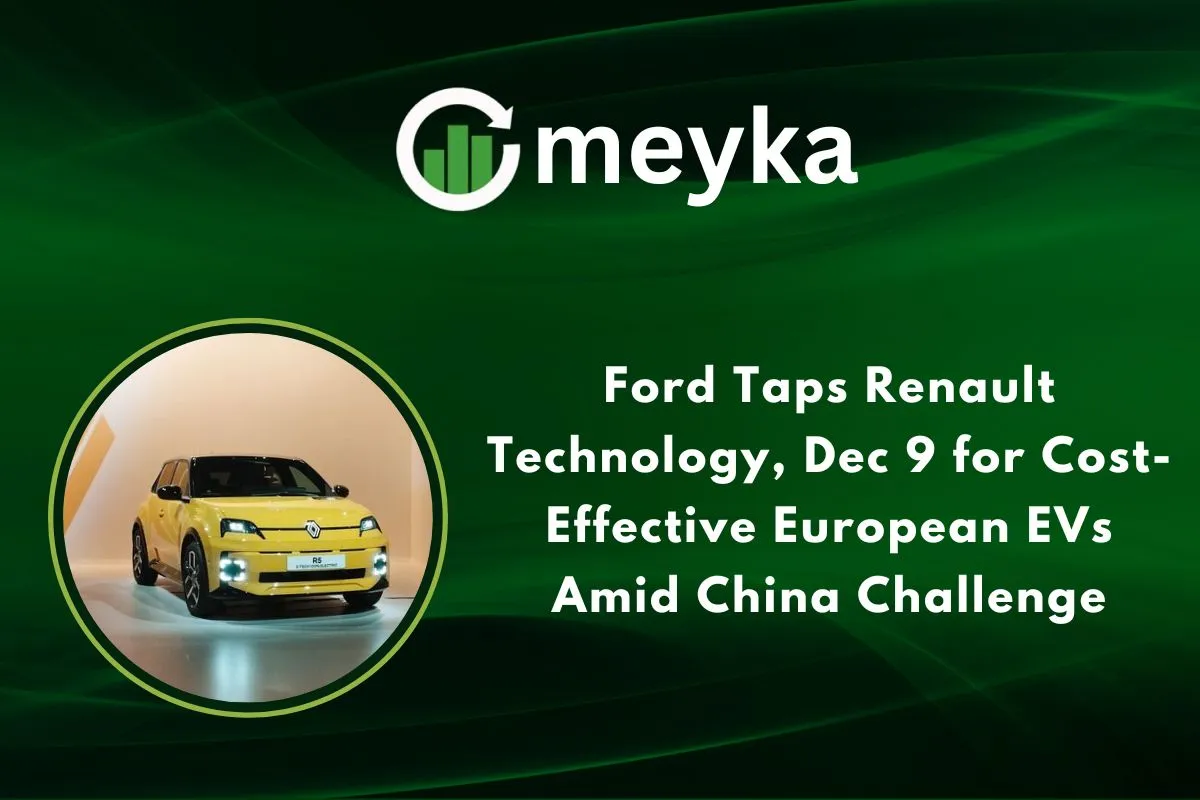
Ford Taps Renault Technology, Dec 9 for Cost-Effective European EVs Amid China Challenge

Europe’s generation of electric vehicles (EVs) is entering a new chapter. On December 9, 2025, Ford and Renault announced a strategic partnership. Under this deal, Renault will provide its advanced EV platform, known as the Ampere platform, enabling Ford to build small, lower‑cost electric cars for the European market.  We believe this move could reshape the EV landscape in Europe. With prices of EVs often a key barrier for many buyers, combining Renault’s cost‑effective EV architecture with Ford’s brand and design promises to make electric cars more accessible.

Ford’s EV Strategy in Europe

Ford has faced a tough road in Europe. Rising production costs, stricter emissions rules, and growing competition, especially from low-cost EV makers from China, have squeezed its market share.  That pressure led Ford to rethink its European plans. Their new strategy has two key parts. First, keep focusing on profit‑making commercial vehicles. Second, launch a new lineup of affordable passenger EVs.  But building affordable EVs from scratch can be costly and time-consuming. That’s where the Renault partnership enters, offering a shortcut with proven technology and manufacturing capacity.

What Renault Technology Brings: The Ampere Advantage

Renault’s Ampere platform is built from the ground up for electric vehicles. In particular, the AmpR Small architecture is designed for compact city and B‑segment cars. It uses fewer parts, optimizes the battery and powertrain, and allows shared components across different models, all helping to lower cost.  Not just design: Ampere benefits from a full EV manufacturing ecosystem. Their electric-production hub, known as ElectriCity (in northern France), brings together assembly plants, battery production, and supply-chain logistics; 75 % of suppliers are within 300 km, cutting transport costs and improving efficiency.

Thanks to this setup, Ampere aims to cut vehicle costs by large margins. Their internal roadmap targets up to 40 % cost reductions between early and later generation EVs. For Ford, tapping this technology means gaining access to an EV‑native platform that’s already proven and cost‑efficient, without bearing all the development costs alone.

Why the Partnership Matters: Strategic Importance

The benefits go both ways:

  • For Ford: They get a ready-to-use EV platform, lower development cost, and faster time-to-market. This helps them reenter the affordable small‑car EV segment in Europe, a segment they more or less exited.
  • For Renault/Ampere: This deal brings added volume and better utilization of its manufacturing capacity. It also validates Ampere as a platform not just for Renault’s own cars, but for other major brands too.

Together, the alliance aims to produce two new Ford-branded electric cars, plus future light commercial vehicles (vans) for both companies.

Market Implications: More Affordable EVs, More Choices

If everything goes according to plan, the first Ford EVs built on Renault technology could hit European showrooms by early 2028. That timing is significant. By then, EV infrastructure will be more developed, incentives may still be in place, and consumers will have more options. Lower-cost EVs, especially city‑friendly models, could attract buyers who previously found EVs too expensive. Moreover, this could push other automakers to look for similar partnerships or boost their own cost‑efficient EV programs. That competition could accelerate EV adoption and lower prices across the board.

Challenges and Risks

This plan sounds promising. But it has risks.

First, merging two different corporate cultures and design philosophies (driving feel and brand DNA with Renault’s EV architecture) may prove tricky. Ensuring the new cars feel “genuinely Ford” even though they ride on Renault underpinnings will be important. Second, supply‑chain and raw material costs remain volatile, especially for batteries. Even with cost-cutting ambitions, global economic pressure could push prices up. Third, there’s a chance that European buyers may view these new cars as “less premium” compared to legacy Ford models. If that happens, the perceived value could drop.

What to Expect,  Looking Ahead

If all goes well, by 2028, we’ll see a new Ford “small EV”,  likely compact, budget-friendly, and built for city driving. It could compete directly with other affordable EVs from Europe and beyond. We may also see light commercial vans under both Ford and Renault brands, offering electric mobility for businesses and delivery fleets.

In the long run, this partnership could reshape how traditional automakers approach EVs: instead of building everything in-house, more collaborations may emerge, cutting costs, sharing risk, and speeding up the EV transition.

Conclusion

The decision by Ford to tap Renault Technology marks a bold step in the evolving European EV market. By combining Ford’s brand and design strength with Renault’s cost‑efficient Ampere EV architecture, the partnership aims to deliver affordable electric cars when Europe needs them most. This collaboration could give everyday customers a real, budget‑friendly path to EV ownership. And for the auto industry, it might set a new standard: smart cooperation, shared technology, and value for consumers.

FAQS

Why is Ford losing money on EVs?

Ford is losing money because its EV and software operations are costing far more than they earn. The company forecast losses up to US$5.5 billion in 2025 from those operations alone.

Is Ford cutting 4,000 EU jobs amid weak EV demand and Chinese competition?

Yes. Ford plans to cut 4,000 jobs in Europe by 2027. The cuts are due to weak demand for EVs, rising costs, and strong competition from Chinese automakers.

Who is the largest EV manufacturer in China?

BYD Auto (BYD) is the largest EV maker in China. In 2025, BYD leads global EV deliveries and dominates China’s electric vehicle market.

Disclaimer:

The content shared by Meyka AI PTY LTD is solely for research and informational purposes. Meyka is not a financial advisory service, and the information provided should not be considered investment or trading advice.

Similar Posts

Leave a Reply

Your email address will not be published. Required fields are marked *