Foreign CEO at Noida Airport Sparks Security Concerns, BCAS Raises Flags in High-Level Review
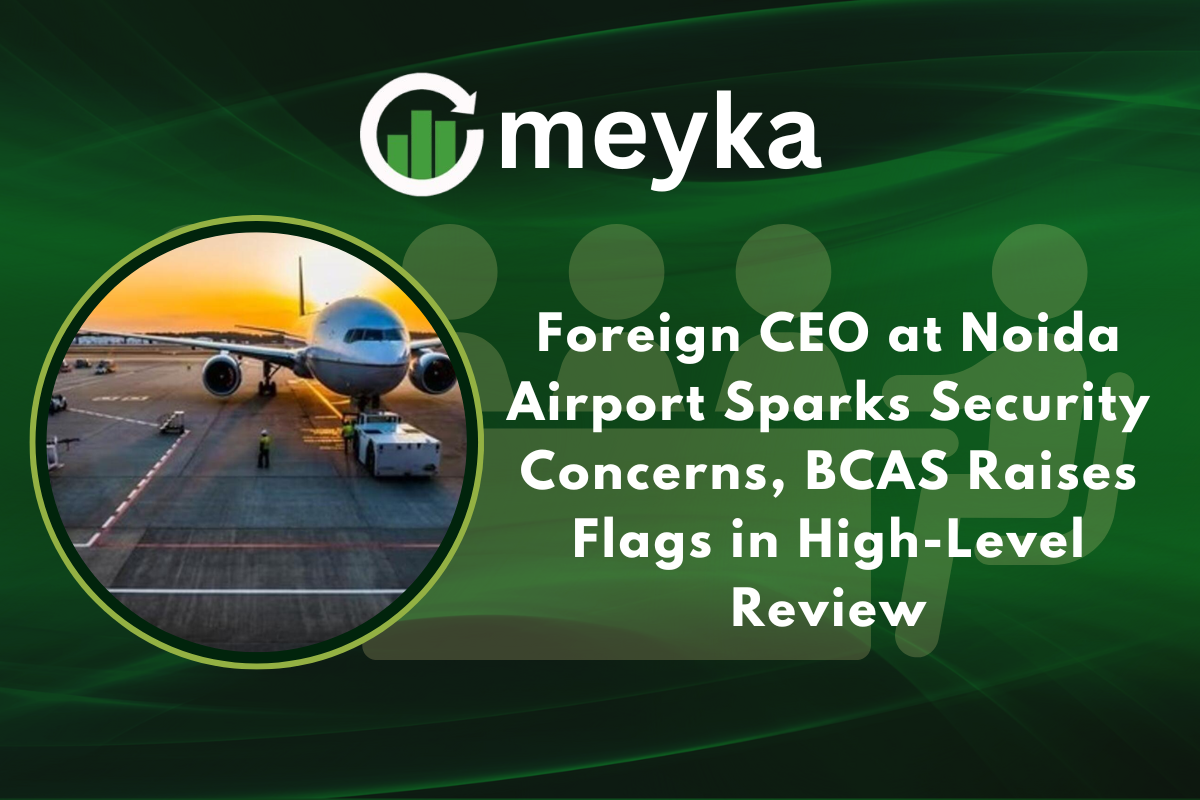
The presence of a Foreign CEO at Noida Airport has triggered a serious debate around airport security, compliance, and the strict rules that govern sensitive aviation zones in India. What initially appeared to be a routine visit by a senior foreign executive has now become a matter of national attention after the Bureau of Civil Aviation Security, commonly known as BCAS, raised concerns during a high-level review.
The incident has led to questions about how security norms are applied, whether exceptions were made, and how India plans to safeguard its fast-growing aviation infrastructure.
This case is important because Noida Airport is not just another airport. It is a flagship project expected to strengthen India’s global aviation footprint. Any security-related issue, especially involving a Foreign CEO, naturally draws scrutiny from authorities, experts, and the public.
What exactly happened at Noida Airport
According to official reporting, the Foreign CEO visited Noida Airport as part of an operational engagement. During this visit, certain security procedures that are mandatory for access to restricted airport zones were reportedly not followed in full. These zones are tightly controlled because they include airside areas, operational rooms, and locations critical to airport safety.
Soon after the visit, the matter came to the attention of BCAS. During its internal review, BCAS observed that established aviation security norms may have been bypassed or diluted. This prompted the agency to flag the issue formally and escalate it for a deeper examination at senior levels.
Why did this trigger concern so quickly? Airports operate under zero margin for error. Even a small lapse can set a risky precedent.
Why BCAS intervention matters
BCAS functions under the Ministry of Civil Aviation and is the apex body responsible for aviation security in India. Its role is to ensure that every airport, whether operational or under development, follows uniform and uncompromising security standards. These standards apply to everyone, including government officials, private operators, and any Foreign CEO visiting Indian airports.
When BCAS flags an issue, it signals that the matter is not routine. It means that the agency believes there could be systemic weaknesses that need correction. In this case, BCAS reportedly questioned how access was granted and whether proper approvals were taken before allowing the Foreign CEO into sensitive areas.
Foreign CEO access and security norms under scrutiny
Airport security norms clearly define who can enter restricted areas and under what conditions. Normally, any Foreign CEO or senior executive visiting an airport must undergo prior clearance, identity verification, and continuous escort by authorized personnel. These steps are designed to ensure safety without disrupting operations.
In the Noida Airport case, BCAS reportedly found deviations from these norms. The review focused on whether permissions were documented correctly and whether escort protocols were followed throughout the visit.
These details matter because aviation security relies on process discipline, not individual judgment.
Why are such strict rules necessary? Airports are high-risk infrastructure, and access control is one of the strongest defenses against threats.
High-level review and involvement of senior officials
Once BCAS raised its concerns, the issue moved beyond routine reporting. Senior aviation and security officials were briefed, and a high-level review was initiated. This review aims to understand how the lapse occurred and whether it was the result of miscommunication, oversight, or deliberate relaxation of rules.
Authorities are examining approval chains, internal communication, and the roles of various officials involved. The objective is not only to assign responsibility but also to ensure that similar situations do not arise again, especially as Noida Airport prepares for larger operations.
Public reaction and social media discussion
The incident did not remain confined to official files. It quickly gained attention on social media, where journalists and policy observers questioned how a Foreign CEO could gain access without strict compliance.
A post shared on X by journalist Sunetra Choudhury highlighted the seriousness of the issue and the role of BCAS in flagging the matter, drawing public attention to aviation security discipline.
Another post by Swarajya Magazine pointed out the broader implications of the incident, stressing that security norms cannot be selectively applied, regardless of a visitor’s status.
Why does social media matter here? Because public scrutiny often accelerates transparency and corrective action.
Response from Noida Airport authorities
Airport authorities acknowledged the visit and confirmed that they are cooperating fully with the BCAS review. They stated that the visit was related to operational discussions and that passenger safety was not compromised at any point.
However, officials also clarified that internal checks are underway to understand whether all procedures were followed as required. While no punitive action has been announced yet, the matter remains under examination until BCAS completes its assessment.
Foreign CEO visits and equal application of rules
One of the central questions raised by this incident is whether security rules are applied equally to everyone. BCAS guidelines are clear that no individual, including a Foreign CEO, is exempt from aviation security protocols.
Experts argue that relaxing rules for high-profile visitors can create dangerous loopholes. Equal enforcement is essential not only for safety but also for maintaining public trust in airport systems.
Why is equal enforcement so important? Because security systems are only as strong as their weakest link.
Impact on Noida Airport’s global reputation
Noida Airport is positioned as a future international hub that will attract global airlines, investors, and leadership talent. Incidents like this, even if administrative in nature, can affect perceptions.
International partners closely observe how security and governance issues are handled. A swift, transparent response by BCAS and airport authorities can help reassure stakeholders that India takes aviation safety seriously.
Understanding the BCAS review process
BCAS follows a structured process when reviewing such incidents. It examines access logs, approval documents, CCTV footage, and statements from officials involved. The goal is to identify gaps and recommend corrective measures.
Based on its findings, BCAS can issue advisories, mandate retraining, or suggest procedural changes. In some cases, it may also recommend administrative action if negligence is established.
Expert views on aviation security discipline
Aviation security experts note that global best practices demand strict adherence to protocols. They emphasize that airports are dynamic environments where threat levels can change rapidly.
Experts believe that the Noida Airport case should be used as a learning opportunity. Strengthening training, clarifying visitor guidelines, and reinforcing accountability can prevent similar incidents in the future.
Foreign CEO presence and India’s growing aviation sector
India’s aviation sector is expanding rapidly, with increasing foreign investment and international collaboration. Visits by Foreign CEOs are becoming more common as global firms engage with Indian infrastructure projects.
However, experts stress that growth must go hand in hand with discipline. Welcoming global leaders should never come at the cost of safety norms.
Legal perspective on the incident
As of now, the issue is being treated as a procedural and administrative matter. There has been no indication of criminal wrongdoing. The focus remains on understanding whether rules were misunderstood or bypassed.
The outcome of the BCAS review will determine whether further action is necessary or whether new guidelines will be issued to avoid ambiguity in future visits.
Why this case matters beyond Noida Airport
This incident has wider implications for airport governance across India. It sends a clear message that security norms are non-negotiable and that oversight agencies are actively monitoring compliance.
It also highlights the importance of strong coordination between airport operators, security agencies, and visiting officials.
Conclusion
The Foreign CEO visit at Noida Airport has become a significant case study in aviation security management. While no immediate harm was reported, the concerns raised by BCAS underline the importance of strict adherence to established norms. As India continues to develop world-class aviation infrastructure, maintaining uncompromising security standards will be critical.
This high-level review is not just about one visit. It is about reinforcing a culture where safety, transparency, and accountability remain at the center of airport operations.
FAQ’S
The visit became a concern because certain airport security protocols were reportedly not followed fully. BCAS noticed possible lapses in access clearance and escort rules, which are mandatory in restricted airport areas.
BCAS reviewed the visit after reports of protocol deviations emerged. As India’s top aviation security body, BCAS flagged the issue and ordered a high-level review to examine how and why security norms may have been relaxed.
Foreign CEOs can visit airports for official reasons, but they must follow strict security procedures. These include prior approval, identity checks, and continuous escort. No individual is exempt from these rules.
According to airport authorities, passenger safety was not impacted during the visit. However, the review focuses on procedural compliance rather than immediate safety threats.
After the review, BCAS may issue advisories, recommend procedural changes, or order retraining of staff. If negligence is found, administrative action may also be considered to prevent similar incidents in the future.
Disclaimer
The content shared by Meyka AI PTY LTD is solely for research and informational purposes. Meyka is not a financial advisory service, and the information provided should not be considered investment or trading advice.