FTSE 100
|

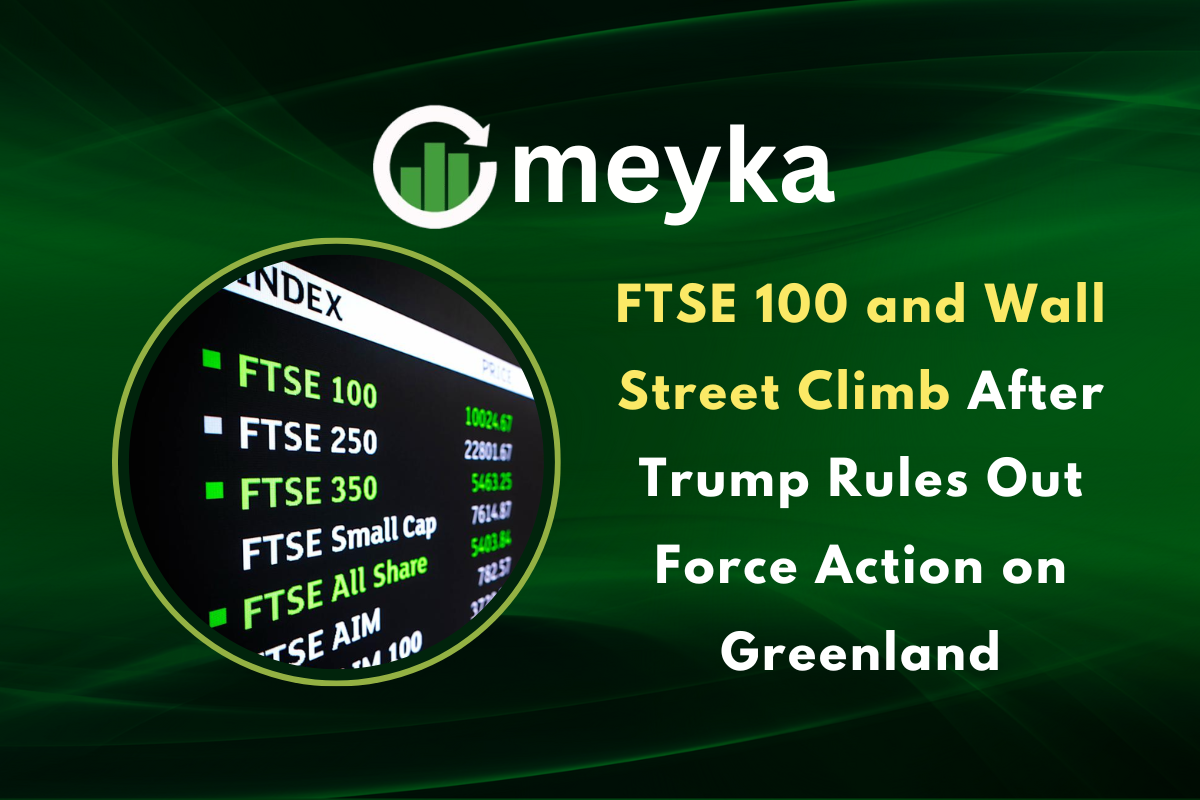
FTSE 100 and Wall Street Climb After Trump Rules Out Force Action on Greenland

The FTSE 100 and Wall Street moved higher after former US President Donald Trump publicly ruled out the use of force to acquire Greenland. This single statement eased a wave of geopolitical fear that had been hanging over global markets for days. Investors responded quickly. Risk appetite improved. Volatility cooled. Stock indices across the UK and the US showed steady gains as traders priced in lower political risk.

Markets do not react to words alone. They react to what those words mean for growth, trade, and stability. Trump’s comment reduced concerns about diplomatic conflict with Denmark and Europe. It also helped calm fears about new trade tensions or defense-driven spending shocks. For investors, that clarity mattered.

Why the Market Reaction Was So Strong

The Greenland issue had become more than a political headline. It was a test of how far rhetoric could go before real policy action followed. When Trump ruled out force, markets treated it as a meaningful signal.

The FTSE 100 held firm and then edged higher as strong company earnings helped offset lingering global trade concerns. Reuters highlighted that upbeat earnings reports played a key role in stabilizing the index, even while broader global tensions remained in focus.

Wall Street followed a similar path. US stocks climbed as investors reassessed risk. The Dow Jones Industrial Average, S&P 500, and Nasdaq all benefited from renewed confidence that extreme geopolitical outcomes were less likely.

A simple question many investors asked was this. Why did markets move up so quickly? The answer is simple. Reduced uncertainty often matters more than positive news.

FTSE 100 Reaction and UK Market Signals

The FTSE 100 reflects the health of global-facing UK companies. Many of its biggest firms earn revenue overseas. That makes the index very sensitive to trade and diplomatic risk.

After Trump’s statement, investors rotated back into large-cap stocks, especially in energy, banking, and consumer staples. These sectors tend to perform better when geopolitical stress eases.

What helped the FTSE 100 move higher

• Strong earnings from major UK-listed firms
• Reduced fear of conflict involving Europe
• Stable pound supporting overseas earnings
• Improved global risk mood lifting equities

The Telegraph reported that markets welcomed Trump’s Davos comments, especially his reassurance on Greenland. Investors viewed it as a step back from confrontation, even if broader trade policy questions remain.

Earnings Strength Offset Global Trade Worries

While geopolitics grabbed headlines, earnings did the heavy lifting. Several FTSE 100 companies delivered results that beat expectations. This helped anchor the index even as global trade tensions lingered in the background.

Investors are forward-looking. Analysts now expect the FTSE 100 to trade within a higher range in the near term if earnings momentum continues. Some forecasts point to modest upside if inflation stays controlled and central banks avoid sudden policy shifts.

This is where AI Stock research is increasingly used by institutions to analyze earnings trends and geopolitical overlays together. Investors want data-driven clarity, not guesswork.

Wall Street Gains Reflect Broader Confidence

Across the Atlantic, Wall Street responded with clear gains. According to Business Recorder, US stocks rose after Trump ruled out the use of force to acquire Greenland. The move was seen as calming, not just symbolic.

US investors had worried that aggressive rhetoric could spill into trade measures or diplomatic retaliation. Once those fears eased, buying returned, especially in cyclical stocks.

A post from EverythingAjay on X captured this mood by pointing out how markets welcomed the reduced risk tone

The post gained traction among traders who had been watching futures closely before the market opened.

Question Investors Are Asking

Does this mean the risk is gone?
Not fully. It means the worst-case scenario is less likely, which is often enough to lift markets.

How Wall Street and Global Markets Responded

• US indices moved higher, led by industrial and tech stocks
• European markets stabilized after recent pressure
• Bond yields eased slightly as fear trades unwound
• The dollar held steady, reflecting balanced risk sentiment

These moves suggest markets are shifting from fear-driven positioning to earnings-driven positioning.

The Role of Trade Policy Still Matters

Even with the Greenland issue cooling, trade policy remains a key concern. Investors know that tariffs and trade talks can quickly change market direction. However, Trump’s statement removed one layer of uncertainty.

The FTSE 100, with its heavy exposure to global trade, is especially sensitive to these shifts. Reduced tension supports valuations, at least in the short term.

Market participants using advanced trading tools are closely watching options data and volatility measures for signs of sustained confidence rather than a short-lived bounce.

Social Media Signals and Market Psychology

Social media often reflects real-time investor emotion. Another widely shared post by S10wH4nds noted how quickly futures reacted after the Greenland comment

These reactions matter because they influence short-term flows. When sentiment shifts, liquidity follows.

A third post by Quan2um_ highlighted how geopolitical clarity often acts as a relief valve for markets

Together, these posts show how closely traders link political signals with market moves.

What Analysts Are Watching Next

Analysts now focus on three main areas. Corporate earnings, central bank policy, and political follow-through. The Greenland comment helped on the third point, but the other two still drive long term direction.

Forecasts suggest that if earnings remain strong and inflation continues to cool, the FTSE 100 could test higher levels in the coming months. Wall Street outlooks also remain constructive, assuming no new shocks emerge.

Professional investors rely on AI stock analysis to stress test these scenarios, blending economic data with geopolitical inputs.

Why This Matters for Everyday Investors

For everyday investors, the key takeaway is simple. Markets prefer clarity. When extreme outcomes are ruled out, confidence improves.

This does not mean risks disappear. It means they become easier to measure. That alone can support stock prices.

A short question many retail investors ask is this. Should I chase the rally? The better approach is balance. Understand why markets moved, and assess whether the reasons are lasting.

FTSE 100 Outlook After the Greenland Statement

The FTSE 100 remains supported by dividend strength, global earnings exposure, and improved sentiment. While challenges remain, including global growth concerns, the immediate pressure from geopolitical fear has eased.

UK markets may continue to benefit if global investors rotate back into value-oriented stocks. Energy and financials could stay in focus if earnings trends hold.

Final Thoughts

The climb in the FTSE 100 and Wall Street after Trump ruled out force action on Greenland shows how powerful clarity can be. Markets are not emotional. They are practical.

By removing the threat of extreme action, investors felt safer taking risks. Earnings then did the rest. While uncertainty has not vanished, the signal from markets is clear. Stability, even temporary, can move prices higher.

FAQ’S

Why did the FTSE 100 rise after Trump ruled out force on Greenland?

The FTSE 100 rose because Trump’s statement reduced geopolitical risk in Europe. Lower political tension helped boost investor confidence and supported UK stocks with global exposure.

How did Wall Street react to Trump’s Greenland comments?

Wall Street moved higher as investors welcomed the reduced risk of conflict. Major US indexes gained as traders shifted back into equities after recent uncertainty.

Does this mean geopolitical risks are fully gone for markets?

No, risks still exist, especially around trade and global politics. However, ruling out force removed a major near term concern, which helped calm markets.

Which sectors benefited the most from this market move?

Energy, financials, and large industrial stocks performed better. These sectors often benefit when global tensions ease, and investor risk appetite improves.

What should investors watch next after this market reaction?

Investors should focus on corporate earnings, central bank policy signals, and future political statements. These factors will guide the next move for the FTSE 100 and global markets.

Disclaimer

The content shared by Meyka AI PTY LTD is solely for research and informational purposes.  Meyka is not a financial advisory service, and the information provided should not be considered investment or trading advice.

Similar Posts

Leave a Reply

Your email address will not be published. Required fields are marked *