BofA

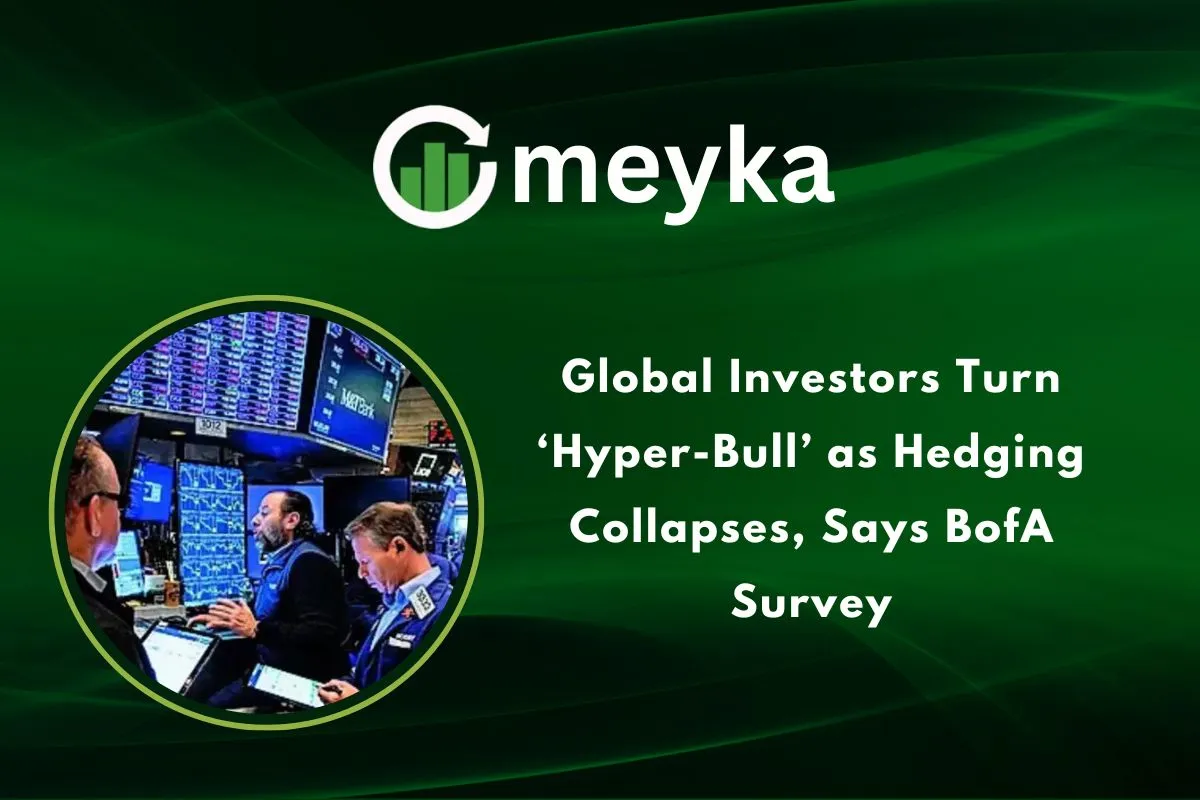
Global Investors Turn ‘Hyper-Bull’ as Hedging Collapses, Says BofA Survey

In January 2026, we from the financial community saw a major shift in how global investors feel about the markets. According to the latest BofA survey, fund managers are now more confident, or “hyper-bullish”, than they’ve been in years. This change in sentiment comes with a surprising twist: hedging against market drops has nearly disappeared. This matters because when investors feel super-positive and stop protecting themselves, the market can become fragile.

What the BofA Survey Found

  • BofA Survey Result: The latest Global Fund Manager Survey shows the Bull & Bear Indicator at 9.4, labeled “hyper-bull.”
  • Survey Size: The survey included 96 fund managers managing $575 billion in assets.
  • Cash Levels Drop: Cash holdings fell to a record low of 3.2%, showing investors are not holding safety money.
  • Hedging Collapses: Almost half of managers have no hedges, like options or insurance.
  • Economic Optimism: 38% expect the global economy to strengthen, while recession fear is at a two-year low.
  • Top Tail Risk: Geopolitical conflict is now the biggest risk, surpassing fears of an AI bubble.
  • Simple Meaning: Investors are betting on rising stocks and ignoring protection.

Why Hedging Has Collapsed

  • Strong Growth Expectation: Fund managers expect strong growth in 2026, reducing the need for protection.
  • Cash at Record Low: Cash levels are at the lowest point in years, pushing more money into stocks.
  • Easy Liquidity: Markets have strong liquidity, making investors more confident to take risks.
  • No-Landing Theory: Many believe the economy will stay steady without crashing or overheating.
  • Conclusion: All these reasons make hedging feel less necessary right now.

Risks of “Hyper-Bull” Sentiment

  • Vulnerability to Drops: Without hedging, sudden sell-offs can cause sharp market crashes.
  • Historical Warning: Extreme bullishness has appeared before major market declines, like the dot-com bubble.
  • Tail Risks Still Exist: Geopolitics, trade tensions, or policy shocks can change sentiment quickly.
  • Crowd Behavior Risk: When everyone thinks the same, markets can form bubbles and crash fast.
  • Main Point: High optimism + low hedging makes markets fragile.

What This Means for Markets

  • Markets Priced for Good News: Investors expect positive economic data to continue, pushing prices up.
  • Sharp Corrections Possible: Any surprise event can cause quick drops due to low hedging.
  • Risk Management Needed: Even in bull markets, smart investors keep safeguards.
  • Sector Risk: High-valued tech stocks may face stronger corrections if sentiment shifts.
  • Final Thought: Optimism is high, but so is market risk.

Conclusion

The latest BofA survey shows a clear shift toward optimism among global investors. With cash levels at historic lows, hedging at minimal levels, and confidence in growth on the rise, markets are in a hyper-bull mood.

But this optimism itself may be a risk. Markets without adequate hedging can move fast, up or down. We recommend that investors enjoy the upside but stay aware of risk. Balance optimism with preparation. History shows that moods can change quickly, and the smartest strategies plan for that.

FAQS

What does “hyper-bull” mean in the BofA survey?

It means investors are extremely optimistic about the market, with the Bull & Bear Indicator at a very high level.

Why has hedging collapsed according to the survey?

Investors are confident about growth, cash levels are low, and many feel the market is stable, so they skip protection.

Is the market safe when everyone is bullish?

Not always. Extreme bullishness can make markets fragile and increase the risk of sharp drops.

What should investors do in a hyper-bull market?

Focus on risk management, keep some protection, and avoid overexposure to high-valued stocks.

Disclaimer:

The content shared by Meyka AI PTY LTD is solely for research and informational purposes. Meyka is not a financial advisory service, and the information provided should not be considered investment or trading advice.

Similar Posts

Leave a Reply

Your email address will not be published. Required fields are marked *