Gold Price Prediction 2026: Goldman Sachs Forecasts Gold Hitting $4,900 by December
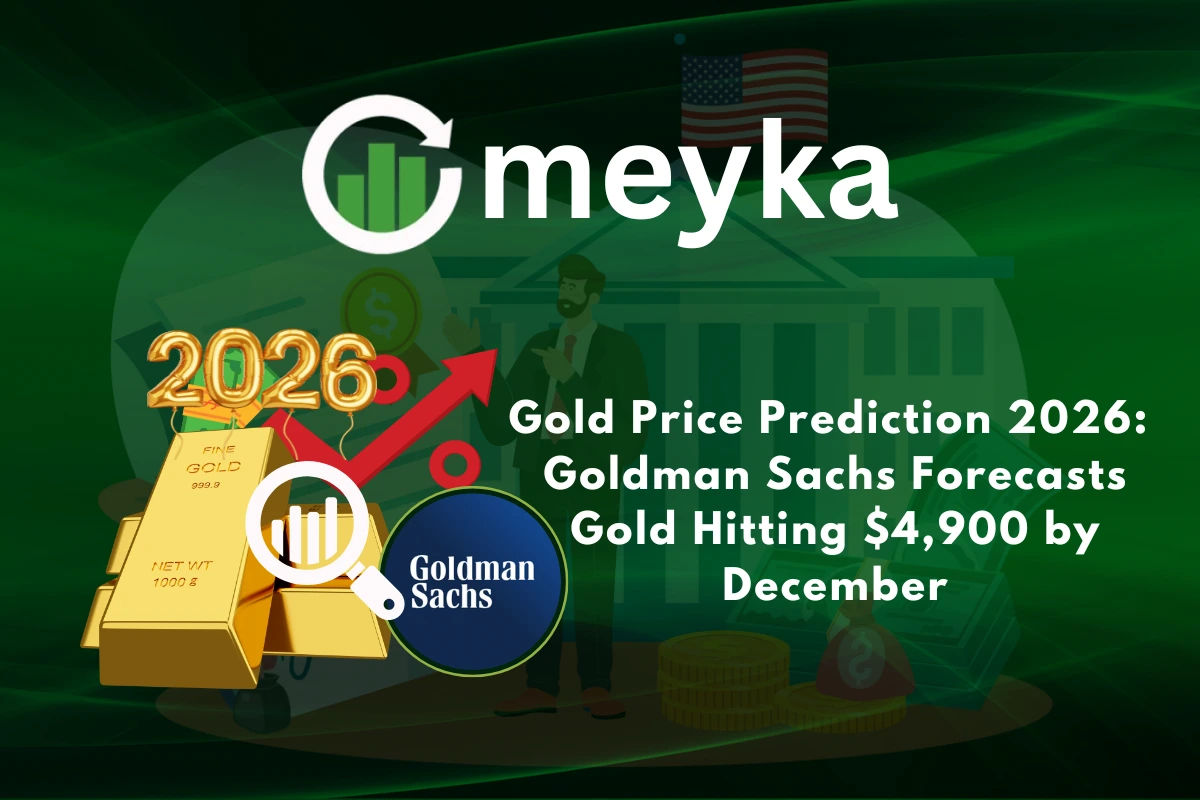
Gold is already making headlines in late 2025. On December 18, 2025, Goldman Sachs updated its prediction for the gold price in 2026. The firm now expects gold to hit $4,900 per ounce by December 2026. This is a sharp jump from its earlier forecasts and has grabbed attention across markets.
Many people watch gold as a safe asset when times get uncertain. But this new target goes far beyond typical expectations. It reflects deep shifts in global demand, central bank behaviour, and investor strategy.
Let’s explore why Goldman Sachs made this bold forecast. We will also look at the key forces that might push gold toward nearly $5,000 an ounce. This is not just another price story. It could change how investors think about gold in 2026.
Goldman Sachs Gold Price Forecast for 2026
Goldman Sachs has updated its December 2026 gold price forecast to $4,900 per ounce in its latest commodities outlook shared on December 18, 2025. The bank points to persistent central bank demand and expectations of Federal Reserve rate cuts as the main drivers of the rally.
Central banks are buying gold at high levels as they diversify reserves, and ETF inflows in the West are likely to rise if rates ease. These forces combined support strong upside potential for the yellow metal toward the $4,900 mark next year.
Gold’s path upward is not just a chart pattern. Institutional forecasts now cluster around high 2026 targets. Many analysts see structural demand continuing into the next year, with some even placing forecasts above $5,000 per ounce.
What Changed in Goldman’s 2026 Outlook?
Goldman Sachs had earlier forecast lower targets for 2026, but the firm raised its end-of-year forecast from $4,300 to $4,900 per ounce in October 2025. This revision reflects stronger ETF holdings, continued reserve buying by emerging market central banks, and expectations that the Fed will cut interest rates by roughly 100 basis points by mid-2026.

The bank also noted that gold’s rally through 2025 has been powered by a weaker US dollar, geopolitical tensions, and retail investor interest. As spot prices climbed, investors increasingly turned to gold as a hedge, pushing demand higher even before the 2026 target period.
Central Bank Buying: A Structural Force
One of the biggest shifts in the gold market is the return of aggressive central bank buying. Major reserve holders like China, Russia, and other emerging economies have steadily increased allocations to gold. This trend is expected to persist into 2026 at high monthly averages. Analysts say this steady accumulation is not temporary but reflects a deeper shift in reserve strategies.

Central banks often buy gold to reduce reliance on the US dollar and hedge against macro risks. Continued purchases in 2025 and expected strong buying patterns in 2026 underpin forecasts that gold will reach record levels.
Dollar Weakness and Monetary Policy
Gold’s price often moves opposite the US dollar. When the dollar weakens, gold becomes cheaper in other currencies, boosting global demand. Current conditions include a softer dollar index and expectations that Federal Reserve rate cuts will reduce real yields. This environment increases the appeal of non-yielding assets like gold.
Lower real yields mean gold doesn’t lose as much opportunity cost against interest-bearing assets. If the Fed follows through with rate cuts as implied by markets, gold’s safe-haven appeal strengthens.
Gold Supply Constraints and Market Pressure
Gold supply has not kept pace with rising demand. New mine output growth is slow because of rising costs and regulatory hurdles. Analysts point out that even if demand surges, physical gold supply can lag, putting upward pressure on prices. Although not every forecast mentions this directly, it is a commonly cited theme among long-term price models.
Alternative Forecasts for 2026
While Goldman Sachs sets a base near $4,900, other institutions offer a range of 2026 projections. Some banks forecast averages around the low-$4,000s, while bullish scenarios push prices above $5,000 per ounce by year’s end. These projections are based on continued reserve diversification, weak real yields, and strong investor demand for gold.
Gold Price: Macro Risks That Could Affect the Rally
Even with bullish forecasts, there are risks. A stronger-than-expected dollar or slower‐than-expected rate cuts could reduce gold’s momentum. Real economic data like employment and inflation figures will influence the path of monetary policy, which in turn affects gold prices. Analysts also caution that periods of market calm can temporarily cool demand before a broader trend resumes.
What $4,900 Gold Means for Markets?
If gold reaches near $4,900 by December 2026, it would mark one of the strongest rallies in decades. Such a rise would reflect broad shifts in global finance: reserve diversification, persistent macro risks, and investor hedging behaviour. Gold reaching this level would also impact related markets, including miners and ETFs tied to bullion.
Closing Note
The gold price outlook for 2026 is unusually strong, anchored by central bank demand, expected rate cuts, and structural reserve shifts. Goldman Sachs’ revised $4,900 target sets a high bar but is grounded in real market forces. If conditions align as projected, gold could test levels that once seemed out of reach, reshaping how investors and institutions view this age-old store of value.
Frequently Asked Questions (FAQs)
Goldman Sachs said on December 18, 2025, that gold could reach $4,900 by December 2026 if central bank buying stays strong and US interest rates decline as expected.
Goldman Sachs expects strong central bank demand, slower global growth, lower US rates, and rising debt risks to support higher gold prices through 2026, according to its December 2025 outlook.
Many analysts believe 2026 could favor gold due to falling real yields, global uncertainty, and steady demand, but returns depend on economic conditions and investor risk tolerance.
Disclaimer
The content shared by Meyka AI PTY LTD is solely for research and informational purposes. Meyka is not a financial advisory service, and the information provided should not be considered investment or trading advice.