Gold Price

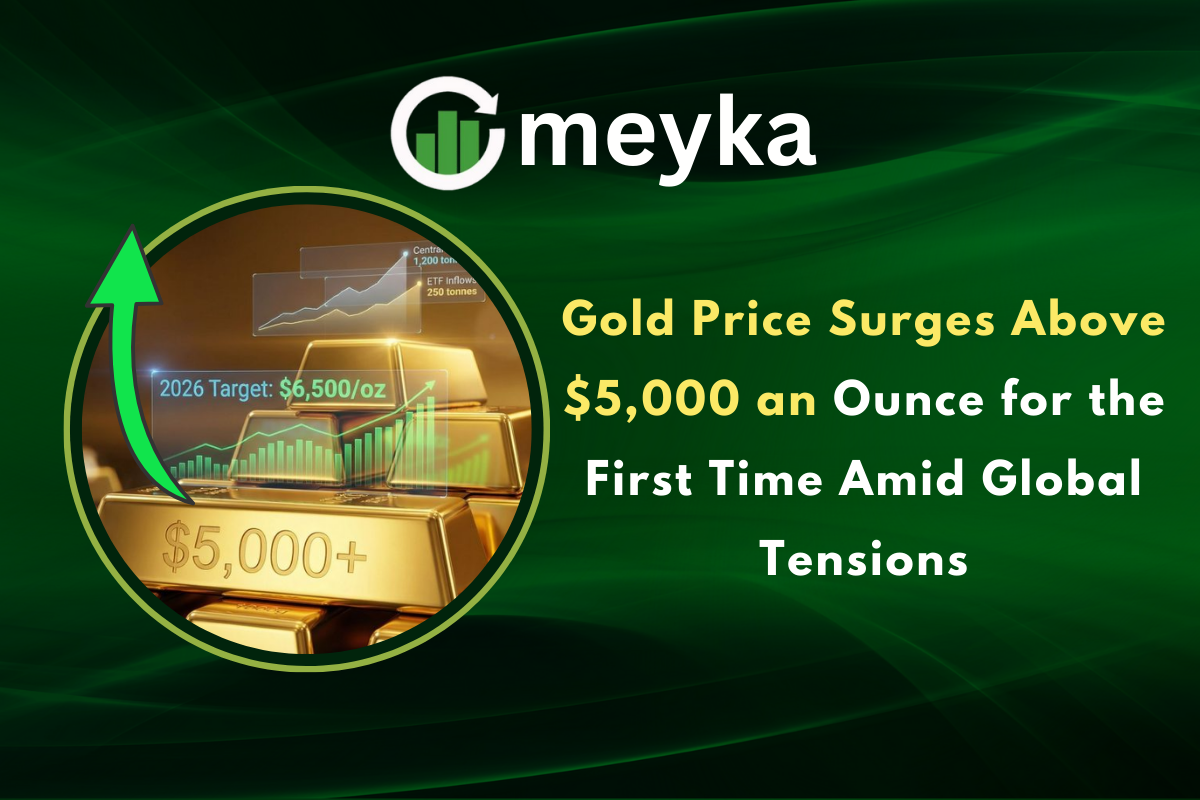
Gold Price Surges Above $5,000 an Ounce for the First Time Amid Global Tensions

Gold Price breaks historic barrier above $5,000 and shocks global markets

The Gold Price has made history. For the first time ever, gold surged above $5,000 an ounce, marking a moment that investors, economists, and central banks will remember for decades. This powerful move comes as global tensions rise, financial uncertainty deepens, and confidence in traditional assets weakens.

Gold crossed the $5,000 level in global spot markets during intense trading, driven by safe haven demand, heavy central bank buying, and fears linked to geopolitics, government shutdown risks, and slowing global growth. Analysts say this rally is not just emotional; it is backed by strong data, long-term demand trends, and structural shifts in the global financial system.

Why does this matter so much?
Because gold has long been seen as a store of value, and crossing $5,000 signals a major change in how investors view risk, currencies, and the future of money.

Why the Gold Price surged above $5,000 an ounce

The surge in the Gold Price did not happen overnight. It is the result of several powerful forces coming together at the same time.

First, geopolitical tensions have intensified. Ongoing conflicts, fragile ceasefires, and rising political risks across multiple regions have pushed investors toward assets that hold value during crisis periods. Gold has always played this role.

Second, central banks around the world continue to buy gold at record levels. According to market data, central bank gold purchases in the last year alone crossed hundreds of tonnes, led by emerging economies looking to reduce reliance on the US dollar.

Third, interest rate expectations are shifting. With global growth slowing and inflation risks still present, markets expect rate cuts in key economies later this year. Lower interest rates reduce the opportunity cost of holding gold, making it more attractive.

A viral post from market watchers captured the mood perfectly.

The post highlighted how gold’s breakout reflects deep concern about the global financial system, not just short-term trading excitement.

Gold Price and the role of global uncertainty

Uncertainty is fuel for gold. The current environment offers plenty of it.

Government shutdown fears in major economies, rising debt levels, trade tensions, and geopolitical flashpoints have created a backdrop where investors want protection. Gold provides that protection because it does not depend on any government promise.

Data shows that during periods of high volatility, gold inflows increase sharply. Exchange-traded funds backed by gold saw strong inflows as the price approached $5,000, signaling broad-based demand.

Why are investors moving so fast?
Because many fear that waiting could mean buying gold at even higher levels later.

Gold Price and Central Bank Buying Explained

Central banks are not buying gold for speculation. They are buying it for stability.

Countries across Asia, the Middle East, and Latin America have increased gold reserves to diversify away from fiat currencies. This structural demand has created a strong price floor under the Gold Price.

Analysts note that even during small pullbacks, central bank demand steps in quickly, preventing deep corrections. This steady buying pressure is one reason gold has climbed so consistently over recent years.

A widely shared analysis on social media explained this shift clearly.

The post pointed out that gold is being revalued as a neutral reserve asset in a changing global order.

Gold Price versus inflation and currencies

Inflation may not be as visible in headlines today, but its impact remains. Rising living costs, expanding money supply, and large fiscal deficits continue to erode currency value over time.

Gold protects purchasing power. That is why the Gold Price often rises when confidence in currencies falls.

The US dollar has shown periods of weakness, while other currencies face their own challenges. Gold benefits from this environment because it is priced globally and not tied to one economy.

Investors looking at long-term value preservation are turning back to gold in large numbers.

Gold Price performance compared to past cycles

This rally stands out even when compared to previous gold bull markets.

In earlier cycles, gold took years to double or triple. This time, the move has been faster and broader. From levels below $2,000 not long ago, gold’s rise to $5,000 reflects both demand strength and changing market psychology.

A market commentator shared a chart that gained attention online.

The chart showed how gold’s current breakout is stronger than prior historical peaks, suggesting this cycle may be different.

How institutional investors view the Gold Price surge

Large institutions are not ignoring this move. Pension funds, hedge funds, and asset managers are increasing gold allocations.

Many now see gold as a core portfolio asset rather than a hedge. This shift supports higher prices over the long term.

Some funds are also using advanced tools, similar to AI Stock research, to analyze macro trends and portfolio risk. These models increasingly point to gold as a stabilizing force in uncertain markets.

Gold Price impact on mining stocks and related assets

The surge in the Gold Price has boosted mining stocks worldwide. Companies with low production costs and strong reserves are seeing renewed investor interest.

Mining equities often act as leveraged plays on gold, meaning they can rise faster than the metal itself during strong rallies. However, they also carry operational risks.

Investors are advised to focus on balance sheets, production stability, and geopolitical exposure when selecting mining stocks.

Gold Price and retail investor demand

Retail investors are also joining the rally. Demand for physical gold bars, coins, and jewelry has increased, especially in Asia.

Reports indicate higher premiums on physical gold in some markets, reflecting tight supply and strong buying interest.

Many individual investors see gold as a way to protect savings, especially during uncertain times.

Key drivers behind the Gold Price rally

• Rising geopolitical risks across multiple regions
• Record central bank gold purchases
• Expectations of lower interest rates
• Currency weakness and debt concerns
• Strong institutional and retail demand

These forces together have pushed gold to levels once thought unreachable.

What analysts predict for the Gold Price next

Forecasts vary, but many analysts believe gold could stay above $5,000 if current conditions persist.

Some predict short-term consolidation as traders take profits. Others see further upside toward $5,200 or even $5,500 if geopolitical risks intensify.

A well-known financial outlet summed up the mood in a recent post.

The post noted that gold’s strength reflects bigger structural changes rather than a temporary spike.

Gold Price and portfolio strategy for investors

So what should investors do now?

Experts suggest avoiding emotional decisions. Gold has already made a big move, and short-term pullbacks are possible. However, many believe gold still plays an important role in diversified portfolios.

Investors using modern trading tools often look for gradual entry points rather than chasing price spikes. Gold can act as insurance, not just a profit opportunity.

Gold Price and technology-driven analysis

Technology is also shaping how investors view gold. Advanced models and AI stock analysis are being used to study correlations between gold, equities, and bonds.

These tools often highlight gold’s ability to reduce portfolio volatility, especially during market stress. This data-driven approach reinforces gold’s role in modern investment strategies.

Public reaction to the Gold Price milestone

Social media has been buzzing with reactions to gold’s historic move.

The post emphasized how gold’s rise reflects loss of trust in paper assets.

Another viral comment captured the emotional side of the rally.

It highlighted how gold remains a timeless asset during moments of crisis.

What could slow the Gold Price rally?

No market moves in a straight line forever. Several factors could slow gold’s rise.

If geopolitical tensions ease, risk appetite could return to equities. Stronger economic data or unexpected rate hikes could also pressure gold temporarily. However, most analysts agree that structural demand remains strong, limiting downside risks.

Gold Price and the bigger global picture

This rally is not just about gold. It reflects broader concerns about debt, currencies, and geopolitical stability.

Gold’s rise above $5,000 is a signal. It tells us that investors are preparing for a world with higher uncertainty and lower trust in traditional systems.

Conclusion

The Gold Price surging above $5,000 an ounce marks a historic moment driven by global tensions, central bank demand, and shifting investor behavior. This move is backed by strong fundamentals, not speculation alone.

While short-term volatility is possible, gold’s role as a store of value has rarely looked stronger. For investors, the message is clear. Gold is no longer just a hedge; it is a central part of the global financial conversation. As markets navigate uncertain times, gold’s golden moment may be far from over.

Disclaimer

The content shared by Meyka AI PTY LTD is solely for research and informational purposes. Meyka is not a financial advisory service, and the information provided should not be considered investment or trading advice.

Similar Posts

Leave a Reply

Your email address will not be published. Required fields are marked *