NATO

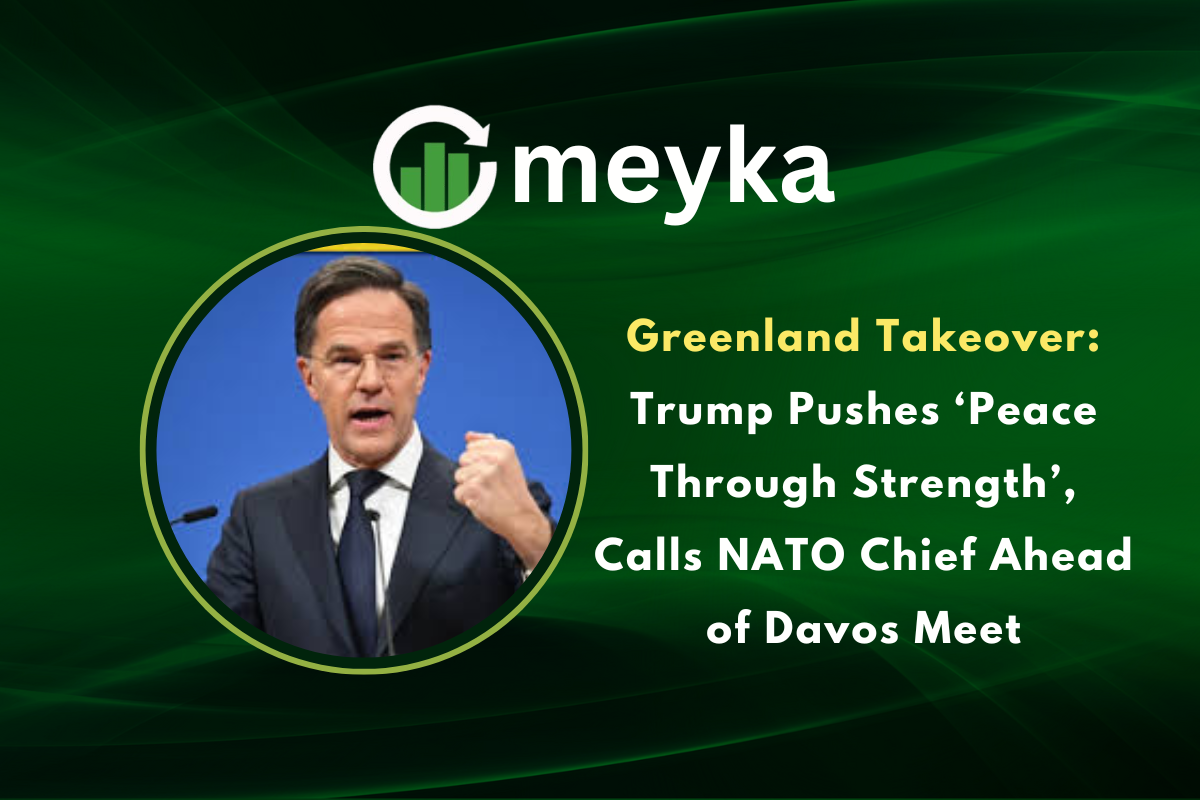
Greenland Takeover: Trump Pushes ‘Peace Through Strength’, Calls NATO Chief Ahead of Davos Meet

Greenland Takeover Debate Sparks Global Attention as NATO Faces New Pressure

The global political stage is once again tense as former US President Donald Trump renews strong rhetoric around Greenland, global security, and alliance obligations. In recent remarks, Trump stressed his belief in peace through strength, linking military power, strategic positioning, and alliance discipline directly to global stability. The comments came just days before a key international meeting in Davos and after a direct call with the NATO Secretary General.

Why does this matter now, and why is Greenland suddenly at the center of global debate? Greenland is not just a frozen landmass. It sits at the heart of Arctic routes, rare earth minerals, military radar systems, and future trade corridors. Control, influence, or even political pressure over Greenland carries consequences far beyond Denmark or the Arctic Circle.

This renewed focus has unsettled European leaders, raised questions inside NATO, and triggered wide reactions across social media, policy circles, and defense analysts.

Why Greenland Matters to NATO and Global Security

Greenland holds deep strategic value for the United States, Europe, and NATO allies. It plays a critical role in missile defense systems, early warning radar coverage, and Arctic military operations. With climate change opening new sea routes, the region has become even more important.

Trump’s framing of Greenland as a strategic asset rather than just a territory reflects a wider shift in global thinking. Power competition in the Arctic is no longer theoretical. Russia has expanded Arctic bases, China has labeled itself a near-Arctic state, and NATO members are reassessing northern defenses.

A key question emerges: Is Greenland about security or sovereignty? The answer is complex. Denmark governs Greenland, but its defense falls under NATO commitments. Any suggestion of takeover or pressure touches the core principles of alliance trust and territorial respect.

Trump’s ‘Peace Through Strength’ Message Explained

Trump’s comments emphasize a long-held belief that a strong military posture prevents conflict. According to his view, diplomacy only works when backed by clear strength. He has repeatedly argued that weakness invites aggression.

In recent statements, Trump suggested that traditional alliance expectations may no longer apply if partners do not meet defense commitments. This directly impacts NATO, where the US has long pushed members to spend at least two percent of GDP on defense.

This stance was echoed in a report shared by Reuters, noting Trump’s view that peace requires firmness, not compromise, especially in regions of rising competition.

Trump’s Call With NATO Chief Ahead of Davos

Just before the World Economic Forum in Davos, Trump held a call with the NATO Secretary General. The timing is critical. Davos is where political leaders, investors, and defense experts discuss global risks.

During the call, Trump reportedly raised concerns about alliance burden sharing, Arctic security, and global instability. While no official transcript was released, the conversation reinforced that NATO remains central to Trump’s foreign policy vision, but only under strict conditions.

This move signaled that Greenland and Arctic defense could become major talking points in upcoming international discussions.

Key Points From the Greenland and NATO Debate

  • Greenland is vital for missile defense, Arctic control, and rare earth access
  • NATO relies on unity and shared defense commitments in the Arctic region
  • Trump links military strength directly to global peace and stability
  • Alliance Trust faces pressure from shifting US political signals

European Reaction and Denmark’s Position

European leaders have responded with caution. Denmark has repeatedly stated that Greenland is not for sale and that its future lies in cooperation, not coercion. Officials stress that any security concerns should be addressed through NATO frameworks.

Germany, France, and the Nordic countries have emphasized unity and dialogue. They argue that Arctic stability depends on cooperation, not unilateral moves.

A BBC live update highlighted concerns among European diplomats that aggressive rhetoric could weaken trust within NATO at a time when unity is critical.

Social Media Reactions Add Fuel to the Debate

The issue has triggered strong reactions online, amplifying political tensions.

A Washington Post post highlighted growing unease among European allies over renewed Greenland talk, drawing attention to alliance credibility.

Conflict monitoring accounts flagged increased diplomatic alerts related to Arctic security discussions.

Political commentators stressed that Greenland is becoming a symbol of wider power rivalry rather than a standalone issue.

US based political voices argued that strength deters conflict and keeps rivals in check, echoing Trump’s messaging.

How NATO Unity Is Being Tested

NATO is built on collective defense and shared responsibility. Trump’s approach challenges allies to reassess their commitments. While some see this as necessary pressure, others worry it risks fragmentation.

Countries close to the Arctic, such as Norway and Denmark, feel especially exposed. They rely on a clear US commitment to deterrence. Any ambiguity raises strategic uncertainty.

The alliance must now balance deterrence, diplomacy, and political stability at a time when global tensions are already high.

Strategic Implications for the Arctic Region

The Arctic is becoming a new frontline of geopolitical competition. Melting ice opens shipping routes and resource access. Greenland sits at the crossroads of this transformation.

Military analysts warn that increased competition could lead to miscalculations. This is why NATO coordination is critical. Shared intelligence, joint exercises, and diplomatic clarity are needed to prevent escalation.

Trump’s rhetoric brings urgency to these discussions, forcing leaders to confront uncomfortable questions about power, sovereignty, and alliance cohesion.

What Does This Mean for Global Markets and Diplomacy

Political uncertainty often affects investor confidence. Arctic tensions, trade routes, and security risks can influence energy markets, shipping insurance, and defense spending.

Diplomatically, the Greenland debate highlights a shift toward hard power politics. Multilateral institutions like NATO must adapt to leaders who prioritize strength and leverage over consensus.

This environment rewards clarity but punishes confusion.

Can NATO Turn Tension Into Stability

The path forward depends on dialogue and clear commitments. NATO leaders may use the Davos meeting to reaffirm unity, outline Arctic strategies, and address concerns raised by Trump’s statements.

Strong alliances do not avoid hard conversations. They manage them openly.

Conclusion: Greenland, NATO, and a Changing World Order

The Greenland takeover debate is not just about territory. It reflects bigger changes in global politics, alliance expectations, and power competition. Trump’s push for peace through strength places NATO at a crossroads.

The coming weeks, especially discussions at Davos, will shape how this issue evolves. Will NATO emerge more united, or will tensions deepen?

One thing is clear: Greenland is no longer on the sidelines of world politics. It is now a symbol of how strength, diplomacy, and alliance trust will define the next phase of global security.

Disclaimer

The content shared by Meyka AI PTY LTD is solely for research and informational purposes.  Meyka is not a financial advisory service, and the information provided should not be considered investment or trading advice.

Similar Posts

Leave a Reply

Your email address will not be published. Required fields are marked *